

You can know what is right and still struggle to do it. You may know that a harsh reply will make an argument worse, yet feel ready to send the message. You may understand your duties at work but find it difficult to carry them out when you feel overlooked.
Situations like these show why we need more than information. We need good judgment, patience, and a willingness to act on what we know.
These Bible verses about wisdom and knowledge help us think about our choices in light of God’s teaching. They address learning, listening, asking for help, and treating people well. They do not promise a life without mistakes or disappointment. They teach us how to approach our responsibilities with greater care.
What Is the Difference Between Wisdom and Knowledge?
Knowledge includes what we learn and come to understand. Wisdom involves judging well and putting what we learn into practice.
Think of a disagreement between two friends. Knowledge helps you understand what each person said. Wisdom helps you listen fairly, avoid spreading the argument, and decide whether you can help.
In the Bible, these words also have a deeper meaning. Knowledge can include knowing God, rather than simply collecting facts about Him. Wisdom includes living in a way that honours Him.
The words overlap, so we should not treat them as completely separate boxes. Together, they describe learning that shapes our character and conduct.
A person does not need an impressive education to show patience, honesty, or good judgment. At the same time, learning from teachers, reading carefully, and developing useful skills are valuable parts of a responsible life.
14 Bible Verses About Wisdom and Knowledge
The passages below explain where wisdom begins and how it affects everyday decisions. Bible quotations are from the King James Version (KJV). The explanations use modern, simple English, with older words explained where needed.

1. Proverbs 1:7 — Be Willing to Receive Instruction
“The fear of the LORD is the beginning of knowledge: but fools despise wisdom and instruction.”
The opening chapter of Proverbs introduces teaching about wise and honest living. This verse places reverence for God at the beginning of that learning.
The “fear of the LORD” includes deep respect, awe, and taking God’s authority seriously. It affects what we are willing to do, even when nobody is watching.
Notice that the verse also mentions instruction. A person who refuses all correction makes learning difficult. In this setting, foolishness is not a label for someone who struggles at school. It concerns an attitude that rejects wisdom.
When someone points out a mistake, pause before defending yourself. Consider whether there is something true and useful in what they have said.
2. Proverbs 9:10 — Let Knowing God Shape Your Choices
“The fear of the LORD is the beginning of wisdom: and the knowledge of the holy is understanding.”
This verse connects wisdom with knowing the Holy One—God. Biblical wisdom is concerned with the kind of life we live before Him.
For example, you might discover a way to gain an advantage by hiding important information. It could appear clever, but it would still be dishonest.
Knowing God’s concern for truth and justice should influence that decision. Before asking whether a plan will work, consider whether you can carry it out honestly and fairly.
The surrounding passage also describes a wise person receiving instruction and continuing to learn. Respect for God leaves room for correction.
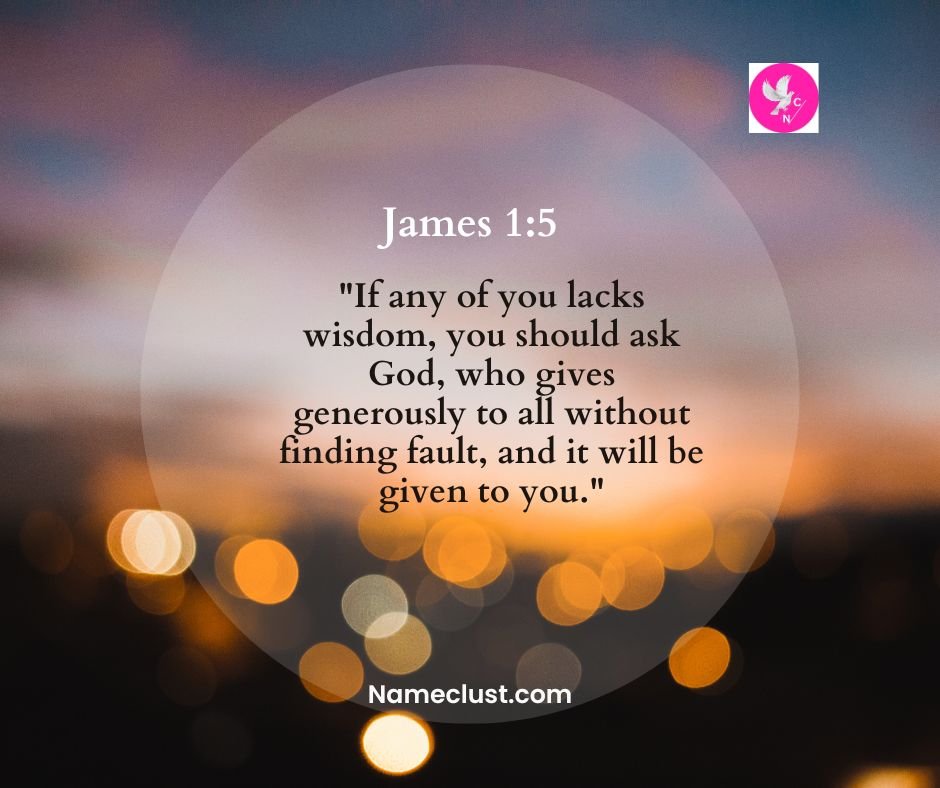
3. James 1:5 — Ask God for Wisdom in Difficulty
“If any of you lack wisdom, let him ask of God, that giveth to all men liberally, and upbraideth not; and it shall be given him.”
James has been writing about trials and the growth of perseverance. His invitation to ask for wisdom belongs within that discussion of facing difficulty faithfully.
“Liberally” means generously. “Upbraideth not” means God does not reproach the person for asking.
You can tell God that you do not know how to respond to a problem. Ask for help to think clearly, act honestly, and remain willing to learn.
The passage does not say that every idea you have after prayer is God’s answer. Continue reading Scripture, checking the facts, and receiving sound advice.
If you need words to begin, our prayers for guidance and direction can accompany your reflection.
4. Proverbs 2:6 — Seek Wisdom with Attention
“For the LORD giveth wisdom: out of his mouth cometh knowledge and understanding.”
God is presented as the source of wisdom. The earlier verses describe someone listening closely, asking for understanding, and searching for it as a person searches for treasure.
Receiving wisdom involves being ready to learn. We should not expect prayer to replace the work of understanding a situation.
Before accepting a new responsibility, for instance, ask what it involves. Read the instructions. Find out what will be expected of you. Then consider those facts alongside your existing duties.
Seeking God’s help and doing careful preparation belong together.
5. Proverbs 4:7 — Make Time to Grow in Understanding
“Wisdom is the principal thing; therefore get wisdom: and with all thy getting get understanding.”
“Principal” means chief or especially important. In this chapter, a father urges his children to value the instruction he has passed on to them.
We often make time for what feels urgent while delaying what would help us grow. We may keep repeating a difficult conversation without learning how to listen better.
Taking time to understand a problem can change how we handle it. That might mean asking a question, reading a useful book, or admitting that we need guidance.
Valuing wisdom means giving learning a real place in our lives.
6. Proverbs 18:15 — Listen Before Forming a Conclusion
“The heart of the prudent getteth knowledge; and the ear of the wise seeketh knowledge.”
A prudent person uses careful judgment. This verse describes such a person actively seeking knowledge.
Imagine hearing that a colleague has failed to complete an assignment. You could assume they were careless. You could also ask what happened and discover missing instructions or an unexpected problem.
Listening does not mean accepting every explanation without question. It means gathering enough information to respond fairly.
Wise people can say, “I do not know enough yet.” That answer is often more useful than a quick opinion.
7. 1 Kings 4:29 — Use Wisdom to Serve Others
“And God gave Solomon wisdom and understanding exceeding much, and largeness of heart, even as the sand that is on the sea shore.”
This verse describes the breadth of the wisdom God gave Solomon. The comparison with sand expresses its great extent.
To understand why Solomon sought wisdom, read 1 Kings 3:5–12. He recognized the weight of governing God’s people and asked for understanding to judge between good and bad.
His request concerned the people affected by his leadership. He needed help to serve them well.
That is a useful question for anyone with responsibility: How will my decision affect the people who depend on me? Wisdom matters in caring for a family, supervising staff, teaching, and serving a church.
8. 1 Corinthians 1:30 — Keep Christ at the Centre
“But of him are ye in Christ Jesus, who of God is made unto us wisdom, and righteousness, and sanctification, and redemption:”
Paul is explaining that believers owe their standing before God to Christ. The surrounding verses challenge boasting in human status and ability.
“Sanctification” concerns being made holy and set apart for God. “Redemption” concerns being rescued and set free. Paul’s point reaches beyond becoming better at everyday decisions: Christ is central to God’s saving work.
For Christians, learning should therefore produce humility. Knowing more Bible facts does not give us permission to speak as though we are better than others.
Let what you learn deepen your dependence on Christ and improve how you treat people.
9. Proverbs 3:13–14 — Value Wisdom Above Gain
“Happy is the man that findeth wisdom, and the man that getteth understanding. For the merchandise of it is better than the merchandise of silver, and the gain thereof than fine gold.”
The passage describes wisdom as more valuable than silver or gold. Its value cannot be measured only by the money it might help someone earn.
A choice can bring a reward and still be wrong. Taking credit for another person’s work may attract praise, but it is dishonest and can damage trust.
These verses invite us to consider what we are willing to sacrifice for an advantage. Wisdom helps us recognize when a gain comes at too high a cost to our integrity or our treatment of others.
10. Proverbs 14:8 — Examine Your Own Direction
“The wisdom of the prudent is to understand his way: but the folly of fools is deceit.”
It can be easier to notice someone else’s poor judgment than to examine our own. This proverb turns attention to the direction of our lives.
Consider what is driving a choice. Are you accepting extra work because it is manageable, or because you are afraid to disappoint someone? Are you refusing advice because it is unhelpful, or because it challenges what you want?
Honest questions can reveal concerns that excitement or pride has hidden.
You do not have to know every future outcome. You can still examine your reasons and the likely effects of your actions.
11. Psalm 90:12 — Remember That Your Time Is Limited
“So teach us to number our days, that we may apply our hearts unto wisdom.”
Psalm 90 places our short human lives beside God’s everlasting nature. This prayer asks for wisdom in light of that difference.
Numbering our days does not mean calculating the date of our death. It means recognizing that our time is limited and should be used thoughtfully.
Perhaps there is an apology you keep delaying or an important conversation you have avoided. This verse invites you to consider what deserves attention.
Using time wisely also includes rest and care for others. A full schedule is not, by itself, evidence of a wise life.
12. James 3:17 — Look at How Wisdom Treats People
“But the wisdom that is from above is first pure, then peaceable, gentle, and easy to be intreated, full of mercy and good fruits, without partiality, and without hypocrisy.”
James contrasts wisdom from God with jealousy and selfish ambition. He directs attention to conduct.
“Easy to be intreated” describes a willingness to listen and respond to reason. “Without hypocrisy” means sincere, rather than pretending to be something you are not.
Someone may speak confidently and still act unfairly. Before following advice, consider whether it encourages honesty, fairness, mercy, and responsibility.
Being peaceable does not require ignoring wrongdoing. You can address a serious problem firmly while refusing insults, revenge, or unfair treatment.
13. Colossians 3:16 — Learn Together and Correct with Care
“Let the word of Christ dwell in you richly in all wisdom; teaching and admonishing one another in psalms and hymns and spiritual songs, singing with grace in your hearts to the Lord.”
Paul addresses a community of believers. Christ’s message is to shape their teaching, worship, and life together.
“Admonishing” includes warning or correcting someone. In the surrounding passage, Paul also calls for kindness, patience, forgiveness, and love. Correction belongs within that kind of community.
If you discuss a Bible passage with a friend, give them room to ask questions. Read the surrounding verses together. Be willing to correct your own explanation if you have misunderstood something.
We can help one another learn without turning every conversation into a contest.
14. Proverbs 13:20 — Pay Attention to Who Influences You
“He that walketh with wise men shall be wise: but a companion of fools shall be destroyed.”
The people we spend time with influence what we consider normal. Repeated encouragement toward honesty can strengthen us. Repeated pressure to lie or behave carelessly can pull us in another direction.
Look for people whose conduct supports their advice. Can they admit a mistake? Do they treat others fairly? Will they tell you the truth when agreement would be easier?

This verse does not require contempt for people who struggle. You can show kindness while being careful about whose example you follow.
How to Use These Verses When You Have a Decision to Make
Reading a verse is a beginning. The next step is to consider how its teaching applies to the choice in front of you.
Suppose you have been asked to accept a new role. It sounds worthwhile, but you are unsure whether you can manage it. Rather than looking for a verse that simply tells you “yes” or “no,” work through a few questions:
What do I actually know? Write down the duties, time involved, and any unanswered questions.
What does Scripture clearly teach about my conduct? Consider honesty, fairness, care for others, and keeping commitments.
Why do I want this? Recognize both good reasons and motives that need attention.
Who can offer useful advice? Ask someone who understands the responsibility and will speak honestly.
What is a responsible next step? You might request more information, discuss your limits, or make a decision based on what you have learned.
Prayer can be part of each step. Our prayers for spiritual discernment offer further prompts for examining your motives and seeking guidance.
Sometimes more than one option is reasonable. You may need to choose without complete certainty. A difficult result does not automatically prove that the choice was foolish. Review your decisions fairly, learn what you can, and remain open to correction.
A Prayer for Wisdom and Understanding
Father, please give me wisdom for the decisions before me. Help me understand what Your Word teaches and apply it honestly. Give me patience to listen, courage to ask questions, and humility to receive correction. Show me where pride or fear is affecting my judgment. Help me consider the people who will be affected by my choices. When I lack information, teach me to seek it. When I already know what is right, help me act on it. In Jesus’ name, Amen.
Begin with One Choice Today
You do not need to master all fourteen passages at once. Choose one that addresses something you are facing, read the surrounding verses, and consider one action you can take.
Perhaps you need to hear someone’s explanation, correct a mistake, ask for advice, or pause before making a promise.
Wisdom grows as learning begins to shape what we do.