

Maybe you are waiting for a job offer that never seems to come. Maybe you are waiting for a medical diagnosis to change, for a prodigal child to come home, for a marriage to be restored, or for an answer to a prayer you have been whispering through tears for years.
The waiting is exhausting. In a world that delivers food in thirty minutes, streams movies instantly, and connects us to anyone on the planet in seconds, waiting feels like a punishment. We scroll, we refresh, we check our phones, and we wonder: Has God forgotten me? Is He even listening?
If that is where you are right now, I want you to take a deep breath and hear this truth: You are not the first person to feel this way, and you are not the last.
The Bible is filled with men and women who waited, sometimes for decades, on promises that seemed impossible, in circumstances that felt unbearable, with no visible sign that God was working.
And yet, every single one of them saw their breakthrough.
Biblical patience is not passive resignation. It is not sitting in a corner, doing nothing, and hoping things magically improve.
The Greek word for patience in the New Testament—hypomone—literally means “to remain under.” It is the active, gritty, faith-filled decision to stay under the weight of God’s promise even when everything around you screams that it will never happen.
As the Apostle Paul wrote: “Be joyful in hope, patient in affliction, faithful in prayer” (Romans 12:12). Notice the order. Joy. Patience. Faithfulness. All three, happening simultaneously, in the middle of the mess.
Below are 11 of the most inspiring stories of patience in the Bible. These are not fairy tales. These are real people who experienced real pain, real doubt, and real waiting. And their stories hold the exact blueprint you need for the season you are in right now.
What Does the Bible Say About Patience?
Before we dive into the stories, let’s establish a foundation. What exactly is biblical patience, and why does God ask us to practice it?
In Scripture, patience shows up in two distinct forms. The first is makrothumia, which means “long-suffering”, the ability to endure mistreatment, delay, and hardship without retaliating or giving up.
The second is hypomone, which means “steadfast endurance”, the refusal to quit when the road gets long and the destination is still invisible.
Both are listed as fruit of the Spirit in Galatians 5:22-23, which means patience is not something you manufacture through sheer willpower. It is something the Holy Spirit grows in you as you surrender your timeline to God.
“Be still before the LORD and wait patiently for him; do not fret when people succeed in their ways.” — Psalm 37:7
“The end of a matter is better than its beginning, and patience is better than pride.” — Ecclesiastes 7:8
“For still the vision awaits its appointed time; it hastens to the end—it will not lie. If it seems slow, wait for it; it will surely come; it will not delay.” — Habakkuk 2:3
1. Abraham: Waiting 25 Years for an Impossible Promise
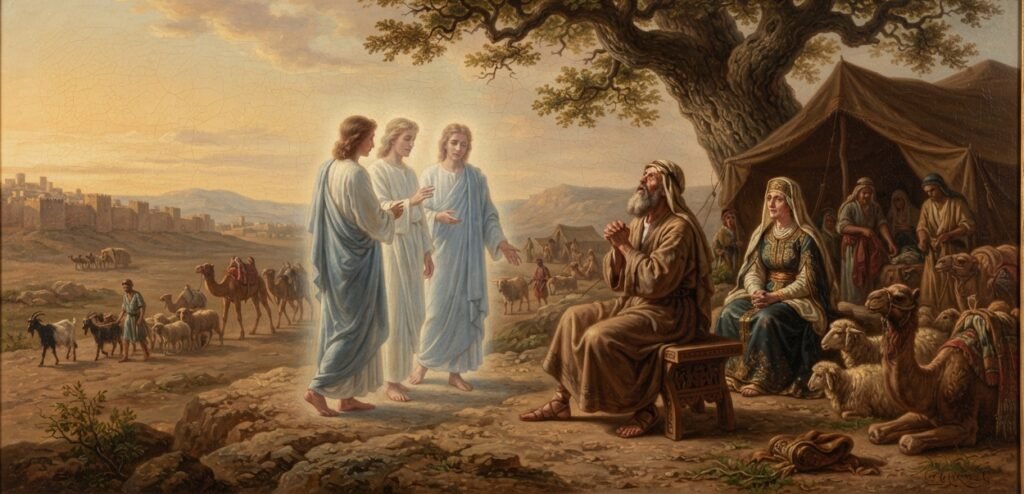
When God first called Abraham (then Abram) at age 75, He made a staggering promise: “I will make you into a great nation” (Genesis 12:2). Abraham believed God. He packed up his entire life and followed.
And then… nothing happened. Year after year. No child. No heir. Just silence.
The biological clock was not just ticking; it had stopped. Abraham’s wife Sarah was barren, and they were both growing older with every passing season. The cultural shame was crushing. In their world, a man without an heir was a man without a future.
The temptation to take matters into his own hands became so overwhelming that Abraham and Sarah devised their own plan, resulting in the birth of Ishmael through Hagar, a decision that brought decades of family conflict.
At age 100, when every medical, logical, and human possibility had expired, Sarah gave birth to Isaac (Genesis 21:1-7). God’s promise was fulfilled, not one day too early, and not one day too late.
The Lesson for You
God’s promises do not have expiration dates. The 25-year gap between the promise and the fulfillment was not God being slow; it was God preparing Abraham’s faith to carry the weight of the blessing.
If you are waiting on a promise that seems biologically, financially, or logically impossible, remember Abraham. The God who opened a barren womb at 90 is the same God who holds your future.
2. Joseph: 13 Years from the Pit to the Palace
At age 17, Joseph received a divine dream that he would one day lead. Almost immediately, his jealous brothers threw him into a pit, sold him into slavery, and lied to their father about his death. Joseph was ripped from his family, his homeland, and his identity in a single afternoon.
Joseph spent roughly 10-11 years serving in Potiphar’s house and then rotting in an Egyptian prison for a crime he did not commit. He was falsely accused by a woman who tried to seduce him, and when he did the right thing, he was punished for it.
To make matters worse, after he interpreted a fellow prisoner’s dream and asked to be remembered, that man forgot about him for two full years (Genesis 40:23). Joseph was faithful, and he was forgotten.
At age 30, Pharaoh had a dream no one could interpret. The forgotten cupbearer finally remembered Joseph.
In a single day, Joseph went from a dungeon to the second-highest throne in the most powerful empire on earth (Genesis 41:41-43). He saved millions from famine, including the very brothers who betrayed him.
The Lesson for You
What feels like a prison is often a preparation room. Joseph could not have governed Egypt without the humility, wisdom, and administrative skills he learned in Potiphar’s house and the prison.
Your current setback is not your final destination. Stay faithful in the dark. God is writing a story you cannot yet read.
3. Job: Patience in Unimaginable Suffering
The Waiting Period: Unspecified, but devastatingly long.
Job was a righteous, wealthy, and deeply faithful man. In a series of catastrophic events, he lost his livestock, his servants, his home, and all ten of his children in a single day. Then, his body was covered in painful, oozing sores from head to toe. His wife told him to curse God and die.
Job’s suffering was not just physical; it was theological. His three closest friends showed up and, instead of comforting him, accused him of harboring secret sin.
Job wrestled with the most agonizing question a human being can ask: Why is this happening to me if I have done nothing wrong? He grieved openly. He questioned God. He sat in ashes and wept.
God eventually answered Job out of a whirlwind (Job 38:1), not with explanations, but with His presence. Job’s faith was refined, not destroyed. In the end, God restored everything Job had lost—double (Job 42:10).
The Lesson for You
Patience does not mean you cannot grieve. Job is proof that you can scream, cry, and question God while still holding onto Him.
If you are in a season of suffering that makes no sense, you do not need to fake a smile. Bring your raw, honest pain to God. He can handle your questions. And He is faithful to restore.
4. David: 15 Years from Anointing to the Crown
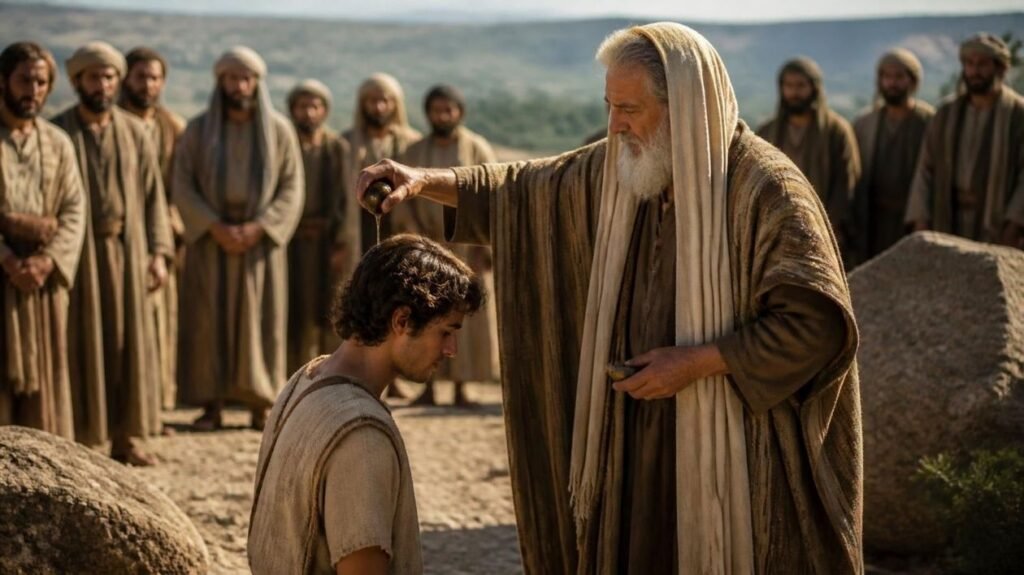
As a teenager, the prophet Samuel anointed David as the future king of Israel (1 Samuel 16:13). The Holy Spirit came upon him powerfully. The promise was clear. The calling was undeniable.
And then David went back to tending sheep.
For roughly 15 years, David lived as a fugitive, running for his life from King Saul, who was consumed with jealousy and determined to kill him.
David hid in caves, lived among enemies, and watched his family suffer because of his calling. He had multiple opportunities to kill Saul and seize the throne by force, but he refused.
“The LORD forbid that I should do such a thing to my master, the LORD’s anointed” (1 Samuel 24:6).
After Saul’s death, David was finally crowned king of Judah at age 30, and later king of all Israel. He became the greatest king in Israel’s history and an ancestor of Jesus Christ.
The Lesson for You
Do not force open doors that God has not yet unlocked. David could have taken the throne early, but it would have cost him his integrity. The wilderness years were not wasted; they were where David learned to lead, to worship, and to trust.
If you have been anointed for something but it hasn’t materialized yet, protect your character. God will bring you to the throne in His time.
5. Hannah: Waiting for a Child Through Tears
The Waiting Period: Years of barrenness.
Hannah desperately wanted a child, but her womb was closed. To make the pain worse, her husband’s other wife, Peninnah, had many children and taunted Hannah relentlessly, year after year (1 Samuel 1:6).
Hannah’s pain was so deep that she could not eat. She went to the temple and wept so bitterly that the priest Eli thought she was drunk. She poured out her soul to God with such raw honesty that her lips moved but no sound came out (1 Samuel 1:13). She was misunderstood, mocked, and heartbroken.
“The LORD remembered Hannah” (1 Samuel 1:19).
She conceived and gave birth to Samuel, who would grow up to become one of the greatest prophets in Israel’s history. Hannah’s prayer of thanksgiving in 1 Samuel 2 is one of the most beautiful songs of praise in the entire Bible.
The Lesson for You
Your tears are not wasted. God collects every single one (Psalm 56:8). If you are waiting for a child, a healing, or a breakthrough that feels impossibly delayed, pour out your heart to God exactly as you are. He is not offended by your honesty. He is moved by it.
6. Moses: 40 Years in the Wilderness
Moses was born a Hebrew slave, raised as an Egyptian prince, and called by God to deliver his people. But after he impulsively killed an Egyptian taskmaster at age 40, he fled into the desert of Midian and became a humble shepherd.
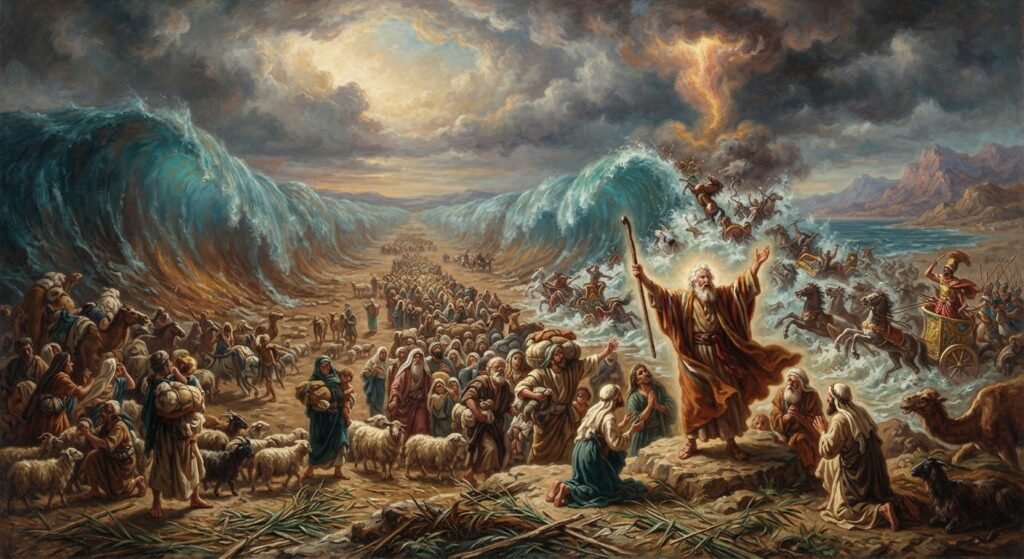 Moses and the Exodus crossing the red sea
For four decades, Moses lived in obscurity. The man who once walked the halls of Pharaoh’s palace was now watching sheep in a barren wasteland. His calling seemed dead. His identity seemed lost. He likely wondered if God had given up on him entirely.
At age 80, God appeared to Moses in a burning bush (Exodus 3:2) and said,
“I have indeed seen the misery of my people in Egypt. I have heard them crying out… So I have come down to rescue them.”
Moses led the Israelites out of slavery, parted the Red Sea, and received the Ten Commandments.
The Lesson for You
Your detour is not a dead end. Those 40 years in the wilderness were not punishment; they were preparation. Moses had to unlearn the pride of Egypt before he could carry the weight of leading a nation.
If you feel like you are stuck in a wilderness season, do not despise it. God is shaping you for a calling you are not yet ready to carry.
7. Ruth: Loyalty in the Midst of Loss
The Waiting Period: Years of widowhood and poverty.
Ruth was a young Moabite woman who lost her husband, her father-in-law, and her brother-in-law in a devastating season of grief.
She had every reason to return to her homeland and start over. Instead, she clung to her grieving mother-in-law, Naomi, and declared: “Where you go I will go, and where you stay I will stay. Your people will be my people and your God my God” (Ruth 1:16).
Ruth arrived in Bethlehem as a foreign widow with no income, no protection, and no social standing. She survived by gleaning leftover grain from the fields of strangers, a humiliating, exhausting existence.
God orchestrated a divine encounter with Boaz, a wealthy kinsman-redeemer who married Ruth, restored her family’s land, and gave her a son named Obed. That son became the grandfather of King David, placing Ruth—a foreign widow—directly in the lineage of Jesus Christ (Matthew 1:5).
The Lesson for You
Faithfulness in small, unseen things leads to extraordinary blessings. Ruth did not know she was walking into the genealogy of the Messiah. She simply chose loyalty over convenience. Stay faithful where you are. God is connecting dots you cannot yet see.
8. Esther: Waiting for the Appointed Moment
The Waiting Period: Days of fasting before a life-or-death decision.
When a genocidal decree was issued to annihilate all Jewish people in the Persian Empire, Queen Esther faced an impossible choice. She could approach the king uninvited to plead for her people, a crime punishable by death or she could stay silent and watch her nation be destroyed.
Esther was terrified. She had not been summoned by the king in thirty days, which meant she had fallen out of favor. Approaching him could mean execution. Her cousin Mordecai sent her a haunting message:
“And who knows but that you have come to your royal position for such a time as this?” (Esther 4:14).
Esther asked all the Jews in the city to fast and pray for three days. Then she approached the king with courage and humility. He extended the golden scepter. Her people were saved.
The Lesson for You
God’s timing is strategic. Esther could have acted a day too early or a day too late, and the outcome would have been catastrophic.
When you feel the urgency to act, pause. Fast. Pray. Wait for God’s kairos moment. His appointed, perfect time. Preparation plus prayer plus courage equals breakthrough.
9. Mary: Waiting Through Uncertainty and Shame
The Waiting Period: Nine months of an impossible pregnancy.

Mary was a teenage girl in a small, insignificant town when the angel Gabriel appeared and told her she would conceive the Son of God. Her response was breathtaking: “I am the Lord’s servant. May your word to me be fulfilled” (Luke 1:38).
The cost of that “yes” was enormous. Mary faced the very real possibility of being stoned to death for adultery under Jewish law. Her fiancé Joseph initially planned to divorce her quietly.
She endured months of social stigma, whispered rumors, and the physical toll of pregnancy while traveling on a donkey to Bethlehem.
In a humble stable, surrounded by animals and straw, Mary gave birth to Jesus Christ—the Savior of the world. The waiting, the shame, and the uncertainty gave way to the most significant moment in human history.
The Lesson for You
God’s call often comes with a cost you did not anticipate. If you are in a season where obedience to God has made your life harder, not easier, you are not being punished. You are carrying something sacred. Hold on. The birth is coming.
10. The Prodigal Son’s Father: The Patience of Unconditional Love.
In Jesus’ parable in Luke 15:11-32, a younger son demanded his inheritance early, left home, and squandered everything in reckless living. The father could have disowned him. He could have locked the door. He could have written him off.
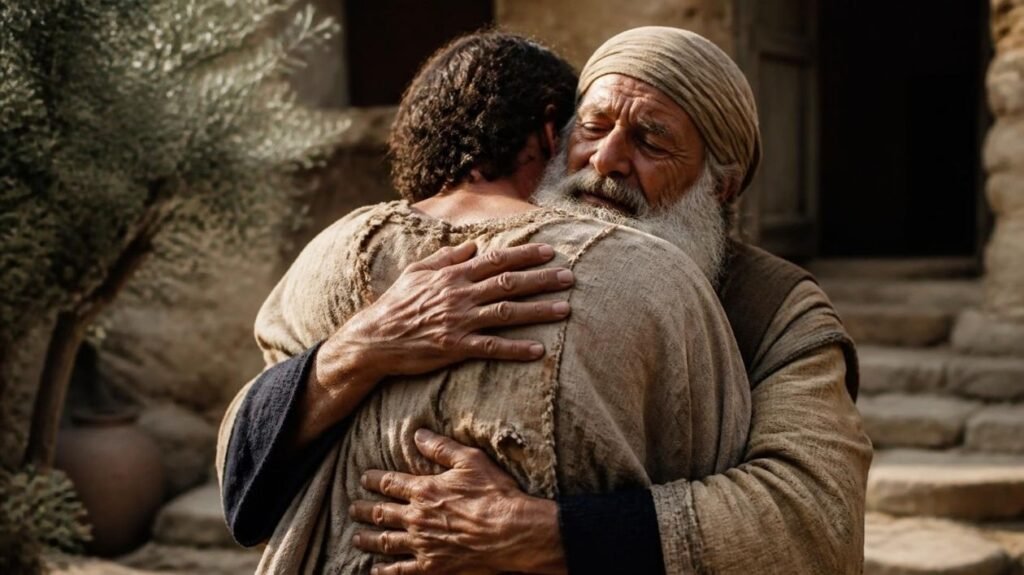
Instead, the father waited. Every single day, he scanned the horizon, hoping to see his son’s silhouette. He endured the whispers of the village, the judgment of his older son, and the crushing grief of a parent whose child has chosen destruction.
“But while he was still a long way off, his father saw him and was filled with compassion for him; he ran to his son, threw his arms around him and kissed him” (Luke 15:20).
The son was restored. The celebration was extravagant.
The Lesson for You
This story is ultimately about God’s patience with you. No matter how far you have wandered, no matter how many mistakes you have made, the Father is scanning the horizon for you. And if you are waiting for a loved one to come home, take heart.
The God who never gives up on His children is working on their heart right now.
11. Jesus: 30 Years of Hidden Preparation
The Waiting Period: 30 years.
Jesus Christ, the Creator of the universe, the King of Kings, lived in complete obscurity for three decades before beginning His public ministry. He grew up in a small, unremarkable town. He worked with His hands as a carpenter. He obeyed His earthly parents. He lived an ordinary life.
Imagine knowing your identity and mission from eternity past, yet choosing to live in limitation, submission, and hiddenness for 30 years. Jesus did not rush. He did not force His timeline. He waited for the Father’s perfect moment.
At age 30, Jesus stepped into the Jordan River, was baptized by John, and the heavens tore open. The Holy Spirit descended like a dove, and the Father’s voice thundered:
“This is my Son, whom I love; with him I am well pleased” (Matthew 3:17).
Three years of ministry followed, and the world was never the same.
The Lesson for You
If the Son of God was willing to wait 30 years, you can trust God with your timeline. Your “ordinary” season is not wasted.
Every act of hidden obedience, every quiet morning of faithfulness, every moment you choose to trust when no one is watching—God sees it all. Preparation is not procrastination. It is the foundation of your future.
What These 11 Stories Teach Us About Waiting
When you step back and look at these 11 lives together, powerful patterns emerge:
1. God’s Timing Is Always Perfect. Abraham waited 25 years. Joseph waited 13 years. Moses waited 40 years. Jesus waited 30 years. Not one of them was late. “He has made everything beautiful in its time” (Ecclesiastes 3:11).
2. Waiting Builds Character. “Suffering produces perseverance; perseverance, character; and character, hope” (Romans 5:3-4). God is more interested in who you are becoming than in what you are waiting for.
3. Faith Is Active, Not Passive. Every person on this list continued to obey, serve, and worship while they waited. Biblical patience is not sitting still; it is moving forward in faith even when you cannot see the finish line.
4. God Is Working Behind the Scenes. Joseph could not see how the pit connected to the palace. Ruth could not see how gleaning connected to the genealogy of Christ. Trust the Author even when you cannot read the plot.
5. The Breakthrough Is Always Worth the Wait. Every single story ended in redemption, restoration, and purpose. Your story will, too.
How to Wait Well on God: 5 Practical Steps
1. Stay Rooted in Scripture. Meditate on God’s promises daily. Let His Word drown out the lies of fear and impatience.
2. Pray Honestly. Bring your frustration, your tears, and your questions to God. He is not fragile. He wants your raw heart, not your polished prayers.
3. Serve Where You Are. Do not put your life on hold. Joseph served in prison. Ruth gleaned in the fields. Your current assignment matters, even if it feels small.
4. Guard Against Bitterness. Unresolved waiting can breed resentment. Choose forgiveness daily. Protect your heart from cynicism.
5. Remember You Are in Good Company. Abraham, Joseph, Moses, David, Hannah, and Jesus all waited. If God made them wait, you are not being punished. You are being prepared.
Frequently Asked Questions (FAQ)
Q1: What is the longest someone waited in the Bible?
A: Some of the longest recorded waits include Moses (40 years in the wilderness), Abraham (25 years for Isaac), and the Israelites (430 years in Egypt before deliverance). However, the length of the wait never diminished God’s faithfulness to fulfill His promises.
Q2: How long did Joseph wait in prison?
A: Joseph spent approximately 13 years total from being sold into slavery at age 17 to his release from prison at age 30. This included time in Potiphar’s house and roughly 2-3 years in an Egyptian prison, where he was falsely accused and forgotten.
Q3: What does the Bible say about patience during hard times?
A: Scripture commands believers to “Be joyful in hope, patient in affliction, faithful in prayer” (Romans 12:12). God uses suffering to produce perseverance, character, and unshakeable hope (Romans 5:3-4). He is present in the pain and faithful to bring restoration.
Q4: How do I know if I’m waiting on God or just being passive?
A: Biblical patience is active, not passive. Signs of healthy waiting include continued obedience, persistent prayer, serving others, and trusting God’s character. Impatience often shows up as anxiety, forcing outcomes, or bitterness.
Q5: Can waiting on God be a form of worship?
A: Absolutely. Waiting demonstrates deep trust in God’s sovereignty and goodness. When you choose to wait with faith and hope instead of demanding your own way, you are declaring that God is worthy of your trust and that His timing is superior to yours.
Conclusion
If you are in a waiting season right now, I want you to hear this with every fiber of your being: God has not forgotten you.
Every person in these 11 stories felt abandoned, confused, and exhausted at some point during their wait. Abraham questioned. Joseph wept. Job screamed. David hid in caves. Hannah sobbed in the temple. Mary faced shame. Jesus lived in obscurity.
And yet, every single one of them saw the faithfulness of God.
“He who began a good work in you will carry it on to completion until the day of Christ Jesus” (Philippians 1:6).
Your waiting has purpose. Your pain is not pointless. Your story is not over.
A Prayer for Your Waiting Season
Lord, I am tired of waiting. My heart aches, my faith wavers, and my patience is thin. But I choose to trust You today. Strengthen my hands. Renew my hope. Remind me that You are not slow—You are strategic. Help me to wait well, to serve faithfully, and to worship boldly even in the wilderness. I believe my breakthrough is coming. In Jesus’ mighty name, Amen.
Which of these 11 stories resonated most deeply with your current season? Share your thoughts in the comments below, and tag a friend who needs this encouragement today.