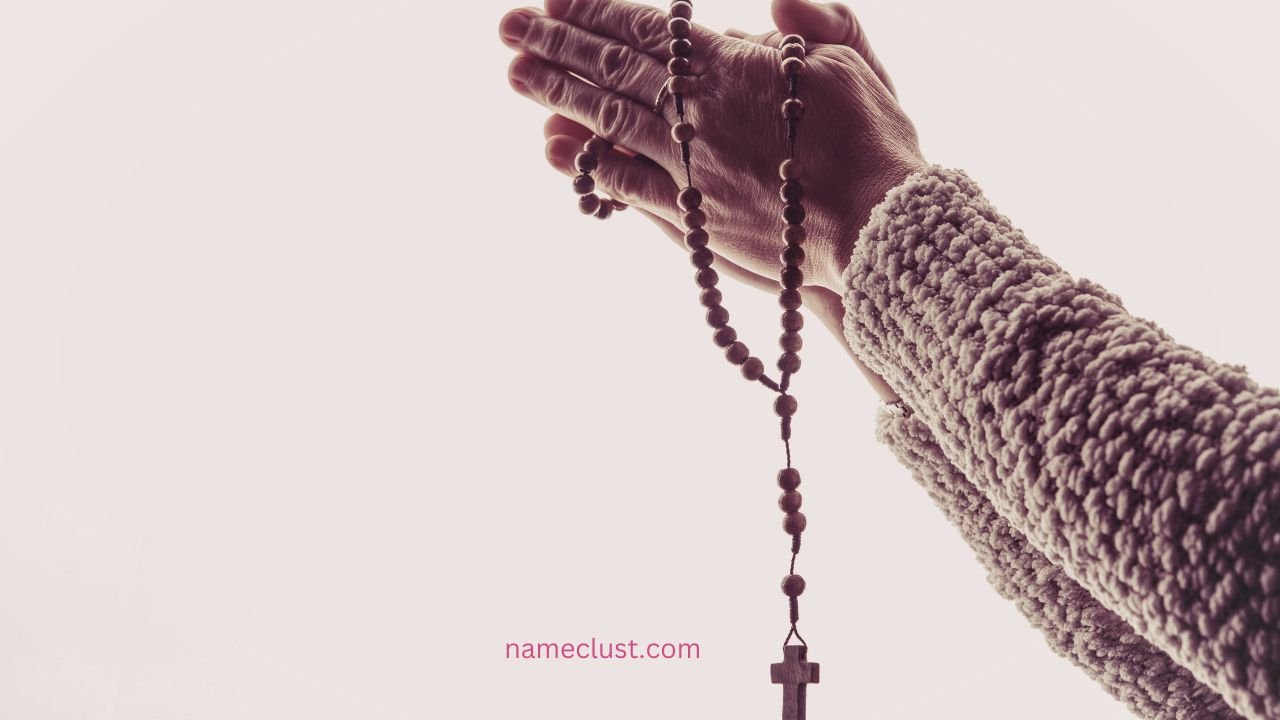
The Rosary is one of the most prayed and least explained devotions in all of Catholic life.
Most Catholics who pray it learned it in pieces — a grandmother’s hands moving the beads, a parish group praying it together before Mass, a hospital room where someone was sick and a Rosary appeared in the bedside drawer. The prayers were absorbed before they were understood. The mysteries were named but not always entered. The rhythm became familiar before the meaning did.
And yet. The Rosary has persisted across eight centuries of Catholic life not because it is easy to understand but because it is genuinely powerful when it is genuinely prayed. St. John Paul II called it “a prayer of peace” and “a contemplative prayer.” St. Louis de Montfort said it summed up the whole Gospel. Pope Francis has asked Catholics to pray it daily during times of world crisis. The saints who left the most lasting marks on the Church were almost uniformly devoted to it.
This article gives you everything the Rosary contains — every prayer, full text, with a brief explanation of where it comes from and what it means; all twenty mysteries across the four sets; the weekly schedule; and a step-by-step guide for those who are just beginning or returning. Whether you have prayed the Rosary for decades or you are holding a set of beads for the first time, come in. The Rosary belongs to everyone willing to bring their heart to it.
What the Rosary Is
The Rosary is a form of contemplative prayer that holds two things together simultaneously — vocal prayer and meditative prayer. The vocal prayers (the Our Father, the Hail Mary, the Glory Be) are repeated in a specific sequence. While the lips are occupied with the familiar words, the mind and heart are drawn into meditation on twenty pivotal events from the lives of Jesus and Mary — called the Mysteries. The repetition is not the point; it is the vehicle. The Hail Mary said fifty times in a single Rosary is not fifty separate petitions — it is a gentle, rhythmic river that carries the soul into deeper meditation on who Christ is and what He has done.
The Rosary is also fundamentally Christocentric. Although the Hail Mary is addressed to Mary, the object of every mystery is Jesus — His Incarnation, His public ministry, His Passion, His Resurrection, His gifts to the Church. Mary’s role is that of the disciple who was closest to Him — who watched the Annunciation from the inside, who stood at the foot of the Cross, who was present at Pentecost. When we meditate on the mysteries with Mary, we are following the most attentive witness. As St. John Paul II wrote: “The Rosary is my favourite prayer. A marvellous prayer! Marvellous in its simplicity and its depth.”
The Structure of the Rosary
A single Rosary consists of five decades. Each decade is one mystery, prayed with one Our Father, ten Hail Marys, one Glory Be, and (optionally) one Fatima Prayer. The full Rosary begins with opening prayers on the short strand of beads — the Sign of the Cross, the Apostles’ Creed, one Our Father, three Hail Marys for faith, hope, and charity, and one Glory Be — before the five decades begin. It concludes with the Hail Holy Queen and a closing prayer.
There are four sets of mysteries, each containing five: the Joyful, the Luminous, the Sorrowful, and the Glorious. One set is prayed per Rosary. The traditional weekly schedule assigns specific mysteries to specific days, though this is a guide rather than a requirement.
The Prayers of the Rosary — Full Text
These are the prayers said in every Rosary. Each is ancient, each is rooted in Scripture, and each carries the weight of centuries of Catholic prayer behind it.
1. The Sign of the Cross
Every Rosary begins and ends with the Sign of the Cross — the most fundamental profession of Catholic faith, made in the name of the Holy Trinity.
In the name of the Father, and of the Son, and of the Holy Spirit. Amen.
2. The Apostles’ Creed
Prayed on the crucifix, the Apostles’ Creed is one of the oldest summaries of Christian faith — rooted in the baptismal formula of the early Church, drawn from the Gospels, the letters of Paul, and the Acts of the Apostles. Beginning the Rosary with the Creed grounds every subsequent prayer in the core doctrines of what Catholics believe. It is not a warm-up — it is a full statement of faith before entering into meditation on the events that make that faith possible.
I believe in God, the Father almighty, Creator of heaven and earth, and in Jesus Christ, His only Son, our Lord, who was conceived by the Holy Spirit, born of the Virgin Mary, suffered under Pontius Pilate, was crucified, died and was buried; He descended into hell; on the third day He rose again from the dead; He ascended into heaven, and is seated at the right hand of God the Father almighty; from there He will come to judge the living and the dead. I believe in the Holy Spirit, the holy Catholic Church, the communion of saints, the forgiveness of sins, the resurrection of the body, and life everlasting. Amen.
3. The Our Father (The Lord’s Prayer)
Prayed at the beginning of each decade — once on the large bead — the Our Father comes directly from Jesus Himself in Matthew 6:9-13, when His disciples asked Him how to pray. It is the only prayer in the Rosary that Jesus gave us in His own words. Praying it before each mystery acknowledges that the meditation we are about to enter — however Mary’s life frames it — is ultimately directed to the Father through the Son.
Our Father, who art in heaven, hallowed be thy name; thy kingdom come; thy will be done on earth as it is in heaven. Give us this day our daily bread; and forgive us our trespasses as we forgive those who trespass against us; and lead us not into temptation, but deliver us from evil. Amen.
4. The Hail Mary
The heart of the Rosary. Prayed ten times per decade — fifty times in a full five-decade Rosary — the Hail Mary is built from two scriptural greetings. The first half comes almost word-for-word from the angel Gabriel’s greeting to Mary at the Annunciation (Luke 1:28) and Elizabeth’s greeting at the Visitation (Luke 1:42). The second half — “Holy Mary, Mother of God, pray for us sinners now and at the hour of our death” — was added by the Church over time and confirmed by Pope Pius V in the 16th century.
The repetition is deliberate. Each Hail Mary is not a separate prayer so much as a bead on a rosary of meditation — the familiar words creating a rhythmic space in which the mystery is held, turned, and entered. The Hail Mary said with full attention while meditating on, for example, the Agony in the Garden is a different prayer from the same words said while meditating on the Annunciation — because the words carry the meditation the way a river carries a boat.
Hail Mary, full of grace, the Lord is with you; blessed are you among women, and blessed is the fruit of your womb, Jesus. Holy Mary, Mother of God, pray for us sinners now and at the hour of our death. Amen.
5. The Glory Be (The Doxology)
Prayed at the end of each decade, the Glory Be is the ancient doxology of the Church — an act of praise addressed to the Holy Trinity that has been prayed at the end of the Psalms since the fourth century. After ten Hail Marys meditating on a mystery of Christ’s life, the Glory Be lifts the prayer from the historical event into eternal praise — acknowledging that every mystery, however embedded in time and human flesh, participates in the eternal life of the Trinity.
Glory be to the Father, and to the Son, and to the Holy Spirit; as it was in the beginning, is now, and ever shall be, world without end. Amen.
6. The Fatima Prayer
Optional but widely used, the Fatima Prayer is prayed after the Glory Be at the end of each decade. It was given by Our Lady to the three shepherd children of Fatima, Portugal on July 13, 1917, during one of her appearances. It is a prayer of intercession — for sinners, for souls in most need of mercy — and its placement at the close of each decade makes every decade a moment of intercessory offering as well as personal meditation.
O my Jesus, forgive us our sins, save us from the fires of hell, and lead all souls to heaven, especially those in most need of your mercy. Amen.
7. The Hail Holy Queen (The Salve Regina)
The Rosary closes with the Salve Regina — one of the most beautiful and ancient of all Marian prayers, dating to the eleventh century and attributed to several authors including Herman of Reichenau. For eight hundred years, monks have ended their day by singing these words. It is addressed to Mary under the title “Queen” — a queenship that flows from her Son’s Kingship — and describes the Church’s pilgrimage through a “valley of tears” toward the moment when she will finally “show unto us the blessed fruit of your womb, Jesus.”
Hail, holy Queen, mother of mercy, our life, our sweetness, and our hope. To you we cry, poor banished children of Eve; to you we send up our sighs, mourning and weeping in this valley of tears. Turn, then, most gracious advocate, your eyes of mercy toward us; and after this, our exile, show unto us the blessed fruit of your womb, Jesus. O clement, O loving, O sweet Virgin Mary.
V. Pray for us, O holy Mother of God. R. That we may be made worthy of the promises of Christ.
8. The Concluding Prayer
After the Salve Regina, the Rosary closes with this prayer — which summarises what the entire devotion is asking: that by meditating on the mysteries, we might both imitate them in our lives and receive what they promise for our souls.
O God, whose only-begotten Son, by His life, death, and resurrection, has purchased for us the rewards of eternal life; grant, we beseech Thee, that meditating upon these mysteries of the most holy Rosary of the Blessed Virgin Mary, we may imitate what they contain and obtain what they promise, through the same Christ our Lord. Amen.
The Twenty Mysteries of the Rosary
The mysteries are the soul of the Rosary. Without them, the vocal prayers are a devotion. With them, the Rosary becomes contemplative prayer — an entering into the life of Christ with the assistance of the one who was present for all of it. Each mystery has traditionally been associated with a specific spiritual fruit: a virtue or grace that the meditation is said to produce in the one who enters it faithfully.
The Joyful Mysteries
Traditionally prayed on Mondays and Saturdays
The Joyful Mysteries meditate on the Incarnation — the astonishing mystery of God becoming flesh, told through the events of Mary’s pregnancy and the early life of her Son. Each mystery is rooted in the Gospel of Luke. They are called joyful not because they are easy or painless — the Presentation involves Simeon’s prophecy of a sword piercing Mary’s soul — but because they all radiate the joy that belongs to the in-breaking of God into the world.
1. The Annunciation — The angel Gabriel appears to Mary in Nazareth and announces that she will conceive and bear the Son of God. Mary asks how this is possible, is told that nothing is impossible with God, and says yes. Spiritual fruit: Humility. Mary’s yes is the most consequential act of human humility in history — the creature making room for the Creator. Scripture: Luke 1:26-38.
2. The Visitation — Mary travels to visit her cousin Elizabeth, who is pregnant with John the Baptist. At the sound of Mary’s greeting, John leaps in the womb and Elizabeth is filled with the Holy Spirit. Mary’s response is the Magnificat — the greatest song of praise in Scripture. Spiritual fruit: Love of neighbour. Scripture: Luke 1:39-56.
3. The Nativity — Jesus is born in Bethlehem, wrapped in swaddling clothes, laid in a manger because there was no room for them at the inn. Angels announce the birth to shepherds in the fields. Spiritual fruit: Poverty of spirit. God enters the world in the most humble of circumstances — a reminder that He has never measured entrance by human standards of importance. Scripture: Luke 2:1-20.
4. The Presentation — Mary and Joseph bring the infant Jesus to the Temple in Jerusalem, as the Law of Moses required for a firstborn son. Simeon and Anna recognise the child as the Messiah. Simeon tells Mary that a sword will pierce her own soul. Spiritual fruit: Obedience. Scripture: Luke 2:22-40.
5. The Finding of Jesus in the Temple — When Jesus is twelve, Mary and Joseph lose Him for three days during the pilgrimage to Jerusalem. They find Him in the Temple, sitting among the teachers, astonishing them with His understanding. He tells them He must be about His Father’s business. Spiritual fruit: Joy in finding Jesus. Scripture: Luke 2:41-52.
The Luminous Mysteries (Mysteries of Light)
Traditionally prayed on Thursdays
The Luminous Mysteries were added by St. John Paul II in his apostolic letter Rosarium Virginis Mariae (2002). They fill the gap in the Rosary’s meditations — the thirty years of Jesus’s hidden life gave way to the Joyful Mysteries, but the three years of His public ministry had no set of mysteries. The Luminous mysteries cover the major events of that ministry, from His Baptism to the Last Supper.
1. The Baptism of Jesus in the Jordan — Jesus is baptised by John, the heavens open, the Spirit descends like a dove, and the Father’s voice declares: “This is my beloved Son, in whom I am well pleased.” The public ministry begins with a divine proclamation of identity. Spiritual fruit: Openness to the Holy Spirit. Scripture: Matthew 3:13-17.
2. The Wedding at Cana — At a wedding in Cana, the wine runs out. Mary tells Jesus. He performs His first miracle — turning water into wine at His mother’s quiet request. Mary’s last recorded words in Scripture are addressed to the servants, and by extension to every disciple: “Do whatever he tells you.” Spiritual fruit: To Mary’s intercession. Scripture: John 2:1-12.
3. The Proclamation of the Kingdom — Jesus travels through Galilee proclaiming the Gospel, calling disciples, healing the sick, forgiving sins, and teaching that the Kingdom of God is at hand. He calls all people to conversion and belief. Spiritual fruit: Repentance and trust in God. Scripture: Mark 1:14-15; Matthew 5-7.
4. The Transfiguration — Jesus takes Peter, James, and John up a high mountain. He is transfigured before them — His face shining like the sun, His garments becoming dazzling white. Moses and Elijah appear. The Father’s voice again declares: “This is my beloved Son.” Spiritual fruit: Desire for holiness. Scripture: Matthew 17:1-9.
5. The Institution of the Eucharist — At the Last Supper, the night before His Passion, Jesus takes bread and wine, gives thanks, and gives them to His disciples with the words: “This is my Body… This is my Blood.” He commands them to do this in His memory. The gift of the Eucharist is given on the eve of Calvary — the source and summit of Catholic life, established in the shadow of the Cross. Spiritual fruit: Adoration. Scripture: Luke 22:14-20.
The Sorrowful Mysteries
Traditionally prayed on Tuesdays and Fridays
The Sorrowful Mysteries walk through the Passion of Christ — from the Garden of Gethsemane to the death on Calvary. They are the most demanding of the mysteries to meditate on, because they require the person praying to stay present to suffering they did not cause, to enter into the specific cost of the salvation that is otherwise only received as a gift. St. John Paul II wrote that in the Sorrowful Mysteries “Mary is united with Jesus in his agony” — and we are invited to join her in that vigil.
1. The Agony in the Garden — Jesus prays in Gethsemane while the disciples sleep. He sweats blood. He asks the Father to take the cup from Him and then surrenders: “Not my will, but yours be done.” Judas arrives with the soldiers. Spiritual fruit: Conformity to God’s will. Scripture: Matthew 26:36-46.
2. The Scourging at the Pillar — Pilate hands Jesus over to be flogged. Roman soldiers carry out the punishment. Scripture gives no details; the tradition has always understood it as severe. The God who took flesh accepts what flesh is capable of absorbing. Spiritual fruit: Mortification of the senses. Scripture: Matthew 27:26; John 19:1.
3. The Crowning with Thorns — The soldiers weave a crown of thorns and press it onto Jesus’s head. They put a reed in His right hand and a purple robe on His shoulders. They mock Him as King of the Jews. The scene is one of the most brutally ironic in all of Scripture — the actual King of the universe mocked in the costume of kingship. Spiritual fruit: Moral courage. Scripture: Matthew 27:27-31.
4. The Carrying of the Cross — Jesus carries the cross through the streets of Jerusalem toward Golgotha. He falls. Simon of Cyrene is compelled to help. Veronica wipes His face. He meets His mother. He speaks to the weeping women of Jerusalem. Every detail of this road has been walked in meditation by every generation of the Church. Spiritual fruit: Patience in suffering. Scripture: Luke 23:26-32; John 19:17.
5. The Crucifixion — Jesus is nailed to the Cross. He speaks seven times from it. He forgives the penitent thief. He commends His mother to the Beloved Disciple. He cries out that He is forsaken. He gives up His spirit. The soldier pierces His side and water and blood flow out. Mary stands at the foot of the Cross. It is finished. Spiritual fruit: Perseverance. Scripture: Matthew 27:33-56; John 19:18-37.
The Glorious Mysteries
Traditionally prayed on Wednesdays and Sundays
The Glorious Mysteries carry the prayer beyond the Passion into the Resurrection, the Ascension, Pentecost, and finally into the life of Mary after the Resurrection — her Assumption into heaven and her Coronation as Queen. They are the completion of the story and the beginning of the Church’s own story. They are the mysteries that make it possible to pray the Sorrowful Mysteries without despair — because death is not the end, the tomb is empty, and the Spirit has been poured out.
1. The Resurrection — On the first day of the week, the tomb is empty. The stone is rolled away. The angel tells the women: “He is not here; He has been raised.” Jesus appears to Mary Magdalene, to the disciples on the road to Emmaus, to the Eleven in the upper room. The Resurrection is the central event of the Christian faith — without it, Paul says, everything is empty. Spiritual fruit: Faith. Scripture: Luke 24:1-12; John 20:1-18.
2. The Ascension — Forty days after the Resurrection, Jesus leads the disciples out to Bethany, blesses them, and is taken up into heaven. He commands them to wait in Jerusalem for the promised Holy Spirit and to go out as witnesses to the ends of the earth. The Ascension is not the ending of the story but the changing of its mode — Jesus goes to prepare a place, to intercede at the right hand of the Father. Spiritual fruit: Hope of heaven. Scripture: Acts 1:6-11; Luke 24:50-53.
3. The Descent of the Holy Spirit at Pentecost — The disciples are gathered in the upper room with Mary when a sound like a rushing wind fills the house and tongues of fire rest on each of them. They are filled with the Holy Spirit and begin to speak in other languages. Peter goes out and preaches to the crowd and three thousand are baptised. The Church is born. Spiritual fruit: Love of God. Scripture: Acts 2:1-41.
4. The Assumption of Mary — At the end of her earthly life, Mary is taken body and soul into heaven by God. This is a defined dogma of the Catholic faith, proclaimed by Pope Pius XII in 1950. The Assumption is the prelude to the Resurrection of all the faithful — Mary’s bodily glorification is what awaits all who die in Christ. Spiritual fruit: Grace of a happy death. Scripture: Revelation 12:1; Luke 1:49.
5. The Coronation of Mary as Queen of Heaven and Earth — Mary, assumed into heaven, is crowned as Queen — a title that flows from her Son’s Kingship and her unique participation in His redemptive work. This final mystery of the Rosary places the person praying at the culmination of the story: all creation redeemed, the first and greatest disciple glorified, the Kingdom of God established in its fullness. Spiritual fruit: Trust in Mary’s intercession. Scripture: Revelation 12:1; Psalm 45:9-17.
The Weekly Schedule for the Mysteries
This is the traditional schedule recommended by St. John Paul II in Rosarium Virginis Mariae (2002). It is a guide rather than a law — the Rosary is always well prayed regardless of which mysteries are used on a given day.
Monday: Joyful Mysteries Tuesday: Sorrowful Mysteries Wednesday: Glorious Mysteries Thursday: Luminous Mysteries Friday: Sorrowful Mysteries Saturday: Joyful Mysteries Sunday: Glorious Mysteries
Exceptions: During Advent and Christmas, the Joyful Mysteries may replace the Glorious on Sundays. During Lent, the Sorrowful Mysteries may replace the Glorious on Sundays.
How to Pray the Rosary — Step by Step
If you are new to the Rosary or returning to it after a long absence, this is where to begin. You do not need to do it perfectly. You do not need to feel anything particular while you pray it. You need only to begin, to follow the structure, and to let the rest develop over time.
Step 1. Begin with the Sign of the Cross, holding the crucifix.
Step 2. On the crucifix, pray the Apostles’ Creed.
Step 3. On the first large bead, pray the Our Father.
Step 4. On each of the three small beads, pray a Hail Mary — traditionally offered for an increase in faith, hope, and charity.
Step 5. On the chain before the first decade, pray the Glory Be.
Step 6. Announce the first mystery. (For example: “The First Joyful Mystery — The Annunciation.”) Hold the event in your mind for a moment before beginning to pray.
Step 7. On the large bead at the beginning of the first decade, pray the Our Father.
Step 8. On each of the ten small beads, pray a Hail Mary, meditating on the mystery announced.
Step 9. After the ten Hail Marys, pray the Glory Be, and optionally the Fatima Prayer.
Step 10. Repeat Steps 6 through 9 for the second, third, fourth, and fifth mysteries.
Step 11. After the fifth decade, pray the Hail Holy Queen.
Step 12. Pray the Concluding Prayer: “O God, whose only-begotten Son…”
Step 13. Make the Sign of the Cross. The Rosary is complete.
A single five-decade Rosary takes approximately 15-25 minutes at a meditative pace. If you only have a few minutes, praying a single decade — one Our Father, ten Hail Marys, one Glory Be, one Fatima Prayer — is a complete and worthy act of prayer.
Questions People Ask About the Rosary
Isn’t the Rosary “vain repetition” that Jesus warned against?
The “vain repetition” Jesus warned against in Matthew 6:7 refers to the pagan practice of repeating divine names or magic formulas to compel the gods into action — the belief that length or volume of prayer was what made it effective. The repetition of the Rosary is the opposite of this. The Hail Mary repeated fifty times is not an attempt to wear God down with volume. It is a rhythmic vehicle for contemplation — the way a walker’s repeated footsteps create the conditions for the mind to roam freely, or the way a musician’s scales open the door to music that transcends the notes. The repetition is the method of entering into prayer, not the prayer itself.
Are Catholics worshipping Mary when they pray the Hail Mary?
No. The Catholic Church is unambiguous that worship belongs to God alone — the Father, Son, and Holy Spirit. Praying to Mary is asking for her intercession — asking her to pray for us, just as one might ask a friend or family member to pray for a need. The theological category is intercession, not worship. The Hail Mary itself contains no act of worship; it greets Mary, identifies her as the Mother of God, and asks her to pray for us. The difference between praying to God and asking Mary to pray is the same as the difference between asking God directly for something and asking a holy person to join their prayer to yours.
Do I need rosary beads to pray the Rosary?
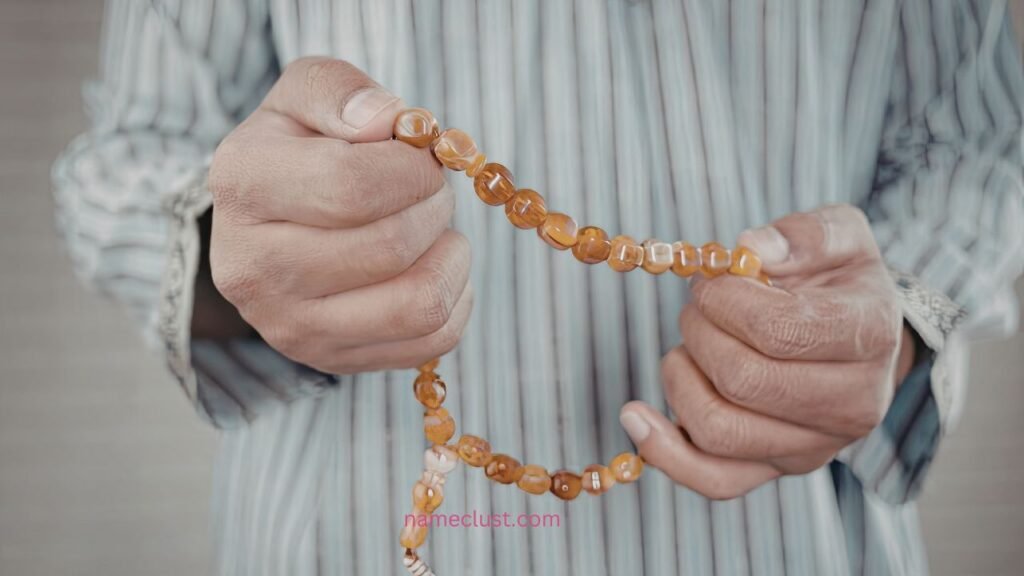
No. Rosary beads are an aid to counting, not a requirement for the prayer. You can count decades on your fingers, use a simple prayer rope, or keep track on a printed guide. The beads free the mind to focus on the mysteries rather than on counting — but they are a tool, and tools are optional when the work can be done without them.
What if my mind wanders during the Rosary?
This is universal and normal. St. Teresa of Avila — one of the great doctors of prayer in the history of the Church — said the mind cannot be perfectly focused during prayer and that the effort to refocus is itself the prayer. When your attention drifts during the Rosary, gently return it to the mystery at hand. You are not failing at prayer when your mind wanders; you are succeeding at prayer when you notice the wandering and return. That act of return, repeated however many times is needed, is precisely what the contemplative tradition calls prayer.
Is the Rosary in the Bible?
The devotion of the Rosary as a structured prayer is not in the Bible — it developed in the Church over many centuries. But the individual prayers of the Rosary are deeply biblical: the Hail Mary draws from Luke 1, the Our Father from Matthew 6 and Luke 11, the Glory Be from ancient liturgical tradition rooted in Trinitarian theology found throughout the New Testament, and the twenty mysteries are all drawn directly from the Gospels and Acts. What the Rosary provides is a structured way to meditate on the gospel narratives — it is a school of gospel contemplation shaped by the Church’s tradition.
Can non-Catholics pray the Rosary?
Yes. The Rosary belongs formally to the Catholic tradition, but there is nothing in it that requires Catholic membership to benefit from it. Many non-Catholics find the meditative structure of the Rosary — the repetitive prayer carrying the mind into gospel contemplation — deeply valuable. The mysteries are all from the gospels shared by all Christians. Anyone willing to pray it with the openness it deserves is welcome to begin.
A Final Word
The Rosary is not a difficult prayer. It is a demanding one. The difficulty is not in learning the words — they are few and simple and you will know them from memory very quickly. The demand is in actually entering the mysteries rather than reciting past them. In holding the Agony in the Garden for ten Hail Marys without the mind drifting to tomorrow’s schedule. In sitting with the Resurrection long enough to let it be as astonishing as it actually is. In returning, again and again, to a prayer that does not change but that reveals more of itself the longer and more faithfully it is prayed.
St. John Paul II, who prayed the Rosary daily for most of his life, wrote in Rosarium Virginis Mariae: “The Rosary, though clearly Marian in character, is at heart a Christocentric prayer. In the sobriety of its elements, it has all the depth of the Gospel message in its entirety… With the Rosary, the Christian people sit at the school of Mary and are led to contemplate the beauty on the face of Christ.”
Begin wherever you are. With one decade if five feels like too many. With one mystery held imperfectly and returned to when the mind drifts. With a grandmother’s rosary found in a drawer or a new set of beads bought precisely for this purpose. The prayer does not require perfection. It only requires beginning — and the willingness to return tomorrow and begin again.
“The Rosary is my favourite prayer. A marvellous prayer! Marvellous in its simplicity and its depth.” — St. John Paul II
Pick up the beads. Begin with the Sign of the Cross. Enter the mystery. The rest will come.