
Some Bible stories are familiar because we heard them as children. We remember Noah and the ark, David and Goliath, Daniel among the lions. But familiarity can make us overlook how much is happening in these accounts. They speak about grief, power, loyalty, injustice, fear, repentance, leadership, and the difficult work of trusting God.
Adults do not come to Scripture with only one kind of question. We may be trying to make a wise decision, carrying disappointment, rebuilding after a mistake, caring for someone who depends on us, or wondering how faith should shape our conduct at work and at home. The lives recorded in the Bible meet us in these complicated places, not because every story offers an easy answer, but because they show us people encountering the living God.
The 20 accounts of these Bible stories for Adults below are arranged around some of those real-life themes. Some are stories of courage; others are about people who were overlooked, corrected, restored, or asked to show mercy. Read the passages themselves as you go. The short accounts here are guides, not substitutes for Scripture.
When faith asks us to take a step.
Let’s take a look at some of these stories below.
1. Noah: obedience when the world around him was broken (Genesis 6:5–22)
Genesis does not introduce Noah into a peaceful world. It describes a society filled with corruption and violence (Genesis 6:5–22). In that setting, Noah is described as righteous and as one who walked with God. When God instructed him to build an ark, Noah acted on what he had been told. The flood narrative is difficult and sobering, but it is also a story about judgment, preservation, and the seriousness of human evil. Hebrews 11:7 later remembers Noah’s faith.
It is tempting to turn Noah into a simple slogan about being different. The deeper challenge is to consider what obedience looks like when dishonesty or cruelty has become normal. Faithfulness may mean refusing to join in a harmful workplace practice, telling the truth when a lie would be convenient, or protecting people entrusted to our care. The story does not promise that doing right will make life painless; it shows Noah responding to God in a deeply broken time.
2. Abraham: learning to trust without seeing the whole road (Genesis 12:1–9)
In Genesis 12:1–9, God tells Abram to leave his country and go to a land that He will show him. The promise is larger than a change of address: God says that Abram will become a great nation and that all families of the earth will be blessed through him. Abram goes, though he cannot see the whole future. The chapters that follow include delay, fear, poor decisions, and renewed promises. Abraham’s life is not a picture of flawless faith; it is a long story of learning to trust the God who called him.
Many adult decisions have this same tension. We may know the next responsible step without knowing how everything will turn out. Abraham’s story encourages trust, but it should not be used to baptise every personal desire as a command from God. Prayer, Scripture, wise counsel, and care for our responsibilities still matter.
3. Moses: the reluctant man at the burning bush (Exodus 3:1–15)
Moses was looking after sheep when he saw a bush that burned without being consumed. From that encounter came a task that seemed far beyond him: return to Egypt and lead the Israelites out of slavery (Exodus 3:1–15). Moses raised questions about his ability and about whether the people would listen. God did not answer by pretending the task was small. He promised His presence and gave Moses help, including Aaron.
This is a useful story for anyone who feels inadequate when faced with responsibility. It does not teach that preparation is unnecessary. Moses had to go, speak, listen, and keep leading through conflict. But his confidence was not the foundation of the mission. God’s presence was.
4. Rahab: a surprising act of faith in Jericho
When the Israelite spies entered Jericho, Rahab hid them and helped them escape (Joshua 2). She explained that she had heard what the Lord had done and had come to recognise His authority. In return, she asked that her family be spared. The agreement was honoured when Jericho fell (Joshua 6:22–25). The New Testament later points to Rahab as an example of faith expressed through action (Hebrews 11:31; James 2:25).
Rahab’s place in the biblical story challenges assumptions about who can turn towards God. Her past and her position did not put her beyond the reach of grace. Her actions belong to a specific moment in Israel’s history, so we should not turn them into a general permission to deceive. What the New Testament highlights is that her trust was not merely an opinion; it moved her to act.
5. Gideon: courage that grew in the middle of fear
Israel was being oppressed by Midian when the angel of the Lord called Gideon to deliver the people. Gideon questioned the call and asked for reassurance (Judges 6). God then reduced the size of his army so that Israel could not claim the victory as its own achievement (Judges 7). The unusual battle is not a formula for guaranteed success whenever we have fewer resources. It is a story about God delivering Israel and refusing to let the people mistake military strength for the source of their rescue.
Gideon’s hesitation also makes the story feel close to ordinary life. Courage is not always the absence of fear. Sometimes it is taking the next obedient step while still asking questions and depending on God.
People who were seen, heard, and welcomed

6. Hagar: the woman who named the God who saw her
Hagar’s story is easy to pass over, yet Genesis gives it space. She was an Egyptian servant in Abraham and Sarah’s household. After conflict arose, she fled into the wilderness, where the angel of the Lord found her (Genesis 16:1–16). Hagar responded by naming God as the One who sees her. Later, when she and Ishmael were sent away and their water ran out, God heard the boy and showed Hagar a well (Genesis 21:8–21).
This is not a story to use to tell someone to endure abuse or remain in danger. It is an account that refuses to make an overlooked woman invisible. God hears the distress of Hagar and her child. Churches and families should take the same care to notice people with little power, listen to their accounts, and help them find safety and support.
7. Ruth: love expressed through ordinary faithfulness

Ruth’s story begins with bereavement. Naomi has lost her husband and sons, and Ruth, her Moabite daughter-in-law, chooses to return with her to Bethlehem rather than go back to her own family (Ruth 1). In Bethlehem, Ruth gathers leftover grain so the two women can eat. Boaz notices her, treats her with generosity, and later acts as a family redeemer. Their marriage becomes part of the family line of David.
There is no single dramatic speech that explains Ruth’s faithfulness. Much of it is seen in the ordinary work of staying, travelling, gathering food, and caring for Naomi. Her story reminds us that devotion often looks like practical love over time. It also shows how a community can protect people who are economically vulnerable.
8. Hannah: a prayer that began in tears

Hannah longed for a child and was deeply distressed by the way she was treated. At the house of the Lord, she prayed with such intensity that Eli thought she was drunk. When she explained that she was pouring out her soul before God, he blessed her (1 Samuel 1:1–18). She later gave birth to Samuel and, after he was weaned, brought him to serve the Lord as she had promised. Her song in 1 Samuel 2:1–10 celebrates God’s power and His concern for the lowly.
Hannah’s account gives us language for honest prayer. She did not hide her anguish behind polished religious words. At the same time, we must not turn her experience into a guarantee that every person who prays for a child will receive the same answer. The passage also cautions us against quick judgments: Eli had to listen before he understood what was happening.
9. The Samaritan woman: a conversation that crossed boundaries (John 4:1–42)
Jesus met a Samaritan woman at a well and asked her for a drink (John 4:1–42). Their conversation crossed social and religious boundaries. Jesus spoke with her about living water, addressed the truth of her personal life, and answered her questions about worship and the Messiah. She returned to her town and told others about Him. Many came to hear Jesus because of her testimony.
Jesus neither reduced the woman to her past nor avoided speaking truthfully with her. That combination matters. Christian witness should not be built on humiliation or stereotypes. It should make room for honest questions, dignity, and the good news of Christ.
10. Mary Magdalene: a witness entrusted with the resurrection message

Mary Magdalene appears in the Gospel accounts as a follower of Jesus who had been delivered from evil spirits (Luke 8:1–3). She remained among those who witnessed the crucifixion and went to the tomb after Jesus’ death. In John 20:1–18, she encounters the risen Christ and is sent to tell the disciples. Her grief gives way to the astonishing news that Jesus is alive.
Mary’s place in the resurrection accounts is significant. She is not presented as a background figure; she is entrusted with announcing what she has seen. Her story invites us to consider how Jesus gives dignity and purpose to people whom society may overlook.
When leadership, power, and conviction are tested
Among some of these stories are examples of leadership, powers. lets take a look.
11. Joseph: integrity in a season he did not choose
Joseph’s brothers sold him, and he was taken to Egypt. He served in Potiphar’s household, refused his master’s wife, and was falsely accused and imprisoned (Genesis 37; 39). Even in prison he acted responsibly. Eventually, after interpreting Pharaoh’s dreams, he was placed in authority to prepare Egypt for famine. When his brothers came seeking food, Joseph had the power to take revenge, but the family story moved towards reconciliation (Genesis 45; 50:15–21).
Joseph’s account never calls betrayal or false accusation good. His words in Genesis 50:20 recognise that God worked for good despite the evil his brothers intended. That distinction matters to anyone who has been harmed: forgiveness does not require pretending the harm was acceptable, and reconciliation needs truth and wisdom.
12. David: the courage to face Goliath—and the need to face his own sin
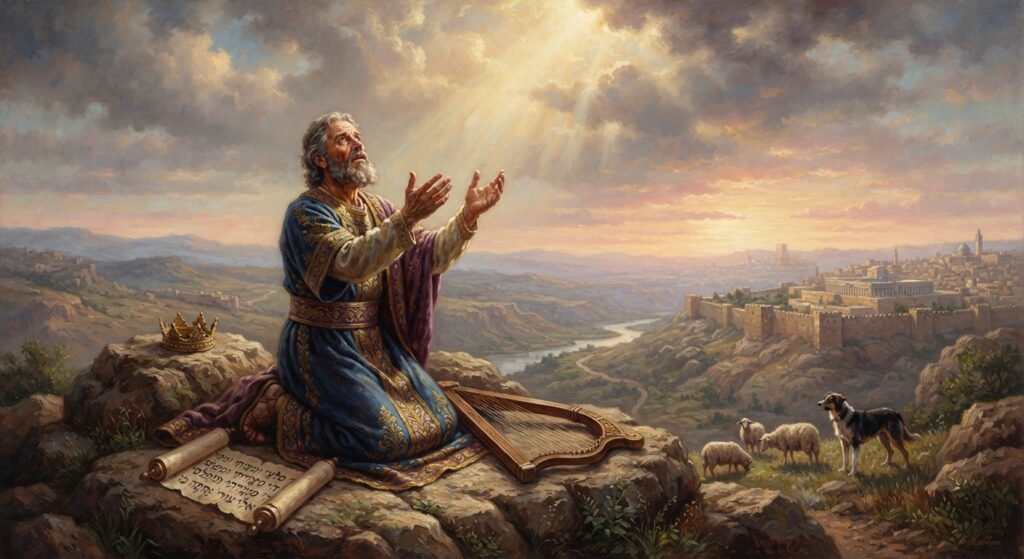
When Goliath challenged Israel, David trusted that the Lord who had delivered him before could deliver him again (1 Samuel 17). It is a memorable account of courage, but it is not the whole story of David. Later, as king, he abused his power in his actions involving Bathsheba and Uriah. Nathan confronted him, and David acknowledged his sin (2 Samuel 11–12; see also Psalm 51).
Keeping both parts of David’s life in view gives us a more honest lesson than treating him only as a hero. Courage is important, but spiritual influence does not make anyone immune to wrongdoing. Those who lead must be accountable. Repentance means facing the truth and accepting responsibility; it does not erase the consequences suffered by others.
13. Elijah: after the great victory came exhaustion
On Mount Carmel, Elijah confronted the prophets of Baal, and the people witnessed the Lord’s answer by fire (1 Kings 18:17–46). Soon afterwards, Jezebel threatened him. Elijah fled into the wilderness, sat down beneath a tree, and asked that his life might end. God’s care began with food and rest. Later, at Horeb, Elijah received renewed direction and learned that he was not the only faithful person left in Israel (1 Kings 19:1–18).
The contrast between Carmel and the wilderness is important. A person can experience a powerful moment and still become exhausted or afraid. The passage does not replace medical care or other practical support, but it challenges the idea that faith means never reaching our limits. Sometimes the next faithful step includes sleep, nourishment, help, and a fresh sense of direction.
14. Nehemiah: prayer that became a rebuilding plan
When Nehemiah heard that Jerusalem’s walls were broken and its people were in distress, he wept, fasted, and prayed (Nehemiah 1). But he did not stop at grief. He asked the king for permission and resources, travelled to Jerusalem, inspected the damage, and organised the people to rebuild. Opposition came, yet the work continued until the wall was completed (Nehemiah 2–6).
Nehemiah gives a strong example of prayer joined to thoughtful action. He did not confuse faith with passivity. He understood the problem, planned carefully, involved others, and responded to threats with discernment. When a family, church, or community faces a problem, prayer can prepare us to act responsibly rather than excuse us from action.
15. Esther: using influence when others are in danger (Esther 2–8)
Esther became queen in Persia, but her position did not protect her people from Haman’s plan to destroy the Jews. Mordecai urged her to approach the king, even though appearing without an invitation could cost her life. Esther asked the Jews to fast, then approached the king and exposed the plot (Esther 2–8). The story remembers her courage, but also the careful preparation and communal support that came before her decision.
Influence is a responsibility. Esther’s story asks what we do when our position gives us an opportunity to protect someone else. That may mean speaking up at work, defending a person who is being treated unfairly, or using access and resources for the good of others.
16. Daniel: convictions that held under pressure
Daniel and his friends were taken into exile and trained for service in Babylon. They faced pressure to adopt practices that conflicted with their convictions. Daniel resolved not to defile himself with the king’s food (Daniel 1); his friends refused to worship the golden image (Daniel 3); and Daniel continued to pray when a law was designed to trap him (Daniel 6). Their faithfulness brought real danger, but God sustained them.
Daniel’s example is not an invitation to be needlessly combative. It is a reminder that convictions are easier to hold when they are formed before a crisis. Adults may face pressure to compromise honesty, worship, or conscience to gain acceptance. Daniel’s life encourages respectful courage without promising a trouble-free path.
17. Jonah: when we want mercy for ourselves but judgment for others (Jonah 1–4)
Jonah received a message to preach against Nineveh, but he fled in the opposite direction. After the storm and the great fish, he went to the city and delivered God’s warning. The people repented, and God showed them mercy. Jonah became angry. He wanted judgment for a city whose people he despised. The book ends with God questioning Jonah’s lack of compassion (Jonah 1–4).
The final chapter makes Jonah’s story more than an adventure about a fish. It asks whether we are glad when mercy reaches people we dislike. We can take wrongdoing seriously and still ask God to free us from bitterness and narrow compassion.
Stories Jesus told and what they expose in us
18. The Good Samaritan: love that stops and gets involved
A religious expert asked Jesus, “Who is my neighbour?” Jesus answered with the story of a man attacked by robbers and left wounded on the road. A priest and a Levite passed by. A Samaritan stopped, treated the man’s wounds, took him to an inn, and paid for his care (Luke 10:25–37).
Notice how practical the Samaritan’s compassion was. He did not merely feel sorry for the injured man or offer a blessing from a safe distance. He interrupted his journey and arranged help. Jesus turns the question around: instead of deciding who qualifies for our care, we are called to become neighbours through mercy. Sometimes that means giving time; sometimes it means paying for help, advocating, or connecting someone with people better equipped to assist.
19. The prodigal son: the joy of return and the resentment of the older brother
In Luke 15:11–32, a younger son demands his inheritance, leaves home, and wastes it. When famine leaves him desperate, he decides to return, hoping to be treated as a hired worker. His father sees him while he is still far away, runs to him, and welcomes him with a celebration. But the older brother refuses to join the joy. He is angry that his brother has been received so warmly.
The parable speaks to two kinds of people. The younger son shows the possibility of returning after serious failure; the older brother exposes the resentment that can grow in someone who believes long service should earn special treatment. The father’s welcome does not call wrongdoing harmless—the younger son admits his sin. It shows the joy of repentance and the generosity of God’s heart.
20. Peter: failure was serious, but it was not the end of his story
Peter had insisted that he would remain loyal to Jesus, yet during the arrest he denied knowing Him three times (Luke 22:54–62). After the resurrection, Jesus met the disciples by the Sea of Galilee. Three times Jesus asked Peter whether he loved Him, and three times He entrusted him with the care of His people (John 21:1–19).
Peter’s restoration is not a claim that consequences disappear after an apology. It shows Jesus bringing failure into the open and giving a repentant disciple responsibility again. If we have hurt someone, genuine repentance includes honesty, accountability, and changed conduct. If we carry regret, Peter’s story reminds us that failure need not be the final word when we turn back to Christ.
Paul: the persecutor who became a witness
Saul approved of the persecution of Christians and travelled to Damascus intending to arrest more believers. On the road, the risen Jesus confronted him. Saul was blinded and led into the city. A disciple named Ananias was sent to him, despite his understandable fear. Saul received his sight, was baptised, and began proclaiming Jesus (Acts 8:1–3; 9:1–22).
Paul’s conversion is a striking account of grace, but Ananias should not be forgotten. God used a disciple to approach, help, and welcome a man with a troubling history. The story offers hope that people can change, while not asking victims to ignore danger or offer immediate trust. Real transformation should become visible in a new direction of life.
What these accounts have in common
These stories do not all teach the same lesson, and that is part of their value. Noah’s obedience is not Jonah’s struggle with resentment. Hannah’s prayer is not Nehemiah’s rebuilding plan. Peter’s restoration is not Esther’s courageous intervention. Reading them carefully helps us avoid reducing the Bible to a collection of slogans.
Still, several themes appear across the accounts. They invite us to trust God without pretending we control the outcome; to notice people who are overlooked; to use influence for the good of others; to receive correction; and to practise mercy without denying truth or justice.
- Faith is more than an idea. In these accounts it shapes decisions, loyalties, courage, and conduct.
- God sees people who are ignored or pushed aside. Hagar, Ruth, Hannah, and the Samaritan woman make that truth difficult to miss.
- Leadership requires humility. David’s failure, Nehemiah’s planning, and Esther’s courage all deserve careful attention.
- Mercy does not make wrongdoing harmless. Joseph’s reconciliation, the prodigal son’s return, and Peter’s restoration all involve truth.
- Ordinary actions matter. Ruth’s work, Ananias’s visit, and the Samaritan’s practical help are not minor details.
How to study a Bible story without missing its meaning
A helpful study begins with the passage, not with a lesson someone has already attached to it. Read the account in full, including what comes before and after. Ask who is speaking, what problem is being faced, and how the story fits into the book’s wider message. Notice what the text says—and resist filling gaps with details it does not give.
As you read, try these questions. You do not need to answer them all every time; choose the ones that help you listen carefully.
- What does this passage show me about God’s character and actions?
- What do the people in the story understand, fear, desire, or get wrong?
- Which actions are described, and which actions are actually commended?
- What would be a faithful application today, taking the original setting into account?
- Is there a practical step, a change of attitude, or a conversation I need to consider?
If you want to explore how individual Bible accounts fit into the Bible’s larger message, read The Story of Salvation in the Bible: God’s Plan for Redemption from Genesis to Revelation on Prayersbase. It traces the theme of redemption through Scripture.
You can also continue studying related themes through NameClust’s guides to Bible stories about strength and courage, second chances after failure, kindness, patience, and faith.
A final thought
The people in these accounts were not all brave, wise, or consistent at every moment. Some obeyed; some resisted; some suffered; some needed correction; and some were given another opportunity to serve. Scripture preserves the complexity of their lives because its purpose is not to make every person look like a flawless hero. It points us to God.
Choose one story that speaks to the season you are in. Read the passage slowly, notice what you had missed before, and ask God to shape your response. Growth often begins not with a dramatic promise, but with a truth from Scripture that we are finally willing to put into practice.
When you are ready to test what you have learned, try the NameClust Bible Quiz and keep building your familiarity with God’s Word.
Frequently asked questions
Which Bible story is best for adults who are going through a difficult season?
There is no single story for every kind of difficulty. Hagar’s account (Genesis 16; 21) speaks to people who feel unseen; Joseph’s story (Genesis 37–50) addresses betrayal and integrity; and Elijah’s experience (1 Kings 19) reminds readers that exhaustion can follow intense seasons. Read the full passage and seek wise support alongside prayer.
What Bible stories teach us about forgiveness and second chances?
Joseph’s meeting with his brothers (Genesis 45; 50:15–21), the parable of the prodigal son (Luke 15:11–32), and Jesus’ restoration of Peter (John 21:1–19) are important accounts to study. They present forgiveness and restoration in different settings, and none requires us to deny harm or ignore accountability.
How can adults apply Bible stories to everyday life?
Start by understanding the story in its biblical context. Identify what it reveals about God and human choices, then consider a practical response that fits the passage. Avoid turning a particular person’s outcome into a guarantee that the same thing will happen in every situation.
Are Bible stories still relevant to adults today?
Yes. Their settings are ancient, but they address enduring questions about family, work, leadership, injustice, grief, faith, mercy, and responsibility. Their relevance becomes clearer when we read them carefully rather than reducing them to motivational sayings.
Take a Bible Break
Enjoy 10 questions and learn from Scripture as you play.
Free to play · Optional audio · Save progress with an account