

It’s not easy being a teenager. Life brings many challenges, pressures, and changes. You may be feeling confused, lonely or insecure. You might be asking yourself “who am I?” and “What am I supposed to be doing?” You might also wonder about God, faith and the meaning of life. However, you are not alone. There is a book that can offer you answers, guidance and hope. This is the word of God: the Bible.
The Bible has many powerful stories that can help you grow as a person. These stories aren’t fairy tales or old history. These are real stories of people facing challenges like yours. They represent how God loves you, cares for you and works in you. In this post, we’ll look at 12 Bible stories for teens. These tales will inspire you, challenge you, and help you grow.
12 Powerful Bible Stories for Teens
Here are 12 inspiring Bible stories for teens. They can challenge you and help you grow.
1: The Story of David and Goliath (1 Samuel 17)
And David said to the Philistine,
“You come to me with a sword and with a spear and with a javelin, but I come to you in the name of the Lord of hosts, the God of the armies of Israel, whom you have defied.” (1 Samuel 17:45)

The first story in the Bible is about a young shepherd named David. He defeated a giant warrior called Goliath using a sling and a stone. Jesse is the father of David, the youngest son, who was sent for food by his father to the other sons who were in the army of Israel fighting the Philistines. Goliath was the Philistines’ champion. He was a tall, heavily armoured giant.
He challenged the Israelites to send a man to engage in battle with him, on a single-to-one basis. The victor would decide the fate of the fate of the two nations. But no one in Israel dared to face him, not even King Saul. When David heard what Goliath said, he was provoked and angry that he was challenging the living God. He was willing to battle against him, relying on God’s power and protection. He refused to wear Saul’s armor, but took his sling and five smooth stones from a brook.
He challenged Goliath and said that he was coming in the name of the Lord. He hurled one of the stones at Goliath, and struck down his forehead. He then cut off his head with his own sword. In panic the Philistines ran off and the Israelites pursued them, and a great victory was won.
Lesson: David and Goliath shows how God gives us strength and helps us succeed. He works through anyone who trusts Him and follows His guidance. He also wants us to face our fears and challenges with courage and trust. This story teaches us to rely on God’s power, not just our strength or resources. We also need to stand up for God’s honor and glory, and not to let anyone or anything intimidate us.
2: The Story of Esther (Esther 1-10)
And who knows whether you have not come to the kingdom for such a time as this? (Esther 4:14)

The second story in the Bible tells us how a young Jewish girl named Esther became the queen of Persia and saved her people from genocide. Esther was an orphan who was raised by her cousin Mordecai in Susa, the capital of Persia. King Ahasuerus was looking for a new queen after he divorced his previous one for disobeying him. He ordered his officials to gather all the beautiful young women in his kingdom and bring them to his palace. Esther was among them, but she did not reveal her Jewish identity as Mordecai instructed her.
She found favor in the eyes of the king and he chose her as his queen. Meanwhile, Haman, the king’s chief adviser, hated Mordecai because he refused to bow down to him. He plotted to kill all the Jews in Persia by convincing the king to issue a decree that authorized their destruction on a certain day. Mordecai learned of this plan and urged Esther to intervene on behalf of her people. He told her that she had been placed in her position by God for such a time as this. Esther agreed to risk her life by approaching the king without being summoned, which was punishable by death unless he extended his golden scepter to her.
She asked him to spare her life and her people’s lives from Haman’s evil scheme. The king was moved by her plea and granted her request. He also hanged Haman on the gallows that he had prepared for Mordecai. He also allowed the Jews to defend themselves against their enemies and to celebrate their deliverance. Esther’s courage and faith saved her people and brought them joy and honor.
Reflection: The story of Esther shows us that God is our sovereign and our savior, and that he has a purpose and a plan for our lives. He also wants us to use our influence and our opportunities for his glory and his people’s good. We can learn from this story that we need to trust in God’s providence and guidance, and not to hide or compromise our identity. We also need to be brave and bold in speaking up for what is right and just, and not to be afraid of the consequences.
3: The Story of Daniel (Daniel 1-6)
But Daniel resolved that he would not defile himself with the king’s food, or with the wine that he drank. Therefore he asked the chief of the eunuchs to allow him not to defile himself. (Daniel 1:8)
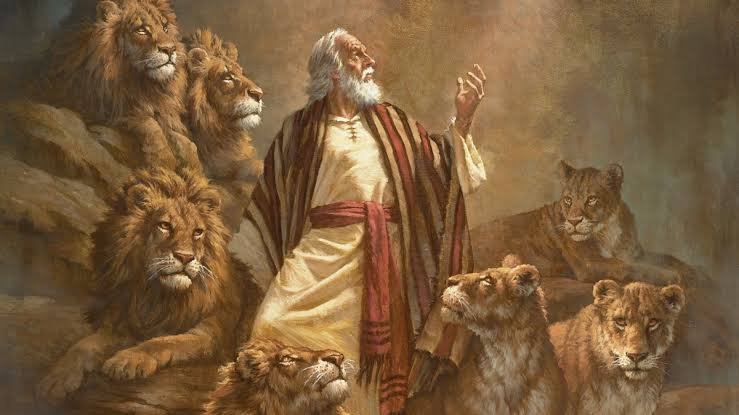
The story of Daniel in the Bible is about a young Jewish man named Daniel. He stayed faithful to God even in a foreign and unfriendly land. Daniel was one of the captives King Nebuchadnezzar brought from Jerusalem to Babylon. The king picked him to work in the palace. He would also learn Babylonian language and literature. The king also gave him a new name, Belteshazzar, and a new diet, consisting of the king’s food and wine.
But Daniel refused to eat the food and drink the wine, because they were not under God’s laws. He asked to eat just vegetables and drink water. God then blessed him and his friends with health and wisdom. Daniel talked about the dreams of Nebuchadnezzar and his heirs. He showed God’s power and plans. He faced many dangers and enemies. He was thrown into a fiery furnace and a lions’ den. But God saved him from them all. Daniel served God well and inspired many kings and nations.
Reflection: Daniel’s story shows how God protects us and grants us wisdom. He rewards those who stay loyal and obedient to Him. He also wants us to be different from the world and to stand up for our beliefs. This story teaches us to respect God with our bodies and minds. We shouldn’t compromise our beliefs or values. We also need to trust in God’s power and presence, and not to fear anyone or anything.
4: The Story of Mary and Martha (Luke 10:38-42)
But Martha was distracted with much serving. And she went up to him and said,
“Lord, do you not care that my sister has left me to serve alone? Tell her then to help me.” But the Lord answered her, “Martha, Martha, you are anxious and troubled about many things, but one thing is necessary. Mary has chosen the good portion, which will not be taken away from her.” (Luke 10:40-42)

The fourth story in this series is about two sisters, Mary and Martha. They responded differently when Jesus visited them. Mary sat at his feet, listening to his teaching. Martha focused on preparing the food and serving it. Martha was frustrated that Mary wasn’t helping, so she complained to Jesus. He gently told her not to worry or get distracted by too much. Jesus praised Mary for her wise choice: being with him and learning.
Reflection: The tale of Mary and Martha shows us that Jesus is our friend and teacher. He desires a personal relationship with each of us. He also wants us to focus on what is most important in life, which is to love him and listen to him. This story teaches us to balance work and worship. We shouldn’t let busyness or duties get in the way of our closeness to Jesus. We also need to listen closely to his words. They are life-giving and transforming.
5: The Story of the Prodigal Son (Luke 15:11-32)
And he arose and came to his father. But while he was still a long way off, his father saw him and felt compassion, and ran and embraced him and kissed him. (Luke 15:20)

The fifth story in this series is about a father who welcomes his wayward son back. The son had wasted his inheritance on a life of sin. The son asked his father for his share of the property and left home to enjoy his freedom. He blew all his money on wild parties and pleasures. Then a famine struck, leaving him poor and hungry. He hired himself out to a pig farmer, but he was so miserable that he longed to eat the pig’s food. He saw that he had sinned against his father and God. So, he chose to go home and ask for forgiveness.
He hoped his father would accept him as a hired servant. But his father’s reaction surprised him. His father saw him from afar and ran to him with joy and compassion. He hugged him and kissed him, and ordered a feast to celebrate his return. welcomed him back as his son and gave him a robe, a ring, and sandals.
The older brother, who had stayed with the father and worked hard, was angry and jealous. He refused to join the celebration and complained to his father. But the father assured him that he loved him and that everything he had was his. He also said they had to celebrate. His brother lost his way, but now he has been found. He was dead, and now he is alive.
6: The Story of Peter’s Denial (Matthew 26:69-75, Mark 14:66-72, Luke 22:54-62, John 18:15-18, 25-27)
And immediately the rooster crowed. And Peter remembered the saying of Jesus,
“Before the rooster crows, you will deny me three times.” And he went out and wept bitterly. (Matthew 26:74-75)

The sixth story in the Bible shows that one of Jesus’ closest disciples denied him three times on the night he was arrested. Peter was a bold and passionate follower of Jesus. He had promised never to leave or forsake him. He even drew his sword to defend himself when Judas betrayed him in the Garden of Gethsemane.
But Jesus told him that before the rooster crowed, he would deny him three times. Peter did not believe it, but it happened just as Jesus said. After Jesus was arrested and taken to the high priest’s house, Peter followed from afar. He sat with the servants in the courtyard. A servant girl recognised him there and said that he was with Jesus.
A relative of the high priest’s servant said that he had seen Peter with Jesus in the garden.
Reflection: Peter’s denial shows us that we are all weak and sinful. We can still fail our Lord, even when we truly love him. Jesus understands our hearts and struggles. He loves us no matter what and forgives us fully. This story teaches us to be humble and honest about our weaknesses. We should also seek God’s strength and grace. We need to repent of our sins and mistakes. Then, we can receive God’s forgiveness and healing.
7: Story of the Good Samaritan (Luke 10:25-37)
But he, desiring to justify himself, said to Jesus,
“And who is my neighbor?” Jesus replied, “A man was going down from Jerusalem to Jericho, and he fell among robbers, who stripped him and beat him and departed, leaving him half dead.” (Luke 10:29-30)

The seventh story in this series shows how a Samaritan man helped a Jewish man. A group robbed and hurt this Jewish man on the road. A lawyer asked Jesus what he had to do to inherit eternal life. Jesus told him to love God and to love his neighbor as himself. The lawyer then asked who his neighbor was. Jesus answered with a parable. A Jewish man was on his way from Jerusalem to Jericho. Then, robbers attacked him. They took his clothes and money, leaving him half dead.
A priest and a Levite, both Jewish leaders, saw him. They chose to walk by on the other side, ignoring his struggle. But a Samaritan, who was an outsider despised by the Jews, saw him and had compassion for him. He went to him and bandaged his wounds, pouring oil and wine on them. He then put him on his own donkey and brought him to an inn, where he took care of him.
The next day, he gave the innkeeper two denarii and asked him to look after him until he returned. He said that he would pay any extra expenses when he came back. Jesus then asked the lawyer which of the three was a neighbor to the man who fell among the robbers. The lawyer said that it was the one who showed him mercy. Jesus told him to go and do likewise.
The story of the Good Samaritan teaches us to love our neighbour and show mercy. It reminds us that God wants us to love others as He loves us. He wants us to show mercy and compassion to everyone in need. This includes all races, religions, and statuses.
This story teaches us to be aware of others’ needs. We should avoid being indifferent or selfish. We also need to be generous and helpful, and not to be stingy or greedy.
8: The Story of Zacchaeus (Luke 19:1-10)
And when Jesus came to the place, he looked up and said to him, “Zacchaeus, hurry and come down, for I must stay at your house today.” (Luke 19:5)

The eighth story in the Bible is about a tax collector named Zacchaeus. He changed after meeting Jesus. Zacchaeus was a rich and powerful man who worked for the Roman government. He took taxes from his fellow Jews and cheated them by asking for they owed. The people hated and despised him. He heard that Jesus was passing by his town of Jericho, and he wanted to see him. But he was too short to see over the crowd, so he climbed up a sycamore tree to get a better view.
To his surprise, Jesus stopped at the tree and called him by name. He invited himself to stay at Zacchaeus’ house that day. Zacchaeus welcomed him gladly and felt overjoyed. But the people grumbled and complained that Jesus had gone to be the guest of a sinner. Jesus’ love touched Zacchaeus, so he chose to change his ways. He stood up and said he would give half of his possessions to the poor. He also promised to repay anyone he had cheated four times the amount he had taken. Jesus praised him for repenting and having faith. He said salvation had come to his house that day. He also said that he came to seek and save the lost.
Reflection: The story of Zacchaeus teaches us that God seeks us and saves us. He desires our repentance and offers us his grace. He also wants us to welcome him into our lives and homes, and to share his love with others. This story teaches us to be humble and honest about our faults. We shouldn’t be proud or dishonest. We also need to be generous and fair, and not to be greedy or unjust.
9: The Story of the Rich Young Ruler (Matthew 19:16-30, Mark 10:17-31, Luke 18:18-30)
And Jesus, looking at him, loved him, and said to him, “You lack one thing: go, sell all that you have and give to the poor, and you will have treasure in heaven; and come, follow me.” (Mark 10:21)
The ninth story in the Bible shows how a rich young man missed his chance to follow Jesus. He loved his money more than God. The young man ran up to Jesus and asked him what he had to do to inherit eternal life. Jesus told him to keep the commandments. These include: no murder, no adultery, no stealing, no lying, and honouring your father and mother.
The young man said that he had kept all these since his youth. Jesus looked at him with love and said he lacked one thing: sell all his possessions, give to the poor, and then follow him. The young man was shocked and saddened by this demand, because he had great wealth. He went away sorrowful, and did not follow Jesus. Jesus told his disciples that it was for a rich person to enter God’s kingdom. Rich people often trust their wealth more than they trust God. He said it’s easier for a camel to pass through the eye of a needle than for a rich person to enter God’s kingdom.
The disciples were astonished and wondered who then could be saved. Jesus said that with God, anything is possible. He promised that those who give up everything for him will receive a hundred times more, both in this life and in the next.
Reflection: The story of the rich young ruler teaches us that God is our true treasure and reward. He wants us to love Him more than anything else. He also wants us to be generous and compassionate to the poor and needy. This story teaches us to reflect on our hearts and priorities. We shouldn’t let anything or anyone stop us from following Jesus. We also need to trust in God’s promises and his provision.
10: The Story of Paul’s Conversion (Acts 9:1-19, 22:1-21, 26:1-23)
And falling to the ground, he heard a voice saying to him, “Saul, Saul, why are you persecuting me?” And he said, “Who are you, Lord?” And he said, “I am Jesus, whom you are persecuting.” (Acts 9:4-5)
Summary: The tenth story in the Bible shows how Saul, a fierce enemy of Christians, became a devoted preacher of Christ. Saul was a Pharisee who hated Christians and wanted to destroy them. He got letters from the high priest. The letters let him arrest any followers of Jesus in Damascus. Then, he would bring them back to Jerusalem for trial and punishment.
As he was on his way to Damascus, a bright light from heaven suddenly flashed around him. He fell to the ground and heard a voice saying to him, “Saul, Saul, why are you persecuting me?” He asked who the voice was, and the voice said, “I am Jesus, whom you are persecuting.” Saul was stunned and terrified. He realized that Jesus was alive and that he was the Lord. He asked what he should do, and Jesus told him to go into the city and wait for further instructions.
Saul got up from the ground, but he was blind. His friends took him by the hand to Damascus. He stayed there for three days without eating or drinking. Jesus appeared in a vision to a disciple named Ananias. He told Ananias to go to Saul and lay hands on him. This would help Saul regain his sight. Ananias was afraid of Saul because he knew his reputation as a persecutor of Christians. But Jesus assured him that Saul was chosen to share his name with Gentiles, kings, and the children of Israel.
Ananias obeyed Jesus and went to Saul. He laid his hands on him and said that Jesus had sent him so that he could see again and be filled with the Holy Spirit. Something like scales fell from Saul’s eyes and he could see again. He got up and was baptized. He then ate some food and regained his strength. He stayed with the disciples in Damascus for some days, and began to preach in the synagogues that Jesus is the Son of God.
The lesson: Paul’s conversion shows us that God is both our changer and our caller. He can transform anyone through his grace and power. He also wants us to respond to his call and to follow his will. This story teaches us to be open and listen to God’s voice. We should not resist or reject Him. We also need to be willing and ready to share our faith with others, and to suffer for his sake.
11: The Story of the Parable of the Talents (Matthew 25:14-30, Luke 19:11-27)
His master said to him, “Well done, good and faithful servant. You have been faithful over a little; I will set you over much. Enter into the joy of your master.” (Matthew 25:21)
Summary: The eleventh story in the Bible is about a master who entrusted his property to his servants based on their skills. It describes how they used or wasted their talents. A talent was a large sum of money, worth about 20 years of wages for a laborer.
The master gave five talents to one servant, two talents to another, and one talent to the last. He then went on a journey and left them to manage his affairs. The first servant invested his five talents and earned five more. The second servant did the same with his two talents and earned two more. But the third servant buried his one talent in the ground and did nothing with it.
After a long time, the master returned and settled accounts with his servants. He praised the first and second servants for being faithful. He also rewarded them for their hard work. He said that he would entrust them with more responsibilities and invite them to share in his joy. But he rebuked and punished the third servant for being lazy and wicked. He said that he should have at least put his talent in the bank and earned some interest. He took away his talent and gave it to the one who had ten talents. He also cast him into the outer darkness, where there would be weeping and gnashing of teeth.
Reflection: The parable of the talents teaches us that God is our master and judge. He gives us different gifts and chances based on our abilities. He also wants us to use them wisely and faithfully for his glory and his kingdom. We can learn from this story that we need to be diligent and creative with what God has given us, and not to be lazy or fearful. We also need to be ready and accountable for when he returns and evaluates our work.
12: The Story of the Woman at the Well (John 4:1-42)
Jesus said to her, “Everyone who drinks of this water will be thirsty again, but whoever drinks of the water that I will give him will never be thirsty again. The water that I will give him will become in him a spring of water welling up to eternal life.” (John 4:13-14)
The twelfth story in the Bible shows how Jesus met a Samaritan woman at a well. He offered her living water to please her deepest thirst. Jesus was on his way from Judea to Galilee. He had to pass through Samaria, a region the Jews disliked. He came to a town called Sychar, where there was a well that Jacob had given to his son Joseph. He was tired from his journey and sat down by the well around noon.
A Samaritan woman came to draw water, and Jesus asked her for a drink. She was surprised he spoke to her. Jews avoided interactions with Samaritans. Jewish men, in particular, did not talk to Samaritan women. Jesus said that if she knew who he was, she would have asked him for living water. He could give it to her. She asked him where he could get this living water, since he had no bucket and the well was deep. She also asked him if he was greater than Jacob, who had given them the well.
Jesus told her that the well water could only satisfy her physical thirst for a while. But the water he offered could quench her spiritual thirst for good. He said that anyone who drinks his water will never be thirsty again and will have eternal life. The woman asked him to give her this water, so that she would not have to come to the well again. Jesus then told her to go and call her husband and come back. She said that she had no husband.
Jesus told her he knew all about her life. He said she had five husbands before, and the man she lived with now wasn’t her husband. The woman saw he was a prophet. She asked him where to worship God: in Jerusalem or on Mount Gerizim, the Samaritan site. Jesus told her that neither place mattered. What mattered was worshiping God in spirit and truth. He said that God was seeking true worshipers who would worship him in this way. He also said that he was the Messiah, the one who was sent by God to save the world. The woman believed him and left her water jar behind.
She went back to the town and told everyone about Jesus and what he had done for her. Many people came to see him and hear him. They invited him to stay with them for two days, and many more believed in him because of his words. They told the woman they no longer believed just because of her testimony. They believed because they had seen and heard him themselves. They said that he was indeed the Savior of the world.
Reflection: The story of the woman at the well shows that Jesus is our Messiah and Savior. He offers us living water that fills our hearts with joy and peace. He also wants us to worship him in spirit and truth, and to share his love with others. We can learn from this story that we need to recognize our need for Jesus and to receive his grace and forgiveness. We also need to worship him with all our being, and to tell others about him.
Conclusion
The Bible is full of powerful stories that can help you to grow as a person.
I hope you enjoyed this blog post and found something useful in these stories. I urge you to read the Bible yourself. Experience the life-changing power of its stories. Share this blog post with friends and family. Show them how the Bible can help them grow. God bless you!