

What is faith? The writer of Hebrews defines faith as assurance of what we hope for and conviction of what we can’t see (Hebrews 11:1).
Faith is believing in God and His promises, even when we cannot see or understand His ways. Faith is trusting in God and His power, even when we face challenges or obstacles. Faith is obeying God and His commands, even when we have to sacrifice or suffer.
Why Are Bible Stories About Faith Important?
Bible stories about faith matter. They show how God has worked in the lives of His people throughout history. God kept His promises, saved His people, worked miracles, and achieved His purposes.
God rewards those who trust and obey Him. He also disciplines those who doubt and disobey Him.
How can Bible stories about faith inspire us to trust God in the midst of difficulty?
Bible stories about faith inspire us to trust God during tough times. They remind us of who God is and what He can do. They remind us that God is faithful and true, and that He never changes or fails. They also show us that God is sovereign and wise, and that He has a plan and a purpose for everything. Finally, they show us that God is loving and gracious, and that He cares for us and provides for us.
In this post, we will look at 25 Bible stories about faith that can inspire us to trust God in the midst of difficulty. We will divide them into two sections: Old Testament and New Testament. For each story, we will include:
A brief summary of the story
A key verse from the story
A lesson or application from the story
Let’s begin!
25 Bible Stories About Faith
Discover 25 powerful Bible stories about faith. These true accounts show how to trust God even during your hardest days.
Bible Stories About Faith in the Old Testament
In this section, you’ll get to see stories of faith in the Old Testament. Let’s begin.
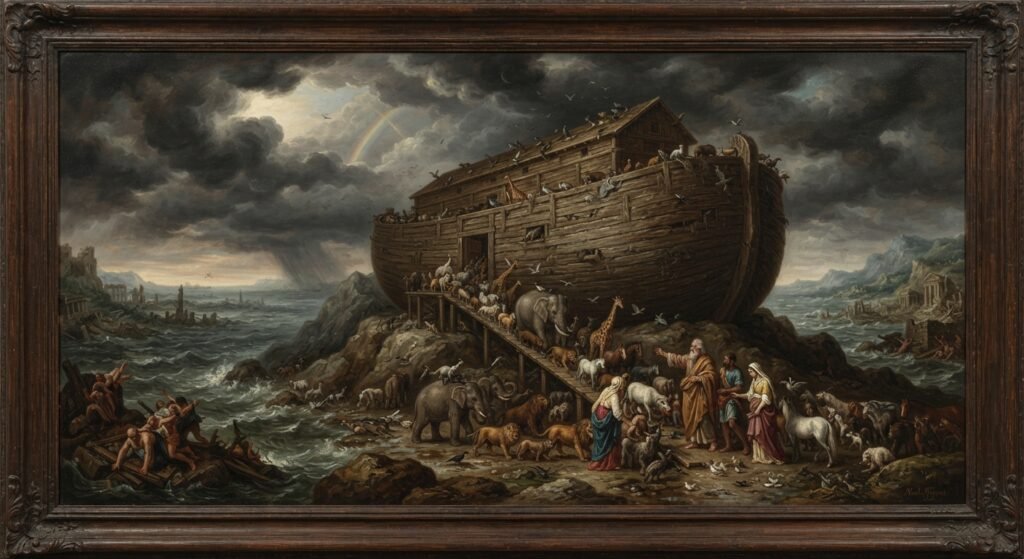
1. Noah and the Ark (Genesis 6-9)
God saw that people were wicked on earth. Every thought in their hearts was only evil all the time. He chose to flood the earth, but Noah found grace in his sight. Noah was righteous and blameless in his time. He commanded Noah to build an ark, a large boat, and to take his family and two of every kind of animal into it. Noah did everything that God commanded him. The flood came and covered the whole earth, but Noah and those with him in the ark were saved.
By faith Noah, being warned by God concerning events as yet unseen, in reverent fear constructed an ark for the saving of his household. By this he condemned the world and became an heir of the righteousness that comes by faith. (Hebrews 11:7)
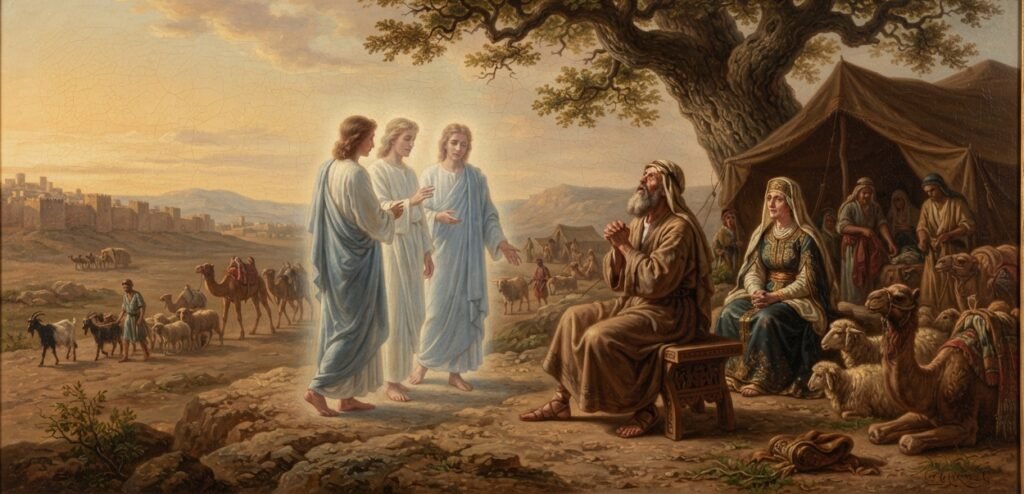
Abraham showed his faith by leaving his comfort zone. He followed God’s call without knowing all the details or having guarantees. He trusted God’s character over his own circumstances. He waited patiently for God’s timing rather than pursuing his own desires. He was willing to give up everything for God’s glory rather than prioritizing his own interests. He was credited with righteousness and blessed with a son.
3. Moses and the Exodus (Exodus 1-14)
The Egyptians enslaved the Israelites for generations. They cried out to God for help. God heard their cry and remembered His covenant with Abraham, Isaac, and Jacob. He raised up Moses as His servant and sent him to Pharaoh to demand the release of His people. Moses felt unsure and hesitant at first. But he listened to God and faced Pharaoh with signs and wonders.
Pharaoh’s heart was hardened. He wouldn’t let the Israelites go. So, God sent ten plagues to Egypt. Each plague was worse than the one before. The last plague was the death of every firstborn in Egypt. The plague did not affect homes with the blood of a lamb on the doorposts. This was the Passover, a sign of God’s salvation and judgment. Pharaoh finally let the Israelites go, but he changed his mind and pursued them with his army.
God parted the Red Sea so the Israelites could cross on dry ground. Then He closed it, drowning the Egyptians. The Israelites were set free from slavery and saw God’s mighty hand.
And he believed the Lord, and he counted it to him as righteousness. (Genesis 15:6)
The Moral of this story:
Abraham’s faith was demonstrated by his willingness to leave his comfort zone and follow God’s call, even though he did not have all the details or guarantees. He trusted God’s character over his own circumstances. He waited patiently for God’s timing over his own desires. He was willing to give up everything for God’s glory over his own interests. He was credited with righteousness and blessed with a son.
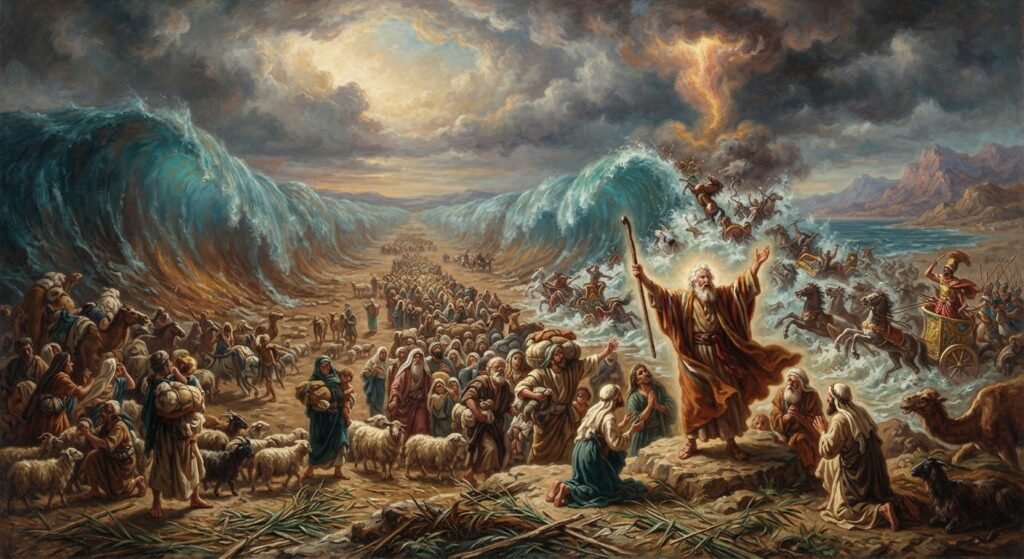
3. Moses and the Exodus (Exodus 1-14)
The Israelites were enslaved by the Egyptians for 400 years, and they cried out to God for deliverance. God heard their cry and remembered His covenant with Abraham, Isaac, and Jacob. He raised up Moses as His servant and sent him to Pharaoh to demand the release of His people. Moses was reluctant and insecure at first, but he obeyed God and confronted Pharaoh with signs and wonders.
Pharaoh hardened his heart and refused to let the Israelites go, so God sent ten plagues on Egypt, each one more severe than the last. The final plague was the death of the firstborn of every household, except for those who had the blood of a lamb on their doorposts. This was the Passover, a sign of God’s salvation and judgment. Pharaoh finally let the Israelites go, but he changed his mind and pursued them with his army.
God parted the Red Sea for the Israelites to cross on dry ground, but He closed it on the Egyptians and drowned them. The Israelites were set free from slavery and saw God’s mighty hand.
By faith Moses, when he was grown up, refused to be called the son of Pharaoh’s daughter, choosing rather to be mistreated with the people of God than to enjoy the fleeting pleasures of sin. He considered the reproach of Christ greater wealth than the treasures of Egypt, for he was looking to the reward. (Hebrews 11:24-26)
Lesson of this story:
Moses showed his faith by choosing to stand with God’s people instead of Egypt’s power. He trusted God’s reward over Egypt’s riches. He obeyed God’s voice despite his own fears. He followed God’s guidance rather than relying on his own wisdom. He led God’s people out of bondage and into freedom.
4. David and Goliath (1 Samuel 17)
The Philistines gathered their armies for war against Israel. They had a champion named Goliath, a giant of a man. He defied the armies of Israel and challenged them to send a man to fight him. The winner’s nation would determine the fate of both peoples.
The Israelites were terrified and dismayed by Goliath, and no one dared to face him. David was a shepherd. His father sent him to deliver food to his brothers in the army. When David heard Goliath’s taunts, he was outraged. Goliath’s blasphemy against God angered him. He stepped up to fight Goliath. His brothers rejected him, and King Saul mocked him. He trusted in God and His power, not in human weapons or armor.
He took five smooth stones from a brook and a sling in his hand, and he approached Goliath in the name of the Lord of hosts. He slung a stone at Goliath’s forehead and struck him down. He then took Goliath’s sword and cut off his head. The Philistines fled in panic, and the Israelites pursued them and won a great victory.
David said to the Philistine, “You come with a sword, spear, and javelin. But I come in the name of the Lord of hosts, the God of the armies of Israel, whom you have defied.” (1 Samuel 17:45)
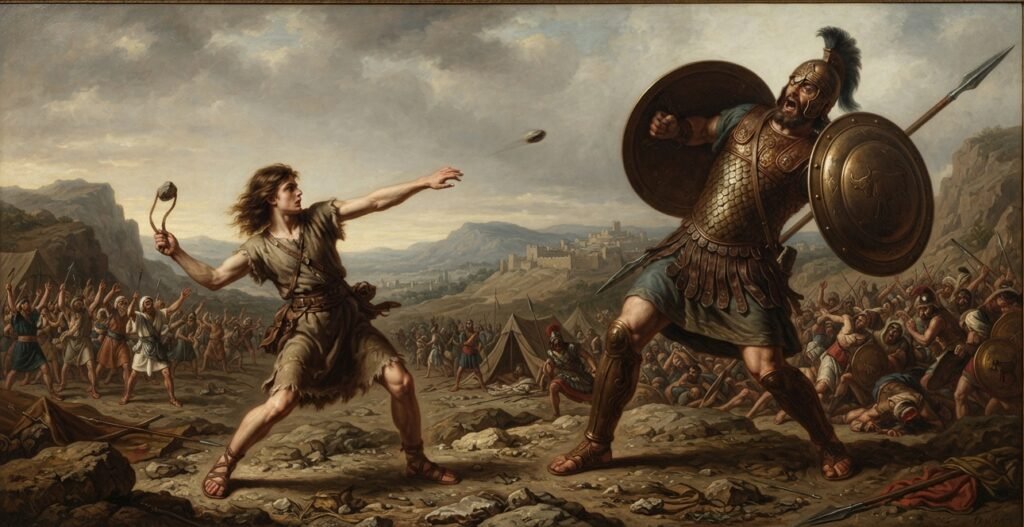
David showed his faith through his courage in facing Goliath. He was young and inexperienced, but he didn’t back down. He trusted in God’s name rather than fearing Goliath’s size. He relied on God’s strength rather than his own skill. He fought for God’s honor rather than his own reputation. He defeated Goliath with a stone and a sling.
5. Elijah and the prophets of Baal (1 Kings 18)
King Ahab and his wife Jezebel led Israel into idolatry and worshiped Baal, a false god of the Canaanites. God sent Elijah, His prophet, to confront Ahab and announce a drought on the land as a judgment for their sin. After three years of famine, God told Elijah to go back to Ahab and challenge him to a contest on Mount Carmel. Elijah proposed that they each prepare an altar and place a bull on it as an offering, but not light the fire. Then they would call on their god, and the god who answered by fire would be the true God. Ahab agreed, and he gathered 450 prophets of Baal on Mount Carmel.
The prophets of Baal went first, and they cried out to Baal from morning till evening, but there was no answer or fire. They even hurt themselves with swords and lances, but Baal did not respond. He neither spoke nor acknowledged them. Elijah mocked them and told them to cry louder or maybe their god was asleep or busy or on a journey. Then Elijah repaired the altar of the Lord that had been broken down. He took twelve stones representing the twelve tribes of Israel.
He arranged the wood and the bull on the altar, and he dug a trench around it. He poured four large jars of water over the altar, and he did this three times, until the water filled the trench. He prayed to the Lord, the God of Abraham, Isaac, and Israel. He asked God to reveal Himself as the true God and to bring the people’s hearts back to Him. The fire of the Lord fell, consuming the burnt offering, the wood, the stones, the dust, and even the water in the trench.
The people saw it and fell on their faces and said, “The Lord, he is God; the Lord, he is God.” Elijah commanded them to seize the prophets of Baal and kill them at the brook Kishon. Then he prayed again to God, and He sent rain on the land.
And at the time of the offering of the oblation, Elijah the prophet came near and said, “O Lord, God of Abraham, Isaac, and Israel, let it be known this day that you are God in Israel, and that I am your servant, and that I have done all these things at your word.” (1 Kings 18:36)
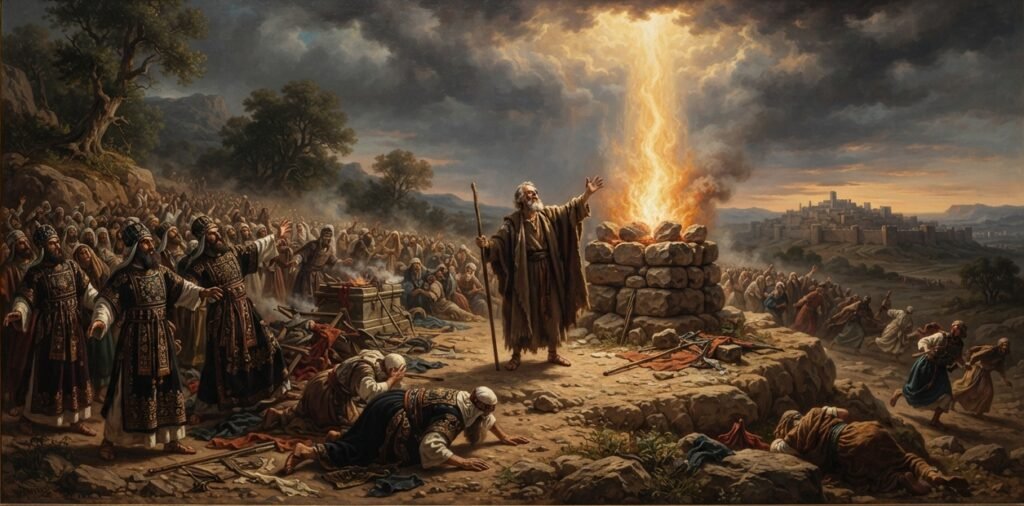
Elijah displayed his faith by bravely confronting Ahab and his many prophets. He trusted in God’s word despite the threat to his safety. He relied on God’s power rather than in his own resources. He prayed to God with confidence despite his doubts. He proved God’s supremacy over Baal with fire and rain.
Bible stories about faith in the New Testament
Lets look at some of the biblical stories that’s talk about faith in this session.
6. The birth of Jesus (Luke 2)
God sent His Son Jesus into the world to save His people from their sins. He chose a young virgin named Mary to be His mother, and a righteous man named Joseph to be His earthly father. He shared His plan through the angel Gabriel. Gabriel told them that Jesus would be conceived by the Holy Spirit and would be called the Son of God.
Mary and Joseph trusted God and followed His commands. They faced many challenges and dangers, but they stayed faithful. They traveled from Nazareth to Bethlehem. They did so to register for a census ordered by Caesar Augustus. They could not find a place to stay in Bethlehem, so they had to stay in a stable where animals were kept. There Mary gave birth to Jesus and wrapped Him in swaddling cloths and laid Him in a manger.
There were shepherds nearby who were watching their flocks by night. An angel of the Lord appeared to them and told them the good news of Jesus’ birth. He also told them where to find Him. A host of angels praised God, saying, “Glory to God in the highest! Peace on earth for those He favors.” The shepherds hurried and found Mary and Joseph, along with the baby lying in a manger. They worshiped Him and spread the word about Him.
And Mary said, “Behold, I am the servant of the Lord; let it be to me according to your word.” And the angel departed from her. (Luke 1:38)

Moral Lesson:
Mary showed her faith by accepting God’s will, even when it was hard to understand or expect. She trusted God’s promise instead of focusing on her reputation or comfort. She obeyed God’s word rather than following her own feelings or fears. She gave birth to Jesus, who is Immanuel, God with us.
7. Jesus’ baptism (Matthew 3:13-17)
Jesus traveled from Galilee to the Jordan River. He went to John the Baptist to be baptized. John was preaching a baptism of repentance for the forgiveness of sins. John was reluctant to baptize Jesus, because he knew that Jesus was greater than he was and had no sin. But Jesus insisted that it was necessary to fulfill all righteousness. So John consented and baptized Jesus. As soon as Jesus came up out of the water, the heavens were opened and he saw
He also saw the Spirit of God descending like a dove and coming to rest on him. And behold, a voice from heaven said, “This is my beloved Son, with whom I am well pleased.”
And when Jesus was baptized, immediately he went up from the water, and behold, the heavens were opened to him, and he saw the Spirit of God descending like a dove and coming to rest on him. (Matthew 3:16)
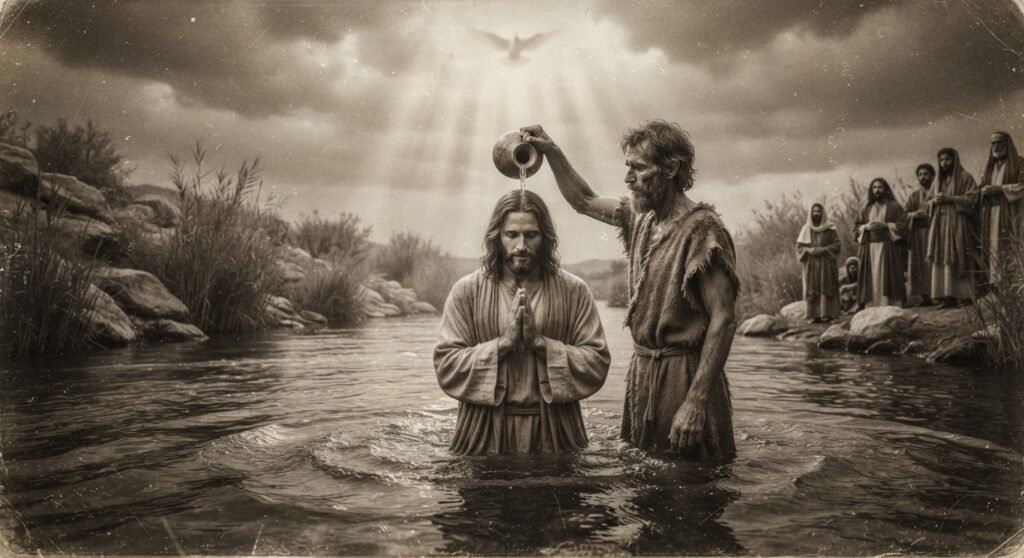
Jesus demonstrated his faith by obeying God’s plan. This was true even when it seemed unnecessary or unexpected. He trusted in God’s righteousness rather than his own merit. He humbled himself and identified with sinners. He received the Spirit of God and the affirmation from God the Father.
8. Jesus’ miracles (Matthew 8-9)
Jesus performed many miracles during his time on Earth. These acts showed his authority and compassion. He healed the sick, cast out demons, calmed the storm, fed the multitudes, raised the dead, and forgave sins. He performed these miracles to meet the people’s physical and spiritual needs. These miracles also revealed his identity and mission as the Son of God and the Savior of the world. These miracles fulfilled Old Testament prophecies. These miracles also demonstrated the power and presence of God’s kingdom.
In the evening, many people came to him. They were troubled by demons. He spoke a word and cast out the spirits. He also healed everyone who was sick. This was to fulfill what was spoken by the prophet Isaiah: “He took our illnesses and bore our diseases.” (Matthew 8:16-17)
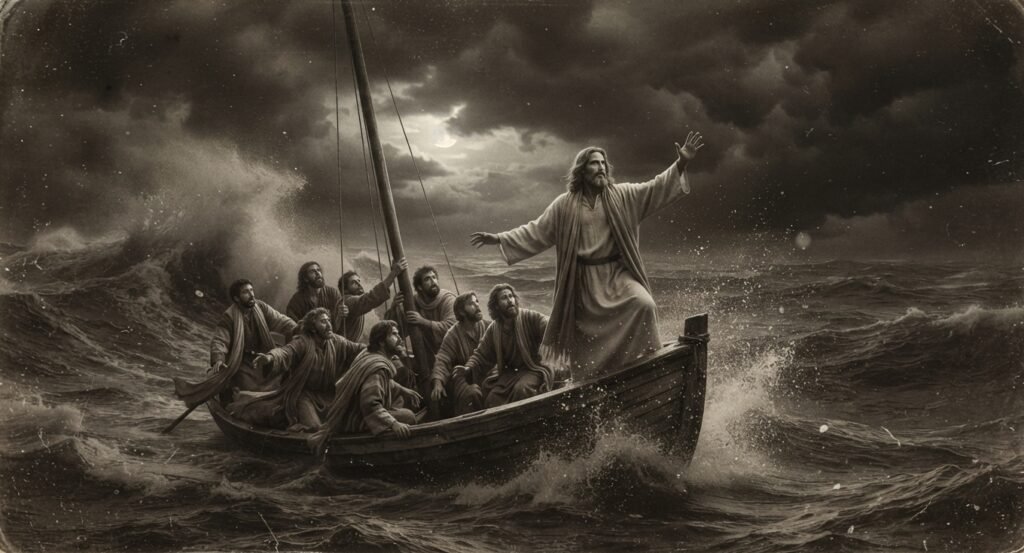
Jesus showed his faith by relying on God’s power and will. He had his own authority and glory, but he chose to depend on God. He trusted in God’s word over his own feelings or opinions. He prioritized obedience to God’s commands over his own comfort or convenience. He manifested God’s grace and truth through his miracles.
9. Jesus’ death and resurrection (Matthew 26-28)
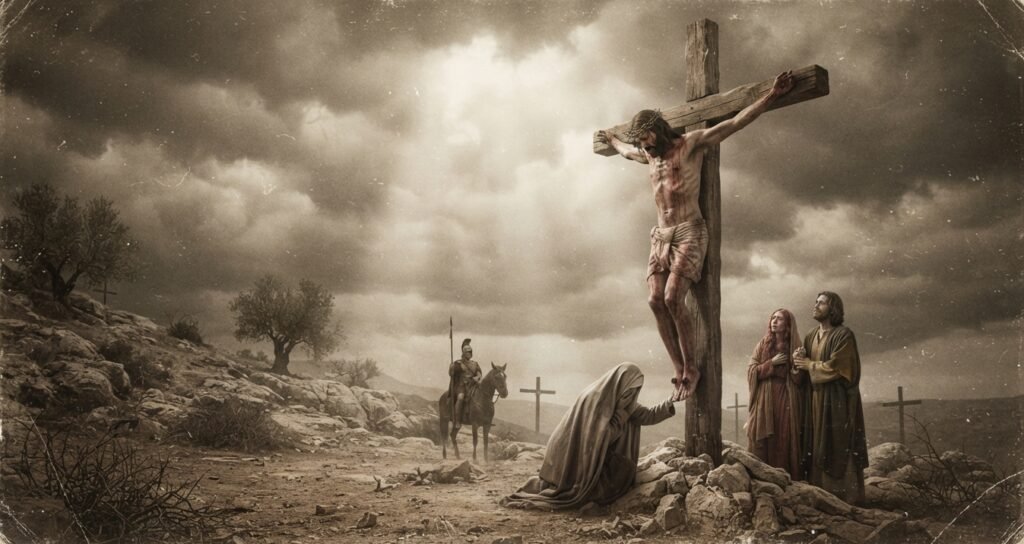
Jesus was betrayed by Judas Iscariot, one of his disciples. Judas handed him over to the Jewish leaders for thirty pieces of silver. They accused him of blasphemy and condemned him to death. They brought him to Pontius Pilate, the Roman governor. He found no fault in him. But because of pressure from the crowd, he ordered his crucifixion. Jesus was mocked, beaten, scourged, and nailed to a cross between two criminals. He suffered and died for our sins, taking our place and paying our penalty.
He cried out with a loud voice, “It is finished,” and gave up his spirit. He was buried in a tomb by Joseph of Arimathea, a rich man who was a secret disciple of Jesus. On the third day, he rose from the dead, defeating death and sin. He appeared to his disciples and many others, proving that he was alive and that he was the Son of God.
And Jesus cried out again with a loud voice and yielded up his spirit. And behold, the curtain of the temple was torn in two, from top to bottom. And the earth shook, and the rocks were split. (Matthew 27:50-51)
Reflection:
Jesus showed his faith by being willing to die for us. He did this even though he was innocent and holy. He relied on God’s love instead of giving in to his pain or fear. He submitted to God’s purpose over his own preference or right. He accomplished God’s salvation through his death and resurrection.
10. The early church (Acts 1-12)
After Jesus ascended into heaven, he sent the Holy Spirit to his disciples on the day of Pentecost. They were filled with power and boldness to preach the gospel and make disciples of all nations. They built a community of believers. They focused on the apostles’ teaching. They shared in fellowship, broke bread, and prayed together. They shared their possessions and met each other’s needs.
They did amazing things in Jesus’ name. They also helped more people find salvation each day. They faced persecution from Jewish leaders and King Herod. Still, they rejoiced because they were deemed worthy to suffer for Christ. They prayed fervently for each other and for God’s will to be done. They seen God’s protection and deliverance in miraculous ways.

11. Peter walking on water (Matthew 14:22-33)
Jesus sent his disciples ahead of him to cross the Sea of Galilee by boat, while he stayed behind to pray. In the middle of the night, he came to them walking on the water. The disciples were terrified and thought he was a ghost. But Jesus told them to take courage and not be afraid, for it was him. Peter, who was always impulsive and adventurous, asked Jesus to command him to come to him on the water.
Jesus said, “Come.” Peter got out of the boat and walked on the water toward Jesus. But when he saw the wind and the waves, he became afraid and began to sink. He cried out, “Lord, save me.” Jesus immediately reached out his hand and caught him. He said to him, “O you of little faith, why did you doubt?” Then they got into the boat and the wind ceased. The disciples worshiped Jesus and said, “Truly you are the Son of God.”
.”And Peter answered him, “Lord, if it is you, command me to come to you on the water.” He said, “Come.” So Peter got out of the boat and walked on the water and came to Jesus. (Matthew 14:28-29)
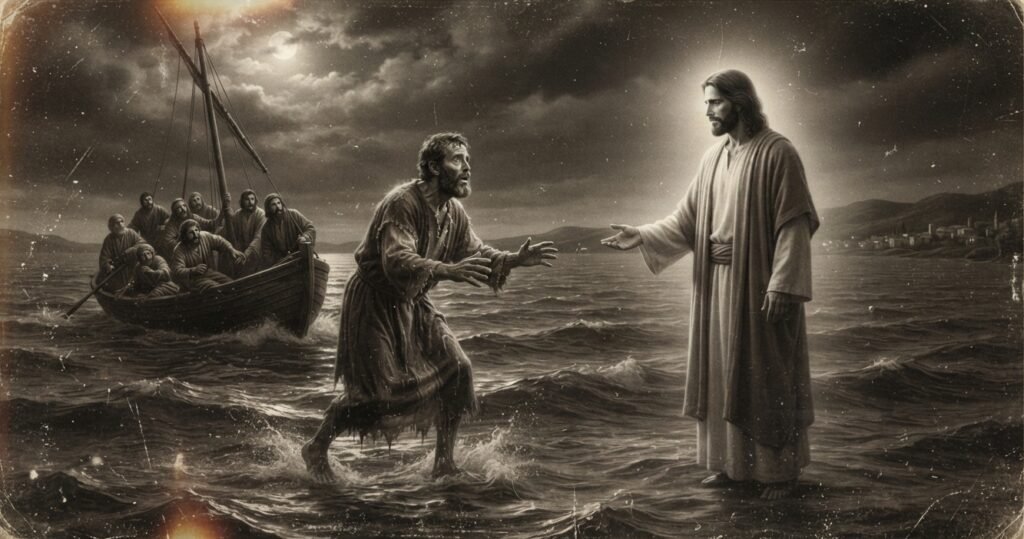
Peter showed his faith by wanting to join Jesus on the water. Walking on water was both impossible and dangerous. He trusted Jesus’ command rather than his own reasoning. He stepped out of his comfort zone and took a risk at Jesus’ command. He experienced Jesus’ power and presence through his faith.
12. The woman with the issue of blood (Mark 5:25-34)
A woman who had suffered from a discharge of blood for twelve years came to Jesus, hoping to be healed by him. She had spent all that she had on physicians, but no one could cure her.
She heard about Jesus and his miracles. She believed that touching his garment would heal her. She came up behind him in the crowd and touched his cloak. Immediately her flow of blood dried up, and she felt in her body that she was healed of her disease.
Jesus felt that power had gone out from him, and he turned around in the crowd and asked, “Who touched my garments?” The woman, aware of what had happened, approached him in fear. She fell down before him and shared the whole truth. Jesus said to her, “Daughter, your faith has made you well; go in peace, and be healed of your disease.”
And he said to her, “Daughter, your faith has made you well; go in peace, and be healed of your disease.” (Mark 5:34)

13. The centurion’s servant (Matthew 8:5-13)
A centurion, a Roman officer in charge of a hundred soldiers, approached Jesus. He begged Jesus to heal his servant, who was paralyzed and in great pain. Jesus offered to go with him to his house and heal his servant. The centurion said he wasn’t worthy to have Jesus in his home. He believed that just a word from Jesus would heal his servant.
He said he understood authority because soldiers followed his orders. He believed that Jesus had authority over sickness and disease as well. When Jesus heard this, he marveled at his faith and said that he had not found such great faith even in Israel. He told him to go home and that it would be done for him as he had believed. And his servant was healed at that very hour.
The centurion replied, “Lord, I am not worthy to have you come under my roof,

14. The Syrophoenician woman (Mark 7:24-30)
Jesus traveled to Tyre and Sidon. There, he met a Gentile woman. She had a daughter with an unclean spirit. She begged him to cast the demon out of her daughter. Jesus said to her, “Let the children be fed first, for it is not right to take the children’s bread and throw it to the dogs.” His words show that his main mission was for the Jews. They also reflect the common belief that Gentiles were outsiders.
But the woman answered him, “Yes, Lord; yet even the dogs under the table eat the children’s crumbs.” She meant that she was not asking for much, but only for a little mercy from God. Jesus admired her faith. He said, “Because of this, you can go. The demon has left your daughter.” And she went home and found her daughter lying in bed and the demon gone.
But she answered him, “Yes, Lord; yet even the dogs under the table eat the children’s crumbs.” (Mark 7:28)
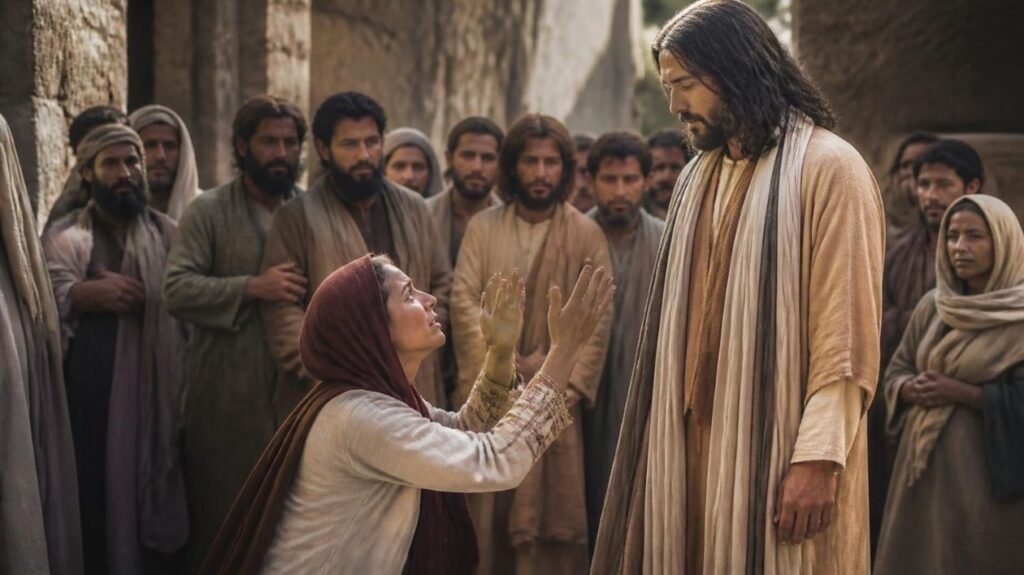
The woman showed her faith through her persistence and humility. She approached Jesus despite being a Gentile and a woman. She trusted in Jesus’ mercy rather than in her own status or worthiness. She accepted Jesus’ challenge and responded with wisdom and grace. She received Jesus’ healing and favor through her faith.
15. The paralytic and his friends (Mark 2:1-12)
Jesus returned to Capernaum and preached the word of God in a house that was crowded with people. There were four men who brought a paralyzed friend to Jesus, hoping Jesus would heal him. But they could not reach Jesus because of the crowd. So they made an opening in the roof above Jesus and lowered their friend on a mat through it.
When Jesus saw their faith, he said to the paralytic, “Son, your sins are forgiven.” Some of the scribes who were sitting there thought to themselves, “Why does this man speak like that? He is blaspheming! Who can forgive sins but God alone?”
Jesus knew their thoughts and said to them, “Why do you question these things in your hearts? Which is easier, to say to the paralytic, ‘Your sins are forgiven,’ or to say, ‘Rise, take up your bed and walk’? “Know that the Son of Man has the power to forgive sins,” he told the paralytic. “I say to you, rise, take up your bed, and go home.” And he rose and immediately picked up his bed and went out before them all. They were all amazed and glorified God, saying, “We never saw anything like this!”
And when Jesus saw their faith, he said to the paralytic, “Son, your sins are forgiven.” (Mark 2:5)
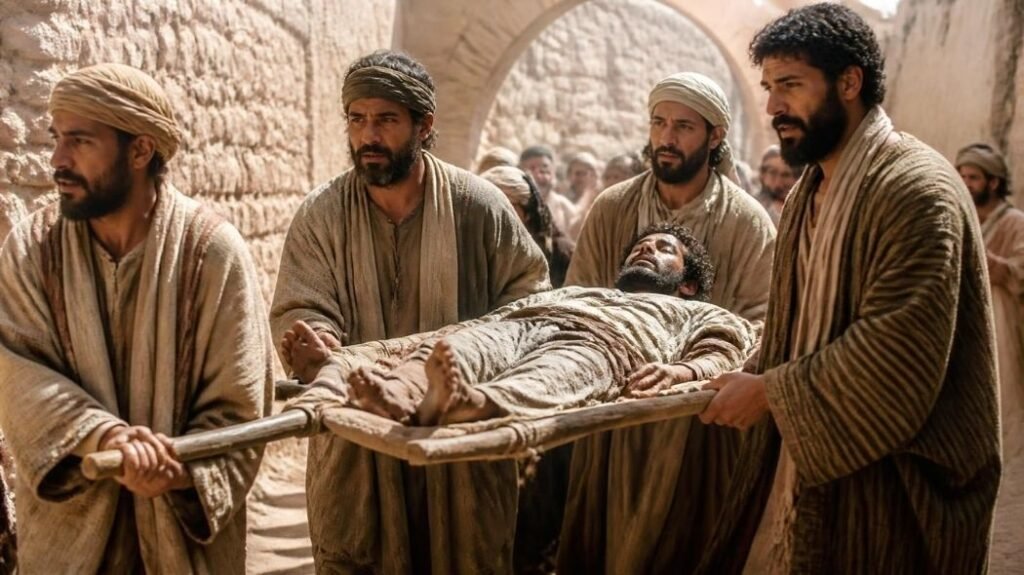
The friends of the paralytic showed great faith. Their determination and creativity were clear. They overcame obstacles and opposition to bring their friend to Jesus. They trusted in Jesus’ power to overcome their own limitations or difficulties.
They showed their love and care for their friend by doing whatever it took to help him. They witnessed Jesus’ authority and grace as he healed their friend.
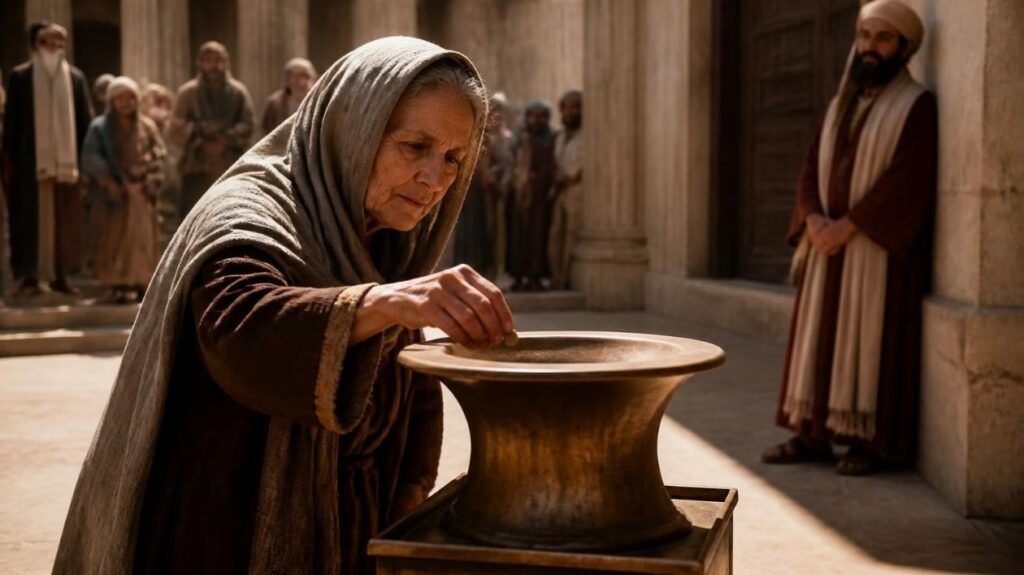
16. The widow’s offering (Mark 12:41-44)
Jesus sat opposite the treasury in the temple and watched how people put money into it. Many rich people put in large sums. But a poor widow came and put in two small copper coins, which together were worth a penny.
He called his disciples and said, “I tell you the truth. This poor widow has given more than anyone else who put money in the offering box.” They all gave from their wealth, but she gave everything she had. She put in all her money, all she had to live on.
For they all contributed out of their abundance, but she out of her poverty has put in everything she had,
17. The Samaritan woman (John 4:1-42)
Jesus traveled through Samaria and stopped at a well near the town of Sychar. He met a Samaritan woman who came to draw water. He asked her for a drink.
This surprised her because Jews and Samaritans did not associate with one another. He told her that if she knew who he was, she would ask him for living water, which symbolizes eternal life. He told her he knew all about her life.
This included her five husbands and her current partner. He also revealed to her that he was the Messiah, the one who was sent by God to save the world.
The woman believed him and left her water jar and went to the town to tell the people about him. Many Samaritans came to see him and hear him, and they also believed in him. They told the woman, “We don’t believe just because of what you said. We’ve heard for ourselves and know this is the Savior of the world.”
The woman said to him, “I know that Messiah is coming (he who is called Christ). When he comes, he will tell us all things.” Jesus said to her, “I who speak to you am he.” (John 4:25-26)

Mora Lesson:
The woman showed her faith by being open and curious. She listened to Jesus, even though she was a Samaritan and a sinner. She trusted in Jesus’ words over her own traditions or opinions. She received Jesus’ living water and became a new person. She shared Jesus’ message and became a witness.
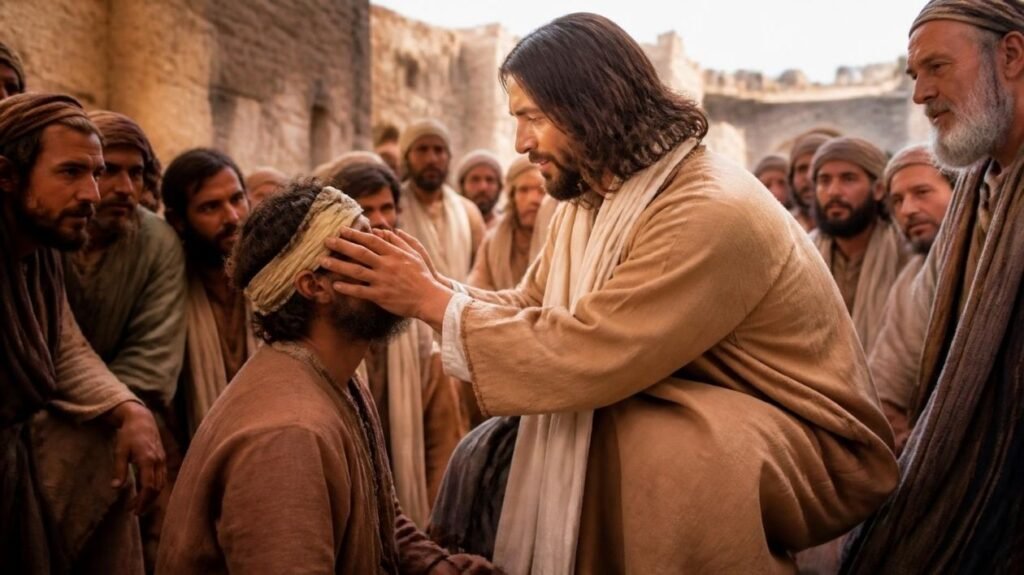
18. The man born blind (John 9:1-41)
Jesus saw a man who had been blind from birth. His disciples asked whether the man or his parents had sinned, causing him to be born blind. Jesus said that neither the man nor his parents had sinned, but that the works of God might be displayed in him. He spat on the ground and made mud with his saliva and anointed the man’s eyes with the mud. He told him to go and wash in the pool of Siloam.
The man went, washed, and came back able to see. The people who knew him were both amazed and confused. So, they took him to the Pharisees, the Jewish religious leaders. The Pharisees asked him how he got his sight. They didn’t believe him or Jesus. They said that Jesus was a sinner and not from God, because he healed on the Sabbath.
They questioned his parents. However, they were afraid of the Pharisees. They said he was old enough to speak for himself. They called the man again and told him to give glory to God and not to Jesus, who they said was a sinner. The man said that he did not know whether Jesus was a sinner or not, but one thing he knew: that he was blind but now he sees. He also said that if Jesus was not from God, he could do nothing. The Pharisees were angry and insulted him and cast him out of the synagogue.
Jesus heard they had cast him out. He found the man and asked if he believed in the Son of Man, another name for the Messiah. The man said that he did not know who he was, but he wanted to believe in him. Jesus said to him, “You have seen him, and it is he who is speaking to you.” The man said, “Lord, I believe,” and he worshiped him.
He answered, “Whether he is a sinner I do not know. One thing I do know, that though I was blind, now I see.” (John 9:25)
The Lesson:
The man demonstrated his faith by obeying Jesus. He also showed gratitude, even though he didn’t know who Jesus was at first. He trusted in Jesus’ power to heal his blindness. He testified to Jesus’ work and defended him before his enemies. He recognized Jesus’ identity and worshiped him.
19. The prodigal son (Luke 15:11-32)
Jesus told a parable about a father who had two sons. The younger son asked for his share of the inheritance and left his father’s house to go to a far country. There he wasted his money on reckless living and ended up in poverty and hunger.
He hired himself out to a citizen of that country, who sent him to feed pigs. He longed to eat even the pods that the pigs ate, but no one gave him anything. He came to his senses and decided to go back to his father and ask for forgiveness and mercy. He rehearsed what he would say: “Father, I have sinned against heaven and before you. I am no longer worthy to be called your son.
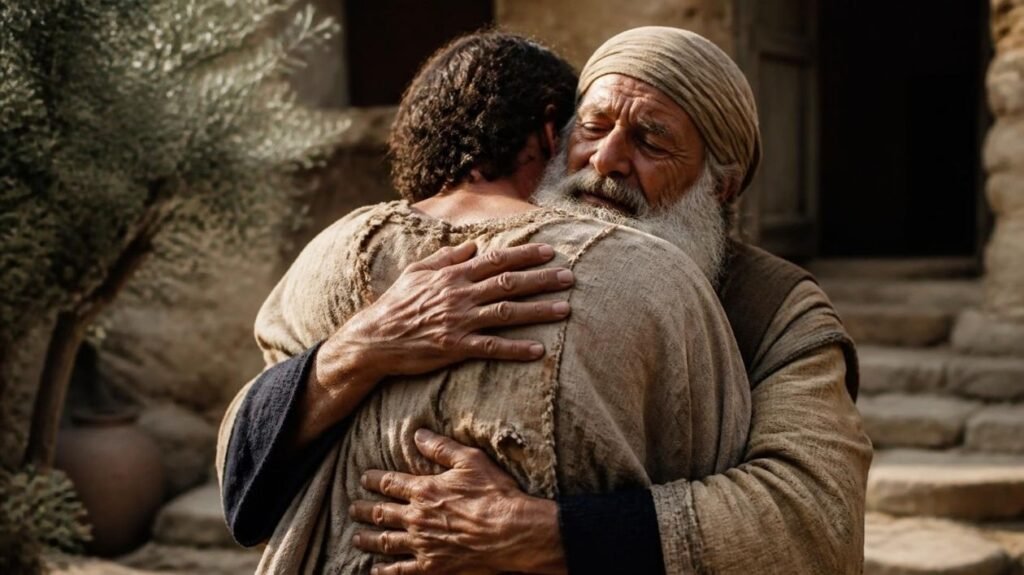
Treat me as one of your hired servants.” He arose and went to his father. But while he was still a long way off, his father saw him and felt compassion for him. He ran and embraced him and kissed him.
The son told him what he had planned to say, but the father did not listen. He called his servants and told them to bring the best robe and put it on him, and to put a ring on his hand and shoes on his feet. He told them to kill the fattened calf and prepare a feast. He said, “My son was dead and is alive again; he was lost and is found.” And they began to celebrate.
The older son, who was in the field, heard the music and dancing and asked what was happening. He was told that his brother had come back and that his father had killed the fattened calf for him. He was angry and refused to go in. His father came out and urged him. He replied, “For years, I’ve served you. I never disobeyed your command. Still, you never gave me a young goat to celebrate with my friends.”
But when this son of yours came back, he wasted your money on prostitutes. Yet you killed the fattened calf for him! The father said to him, “Son, you are always with me, and all that is mine is yours. It was fitting to celebrate and be glad, for this your brother was dead, and is alive; he was lost, and is found.”
And he arose and came to his father. But while he was still a long way off, his father saw him and felt compassion, and ran and embraced him and kissed him. (Luke 15:20)
Lesson:
The younger son showed his faith through his repentance. He returned to his father humbly despite having sinned and wasted his inheritance. He placed greater trust in his father’s love than in his own guilt or shame. He confessed his sin and asked for mercy. He received his father’s forgiveness and restoration through his faith.
20. The thief on the cross (Luke 23:39-43)
Jesus was crucified between two criminals. They were both sentenced to death by the Romans. One of the criminals railed at Jesus and said, “Are you not the Christ? Save yourself and us!” The other criminal rebuked him. He confessed they deserved their punishment, but that Jesus was innocent. He then asked Jesus to remember him when he came into his kingdom. Jesus replied that he would be with him in paradise that day.
The lesson of this story is that it is never too late to repent and believe in Jesus. Even in his last moments, the thief recognized his sin and trusted in Jesus as his Savior. He received God’s grace, forgiveness, and the promise of eternal life. This story shows us that salvation is not based on our works, but on God’s mercy and love. It also urges us to learn from the repentant thief. He humbled himself before God and recognized Jesus as his Lord.

21. The conversion of Saul (Acts 9:1-19)
Saul was a passionate Pharisee. He persecuted Jesus’ followers, arresting them and even putting them to death. He got letters from the high priest.
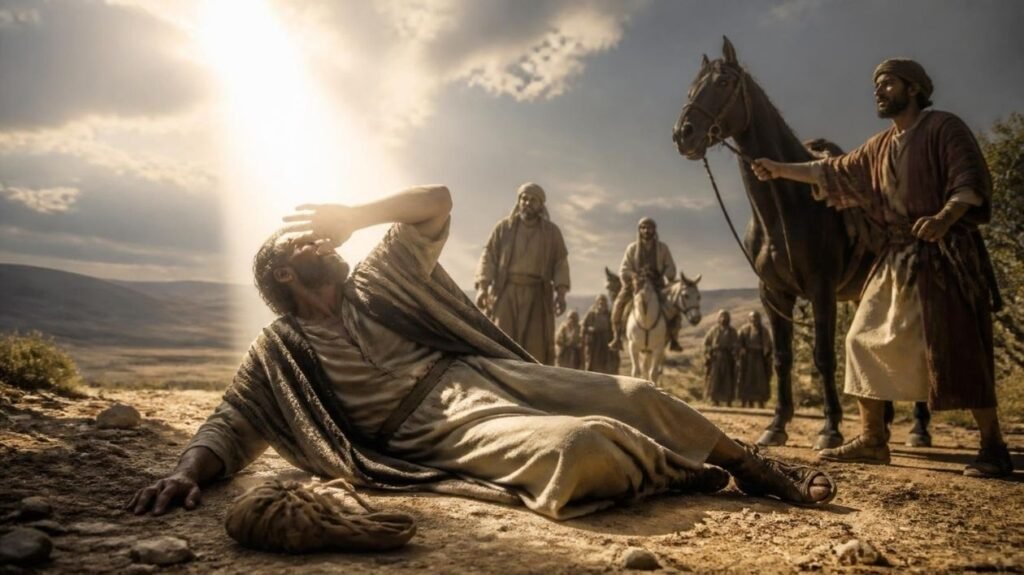
These allowed him to go to Damascus and bring back to Jerusalem any Christians he found. As he was on his way, he suddenly saw a bright light from heaven that blinded him. He fell to the ground and heard a voice saying to him, “Saul, Saul, why are you persecuting me?” He asked, “Who are you, Lord?” The voice said, “I am Jesus, whom you are persecuting. But rise and enter the city, and you will be told what you are to do.” The men who were with him were speechless, hearing the voice but seeing no one.
Saul got up and opened his eyes, but he could see nothing. They led him by the hand and brought him to Damascus. He was without sight for three days, and he neither ate nor drank.
There was a disciple in Damascus named Ananias, whom the Lord called in a vision. He told him to go to the house of Judas and look for a man named Saul of Tarsus, who was praying. He also told him that Saul had seen a vision of a man named Ananias laying his hands on him and restoring his sight.
Ananias was scared. He said to the Lord, “I’ve heard a lot about this man and the harm he has caused to your saints in Jerusalem. And here he has authority from the chief priests to bind all who call on your name.”
The Lord said to him, “Go. He is my chosen instrument. He will carry my name to the Gentiles, kings, and the children of Israel.” For I will show him how much he must suffer for the sake of my name.”
Ananias obeyed the Lord and went to Saul. He put his hands on him and said, “Brother Saul, the Lord Jesus who met you on the road has sent me. You will regain your sight and be filled with the Holy Spirit.”
And immediately something like scales fell from his eyes, and he regained his sight. He rose and was baptized. And he took food and was strengthened.
And falling to the ground, he heard a voice saying to him, “Saul, Saul, why are you persecuting me?” And he said, “Who are you, Lord?” And he said, “I am Jesus, whom you are persecuting.” (Acts 9:4-5)
Lesson:
Saul’s faith showed in his dramatic change from a persecutor to a preacher of Jesus. He trusted in Jesus’ identity over his own ideology or reputation. He obeyed Jesus’ call over his own agenda or ambition. He received Jesus’ forgiveness and grace through his faith.
22. The Philippian jailer (Acts 16:25-34)
Paul and Silas were missionaries who preached the gospel in Philippi, a Roman colony in Macedonia. They cast out a spirit of divination from a slave girl who made money for her owners by fortune-telling. Her owners were upset. They brought them to the magistrates, claiming they disturbed the city and taught illegal customs. The crowd joined in attacking them, and the magistrates ordered them to be beaten with rods and thrown into prison. They were put in the inner prison and their feet were fastened in stocks.
About midnight, Paul and Silas were praying and singing hymns to God, and the prisoners were listening to them. Suddenly there was a great earthquake, so that the foundations of the prison were shaken. And immediately all the doors were opened, and everyone’s bonds were unfastened. When the jailer woke up and saw the prison doors open, he drew his sword and was about to kill himself, supposing that the prisoners had escaped. But Paul cried out with a loud voice, “Do not harm yourself, for we are all here.” And the jailer called for lights and rushed in, and trembling with fear he fell down before Paul and Silas.
Then he brought them out and said, “Sirs, what must I do to be saved?” And they said, “Believe in the Lord Jesus, and you will be saved, you and your household.” And they spoke the word of the Lord to him and to all who were in his house. And he took them the same hour of the night and washed their wounds; and he was baptized at once, he and all his family. Then he brought them up into his house and set food before them. And he rejoiced along with his entire household that he had believed in God.
Then he brought them out and said, “Sirs, what must I do to be saved?” And they said, “Believe in the Lord Jesus, and you will be saved, you and your household.” (Acts 16:30-31)
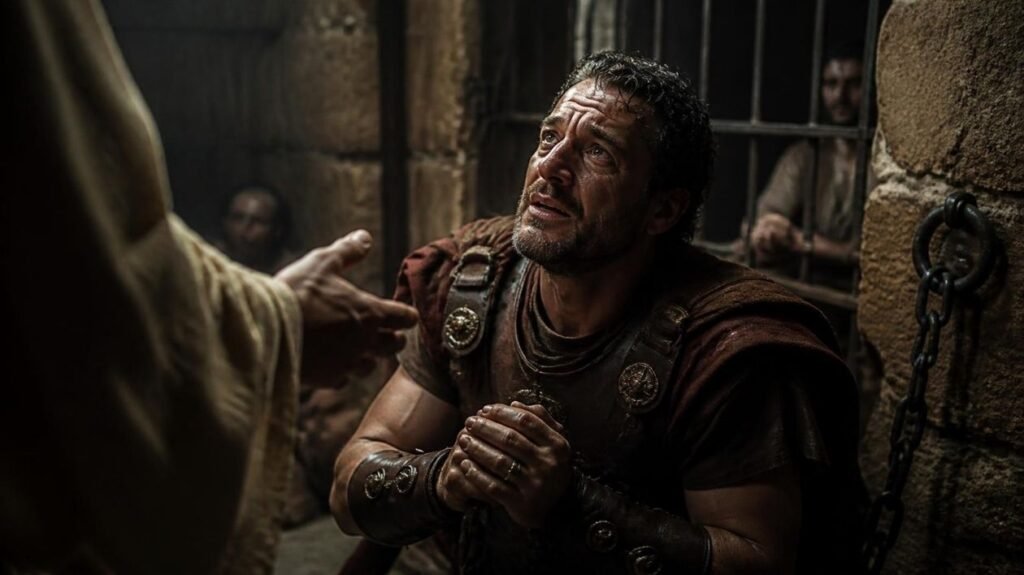
The jailer showed his faith through his repentance and confession of Jesus. He was a pagan and a prisoner, yet he believed. He trusted in Jesus’ salvation over his own despair or duty. He obeyed Jesus’ word over his own fear or doubt. He received Jesus’ forgiveness and joy through his faith.
23. The Ethiopian eunuch (Acts 8:26-40)
Philip was an evangelist who preached the gospel in Samaria with great success. An angel of the Lord told him to go south to the road that goes down from Jerusalem to Gaza. He obeyed and went. There he met an Ethiopian eunuch, who was a court official of Candace, queen of the Ethiopians. He was in charge of all her treasure and had come to Jerusalem to worship. He was returning home in his chariot and reading aloud from the prophet Isaiah. The Spirit told Philip to go over and join him.
Philip ran to him and heard him reading Isaiah 53:7-8. It talks about the suffering servant. He was led like a lamb to the slaughter, and his life was taken away. Philip asked him if he understood what he was reading. He said that he did not, and asked Philip to explain it to him. Philip opened his mouth, and beginning with this Scripture, he told him the good news about Jesus.
As they were going along the road they came to some water. The eunuch said, “See, here is water! What prevents me from being baptized?” Philip said, “If you believe with all your heart, you may.” And he replied, “I believe that Jesus Christ is the Son of God.” He commanded the chariot to stop. Then, Philip and the eunuch went into the water, and Philip baptized him. When they came out of the water, the Spirit of the Lord took Philip away. The eunuch didn’t see him again but continued on his way, rejoicing.
And Philip said, “If you believe with all your heart, you may.” And he replied, “I believe that Jesus Christ is the Son of God.” (Acts 8:37)

Lesson:
The eunuch showed his faith through his eagerness to learn from God’s word. He was humble, even as a foreigner and outsider. He trusted in Jesus’ fulfillment over his own understanding or tradition. He responded to Jesus’ invitation over his own status or convenience. He received Jesus’ baptism and joy through his faith.
24. The woman with the alabaster flask (Mark 14:3-9)
Jesus was in Bethany at the house of Simon the leper, reclining at table with his disciples. A woman came with an alabaster flask of very expensive ointment of pure nard.
She broke the flask and poured it over his head. Some of those who were there said to themselves indignantly, but why did she waste the ointment? For this ointment could have been sold for more than three hundred denarii and given to the poor.” And they scolded her. But Jesus said, “Leave her alone.
Why do you trouble her? She has done a beautiful thing to me. For you always have the poor with you, and whenever you want, you can do good for them. But you will not always have me. She has done what she could; she has anointed my body beforehand for burial. And truly, I say to you, wherever the gospel is proclaimed in the whole world, what she has done will be told in memory of her.”
She has done what she could; she has anointed my body beforehand for burial. (Mark 14:8)
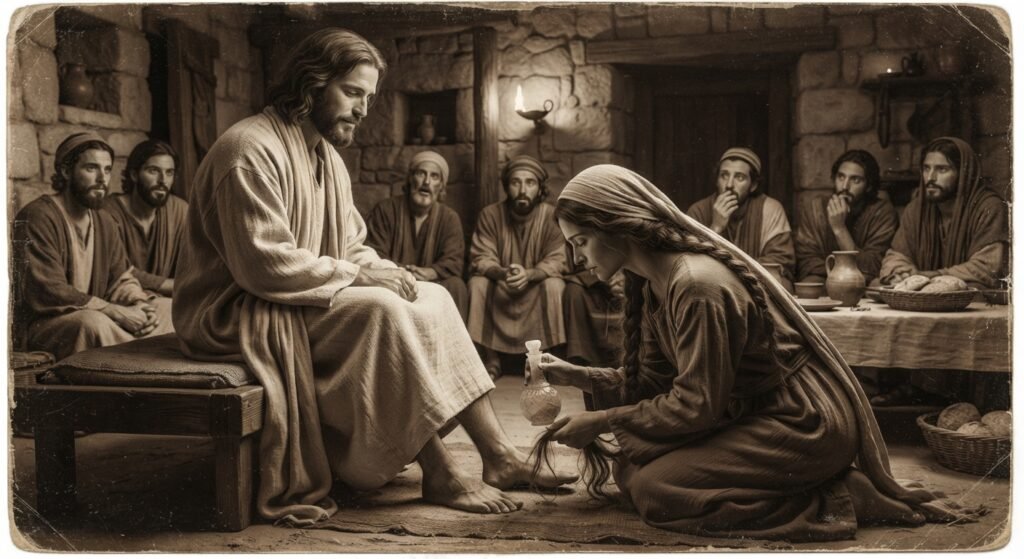
Lesson: The woman showed her faith through her devotion and generosity to Jesus. Even when others criticized and misunderstood her, she remained steadfast. She trusted in Jesus’ worth over her own wealth or reputation. She gave Jesus her best and most precious gift. She honored Jesus’ death and resurrection through her faith.
25. The thief on the cross (Luke 23:39-43)
Jesus was crucified between two criminals, one on his right and one on his left. The people and the rulers mocked him and challenged him to save himself and come down from the cross. The soldiers also mocked him and offered him sour wine.
One of the criminals who were hanged railed at him, saying, “Are you not the Christ? Save yourself and us!” But the other rebuked him, saying, “Do you not fear God, since you are under the same sentence of condemnation? And we indeed justly, for we are receiving the due reward of our deeds; but this man has done nothing wrong.” And he said, “Jesus, remember me when you come into your kingdom.” And Jesus said to him, “Truly, I say to you, today you will be with me in paradise.”
And he said, “Jesus, remember me when you come into your kingdom.” And Jesus said to him, “Truly, I say to you, today you will be with me in paradise.” (Luke 23:42-43)
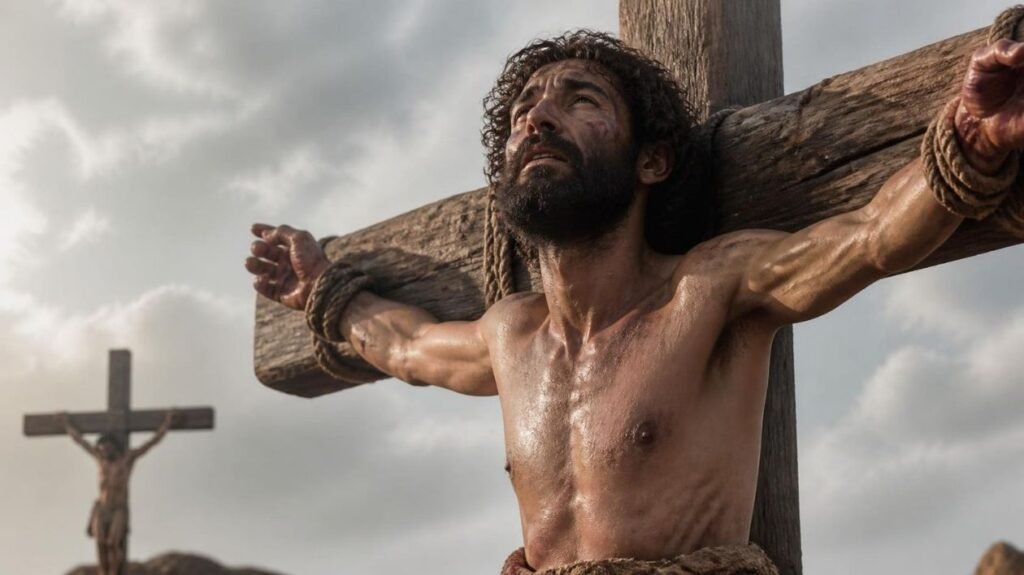
The thief expressed his faith by repenting and confessing Jesus. He did this even in his final moments, despite feeling hopeless. He trusted in Jesus’ kingdom over his own fate or circumstance. He acknowledged Jesus’ innocence and authority. He received Jesus’ promise and mercy through his faith.
Conclusion
We have seen that the Bible is full of stories about faith that can inspire us to trust God in the midst of difficulty. These stories show how God reveals Himself and His plan through His Son, Jesus Christ. He is the author and finisher of our faith. They show us how God has empowered and transformed His people. His Spirit is our helper and counselor in faith.
How can we apply the lessons of these Bible stories about faith to our own lives? We can do this by:
Reading and studying God’s Word regularly and diligently (2 Timothy 2:15)
Praying and asking God for wisdom and guidance (James 1:5)
Obeying and following God’s commands and will (John 14:15)
Sharing and witnessing God’s love and grace (Matthew 28:19-20)
Growing and maturing in our faith (2 Peter 3:18)
I hope this blog post has been helpful and inspiring for you. If you have any questions or comments, please feel free to share them below. Thank you for reading and God bless you!