

Redemption is one of the biggest themes in the Bible. Over and over, God takes people who are broken, guilty, lost, or far from Him. He brings them back. He gives them a new start.
Redemption is not the same as forgiveness. It is bigger than that. Redemption can mean being rescued. It can mean being bought back. It can mean being restored to a relationship or a purpose you thought you had lost.
In this article, you will find twelve stories of redemption in the Bible. Each story is different. Some people sinned badly. Some people ran from God. Some people were simply overlooked by others. In every story, God did something new.
You’ll find a simple explanation of redemption. There’s also a table comparing redemption, forgiveness, and restoration. Plus, we answer common questions on this topic. By the end, you will see practical lessons you can use in your own life today.
What Does Redemption Mean in the Bible?
Before we look at the twelve stories, it helps to understand the word itself.

Redemption Means Being Rescued or Bought Back
In the Old Testament, redemption often had to do with money or freedom. A person could be redeemed, or bought back, out of slavery or debt. A family member called a “kinsman-redeemer” could pay a price to rescue a relative.
The Bible uses this picture to describe what God does for His people: He rescues them; He pays a price to bring them back.
Redemption Involves More Than Forgiveness
Forgiveness, redemption, restoration, and repentance are connected, but they are not the same.
Forgiveness is the release of guilt or a debt owed to someone
Redemption is being rescued or bought back from bondage, sin, or loss
Restoration is being brought back into a relationship, position, or purpose
Repentance is a change of heart that turns away from sin and toward God
A person can be forgiven without every part of their life feeling restored right away. A person can be redeemed and still face consequences from past choices. These layers make the Bible’s stories of redemption honest, not simple.
Redemption Ultimately Points to Christ
Many of the stories below happened long before Jesus was born. The Bible does not say every one of these people knew they were pointing forward to Him. Christian readers have long viewed these stories as one big story. It’s about God rescuing His people, which reaches its peak in Jesus Christ.
This article will note where a story shows a picture of redemption. It will clearly show what the text says. It will also explain how Christians have interpreted or applied the story.
1. Joseph — From Betrayal to Purpose (Genesis 37; Genesis 39–50)
Joseph’s own brothers turned against him. They sold him as a slave. He was taken to Egypt, far from his home and his father. He was later falsely accused and thrown into prison, even though he had done nothing wrong.
Over time, God gave Joseph favor. He was eventually placed in charge of Egypt, second only to Pharaoh. Years later, a famine struck the land. Joseph’s brothers went to Egypt to find food. They didn’t know their brother was a powerful ruler now. Joseph recognized them. Instead of taking revenge, he forgave them.
God can work through circumstances that look completely destructive.
It is worth noting a careful distinction here. The Bible does not say God caused Joseph’s brothers to sin. It says God worked through their sin to bring good. Joseph put it this way to his brothers:
“But as for you, ye thought evil against me; but God meant it unto good, to bring to pass, as it is this day, to save much people alive” (Genesis 50:20, KJV).
That is different from saying everything that happens is automatically good. It is saying God can redeem what others meant for harm.
Christian Living Application:
Your current suffering may not be the end of your story.
Forgiveness does not mean pretending the wrong never happened.
God can bring purpose out of painful seasons, even years later.
2. Book of Ruth — From Loss to Belonging and Hope
Ruth lost her husband while she was still a young woman, far from her own homeland. She decided to stay with her mother-in-law, Naomi, instead of going back to her own people. She chose to follow the God of Israel.
In the land of Bethlehem, Ruth met Boaz, a close relative of Naomi’s family. Boaz became her kinsman-redeemer. He married her, and she became part of the family line that eventually led to King David, and later, to Jesus Himself.
Redemption lesson: God can bring belonging, provision, and purpose out of deep loss.
This story is often reduced to “Ruth was poor and then she became rich.” That misses the point. The real story focuses on loyalty and faithfulness. It shows how God welcomes an outsider into His family and plan.
Christian Living Application:
Faithfulness matters, even in uncertain or painful seasons.
God can work through small, ordinary acts of loyalty.
People who feel like outsiders can become part of God’s larger story.
3. David — From Sin to Repentance and Restoration (2 Samuel 11–12; Psalm 51)
David’s story shows something important: redemption does not always mean escaping consequences.
David committed adultery with Bathsheba. When he learned she was pregnant, he tried to cover it up. His plan led to the death of her husband, Uriah. For a while, David hid what he had done. Then the prophet Nathan confronted him directly. David finally confessed.
Psalm 51 is David’s prayer of repentance after this confrontation. He wrote:
“Create in me a clean heart, O God; and renew a right spirit within me” (Psalm 51:10, KJV).
God forgave David. David still faced tough challenges in his family in the years that followed.
God’s grace meets genuine repentance, but redemption does not erase every earthly consequence.
What to do:
Do not hide sin. Hidden sin tends to grow, not shrink
Real repentance requires honesty, not excuses
Restoration begins with admitting what went wrong
4. Rahab — From Outsider to Woman of Faith (Joshua 2; Joshua 6:22–25; Matthew 1:5)
Rahab lived in Jericho and worked as a prostitute. When Israelite spies came into the city, she hid them and helped them escape. She told them she believed their God was the true God.
Because of her courage, Rahab and her family were spared when Jericho was destroyed. Later, she became part of the genealogy of Jesus, listed by name in the book of Matthew.
Redemption lesson: A person’s past does not have to determine the final chapter of their story.
Faith sometimes requires a courageous decision made in a moment.
God can use people others might overlook or judge.
Your past does not have to define your future.
5. The Prodigal Son — From Rebellion to the Father’s Welcome (Luke 15:11–32)
A younger son asked his father for his share of the inheritance. Then he left home and wasted it on wild living. When the money ran out, he ended up feeding pigs, desperate and starving. Eventually, he decided to return home, planning to ask his father if he could work as a servant.
Instead, his father saw him from a distance and ran to meet him. He welcomed him back as a son, not a servant, and threw a celebration.
There is a second half to this story that is often skipped. The older brother stayed home and worked hard. He got angry about the celebration. He struggled to accept his father’s grace toward his brother. The father went out to him too, and gently reminded him that everything the father had was still his.
Redemption involves returning, repentance, grace, and a restored relationship. But this parable is not only about the younger son. It is also about whether the older brother can accept grace for someone else.
Note:
Coming home to God starts with admitting where you have gone wrong.
God’s welcome is not based on how well you performed beforehand.
Grace can be just as hard to accept for the people watching as it is for the one receiving it.
6. Peter — From Denial to Restoration (Luke 22:54–62; John 21:15–19)
Peter was one of Jesus’s closest disciples. He had promised he would never abandon Jesus, even if it meant dying with Him. On the night Jesus was arrested, Peter denied knowing Him. He did this three times before a rooster crowed. Afterward, Peter wept bitterly.
After His resurrection, Jesus met Peter by the sea. Three times, Jesus asked Peter if he loved Him. Three times, Peter answered yes. Jesus responded by giving Peter a purpose: to care for His followers. Peter later became a key leader in the early Church.
lesson: Failure does not automatically disqualify someone from being useful to God again.
Living Note:
Failure is painful, but it is not the same as final defeat
Genuine repentance opens the door to restoration.
When Jesus restores someone, He usually gives them a purpose, not just a clean slate.
7. Paul — From Persecutor to Apostle (Acts 9:1–22; Galatians 1:13–16)
Before he was an apostle, Saul (later called Paul) actively hunted down and persecuted followers of Jesus. On the road to Damascus, he had a sudden, dramatic encounter with the risen Jesus. He was temporarily blinded, then healed a few days later by a believer named Ananias.
Saul’s life changed direction completely. He became a key missionary and writer in the early church. He spread the same message he once tried to destroy.
Lesson on this: God can change anyone, even if their past seems against His plans.
Christian living application:
Do not assume anyone is beyond the reach of change.
Grace can produce a genuinely new direction in life.
A transformed life should show up in transformed actions, not just changed beliefs.
8. Zacchaeus — From Exploitation to Transformation (Luke 19:1–10)
Zacchaeus was a chief tax collector. His job often meant overcharging people and pocketing the extra cash. He was short in height, so when Jesus passed through his town, he climbed a tree just to see Him. Jesus stopped, looked up, and told Zacchaeus He wanted to stay at his house that day.
Zacchaeus was transformed by that encounter. He said he would give half of his things to the poor. He also promised to repay anyone he had cheated four times what they lost.
True transformation shows up in how a person treats others and handles money, not just in private beliefs.
Christian Living Note:
Genuine change often includes making things right with people you have wronged.
Integrity and honesty are part of a redeemed life, not separate from it.
Redemption can be seen in practical, financial decisions, not only spiritual ones.
9. The Woman at the Well — From Shame to Witness (John 4:1–42)
Jesus met a Samaritan woman at a well during the day. This was unusual for drawing water, likely to avoid others. Jesus spoke with her directly, which broke several social barriers of that time. He also showed that He already knew details about her life.
Instead of judging her as she might have expected, Jesus gave her what the Bible calls “living water.” She left her water jar behind and went to tell others in her town about Him.
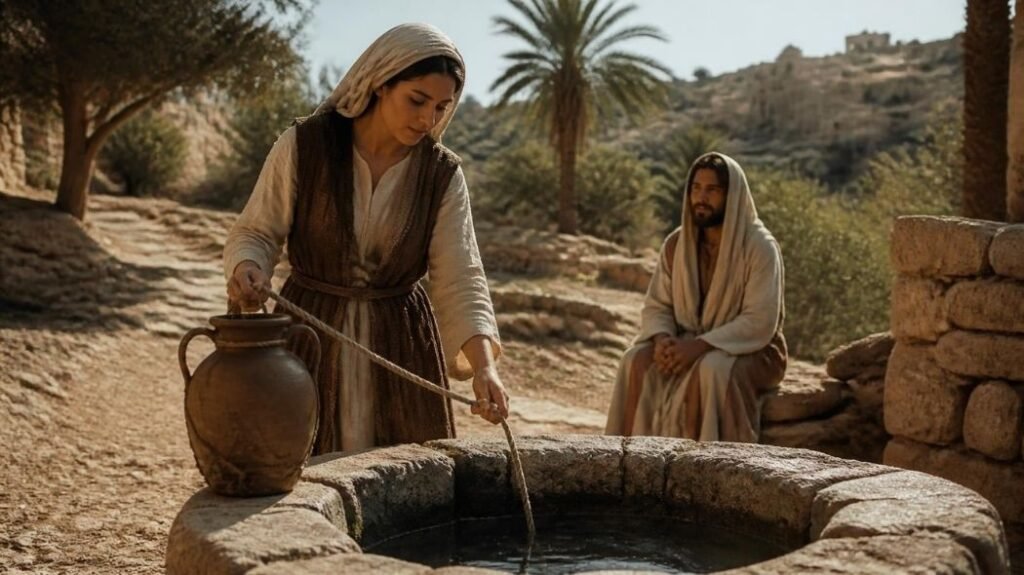
Jesus meets people in their shame. A changed encounter with Him can become a powerful testimony for others.
It is worth being careful here. John’s Gospel shares few details about her past, only what Jesus says in their talk. This article will not add speculation beyond what the text actually says.
Christian Living Application:
Shame does not have to have the final word over your story.
Jesus crosses social and personal barriers to reach people.
A genuine encounter with Jesus can influence the people around you.
10. Jonah — From Running Away to Obedience (Jonah 1–4)
God told Jonah to go preach to the city of Nineveh. Instead, Jonah ran the other way. He jumped on a ship going far from his assignment. A storm arose, and Jonah was thrown overboard at his own suggestion. He was then swallowed by a great fish and stayed inside it for three days before being brought back to dry land.
Jonah eventually went to Nineveh and preached, and the city repented. But the story does not end neatly. Jonah struggled with anger over God’s mercy toward people he did not think deserved it.
Redemption lesson: God’s redemptive work does not just rescue people from dangerous circumstances. It can also work on correcting a person’s heart.
Christian Living Application
Being rescued from a hard situation does not automatically fix a person’s inner struggles.
It is possible to obey God outwardly while still wrestling with Him inwardly.
God’s mercy can be hard to accept when it is shown to someone we feel does not deserve it.
11. Manasseh — From Extreme Wickedness to Humility
Scripture: 2 Kings 21; 2 Chronicles 33:1–20
Manasseh was one of the most wicked kings in Israel’s history. He led the nation into idol worship and other serious sins. Eventually, he was captured by a foreign army and taken away in chains.
In captivity, Manasseh humbled himself and prayed to God. According to 2 Chronicles, God heard his prayer and brought him back to Jerusalem. Manasseh then tried, at least in part, to reverse some of the wrong he had done.
Redemption lesson: No past is too dark for God’s mercy when there is genuine repentance.
This story should not be flattened into “God automatically removes every consequence when someone repents.” Manasseh’s earlier choices had already caused lasting damage to the nation, damage that his later repentance did not fully undo.
Christian living application:
Do not give up on someone, no matter how far they have gone.
Humility is often the turning point toward change.
Repentance should produce a changed direction, even if it cannot undo every past effect.
12. The Thief on the Cross — Redemption at the End of Life
Scripture: Luke 23:32–43
Jesus was crucified between two criminals. One of them mocked Him. The other acknowledged his own guilt, recognized who Jesus was, and simply asked to be remembered. Jesus answered him:
“Verily I say unto thee, To day shalt thou be with me in paradise” (Luke 23:43, KJV).
This man had no time left to prove himself through good works or religious performance. His story shows something central to the gospel: grace, not merit.
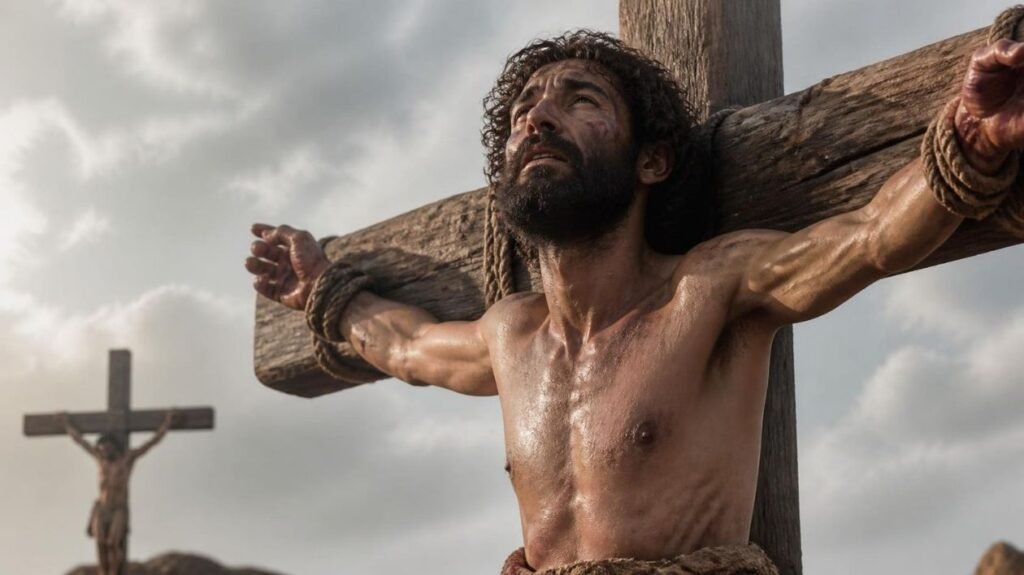
The gospel centers on grace, not human achievement.
Christian living application:
Salvation is not something a person earns through religious accomplishment.
Genuine faith can emerge even in someone’s final moments.
God’s grace touches people the moment they turn to Him. There’s no need to do good deeds first.
What These 12 Stories Teach Us
Taken together, these stories build a fuller picture of what redemption looks like.
God can redeem painful circumstances. See Joseph and Ruth.
Redemption begins with honesty about sin. See David and Zacchaeus.
Your past does not have to determine your future. See Rahab and Paul.
God’s grace does not require perfection or religious performance. See the prodigal son and the thief on the cross.
Restoration can lead to renewed purpose. See Peter and Paul.
Redemption can involve restitution. See Zacchaeus.
God’s redemption can transform relationships. See Joseph, Ruth, and the prodigal son.
Redemption does not always remove consequences. See David and Manasseh.
God works through unlikely people. See Rahab, Ruth, Zacchaeus, and Paul.
Redemption ultimately points toward God’s larger saving work, fulfilled in Jesus Christ.
Redemption vs. Forgiveness vs. Restoration: What’s the Difference?
These words overlap, but they are not identical.
Concept | Simple Meaning | Example
Forgiveness | Letting go of guilt or debt | David
Redemption | Being saved from loss | Ruth
Restoration | Returning to relationship or purpose | Peter
Repentance | Turning away from sin to God | Zacchaeus
Understanding these differences can help you make sense of your own story. You might already be forgiven, but still waiting for restoration. You might feel rescued from a hard season, but still working through repentance. That is normal, and the Bible shows it happening to real people.
How Can Christians Apply These Stories Today?
When You’ve Made Serious Mistakes
Look to David, Peter, and Zacchaeus. Their stories show that honesty about sin, not hiding it, is the first step toward restoration.
When Someone Has Hurt You
Look to Joseph. His story shows that forgiveness is possible without pretending the wrong never happened.
When You Feel Like an Outsider
Look to Ruth and Rahab. Their stories show that God brings unlikely people into the center of His plan.
When You’re Struggling With Shame
Look to the Samaritan woman and Peter. Their stories show that a genuine encounter with Jesus can turn shame into a testimony.
When You’re Waiting for God to Change Your Circumstances
Look to Joseph and Ruth. Their stories show that redemption sometimes unfolds slowly, over years, not overnight.
When You’re Wondering Whether God Can Change Someone
Look to Paul and Manasseh. Their stories show that even the most opposed hearts are not beyond God’s reach.
Frequently Asked Questions About Redemption in the Bible
What is the best example of redemption in the Bible?
There is not one single “best” example. Different stories show different sides of redemption. Joseph shows redemption through suffering. David shows redemption after sin. Ruth shows redemption through loyalty and belonging.
What Bible story is about someone being redeemed?
Many stories match this description. They include Joseph, Ruth, David, Rahab, the prodigal son, Peter, Paul, Zacchaeus, and the thief on the cross. Each shows a different form of redemption.
Who is an example of redemption in the Bible?
Joseph, Ruth, David, Rahab, Peter, Paul, Zacchaeus, the Samaritan woman, Jonah, Manasseh, and the thief on the cross are often mentioned as examples.
What does the Bible say about redemption?
The Bible presents redemption as being rescued or bought back, often at a cost. Christians find this theme throughout Scripture, with its true meaning in Jesus Christ.
Can God redeem someone who has made terrible mistakes?
Yes. David, Manasseh, and Paul all made big mistakes. Yet, they each found redemption through true repentance. Their stories are not the same, and each shows redemption unfolding differently.
Does redemption mean there are no consequences for sin?
No. David’s story shows this clearly. He was forgiven, but he still experienced painful consequences within his family afterward. Redemption restores a relationship with God. It does not erase every earthly result of past choices.
What does redemption mean for Christians today?
For Christians today, redemption means that no failure, mistake, or pain is beyond what God can use. It also calls for honesty about sin, genuine repentance, and, where possible, making things right with people who were wronged.
Final Thoughts
Redemption is not about pretending the broken parts of a story never happened. It’s about what God can do with people. He uses failures, losses, and tough times when they trust Him.
Joseph was betrayed, but not abandoned. Ruth was widowed, but not without hope. David sinned deeply, but was not left without a path back. Paul persecuted the church, but became one of its greatest voices. The thief on the cross had nothing to offer, yet was welcomed.
Each of these stories points toward the same larger story: a God who rescues, restores, and redeems. If you are in the middle of a painful chapter right now, these stories are a reminder that it may not be the end of yours.