
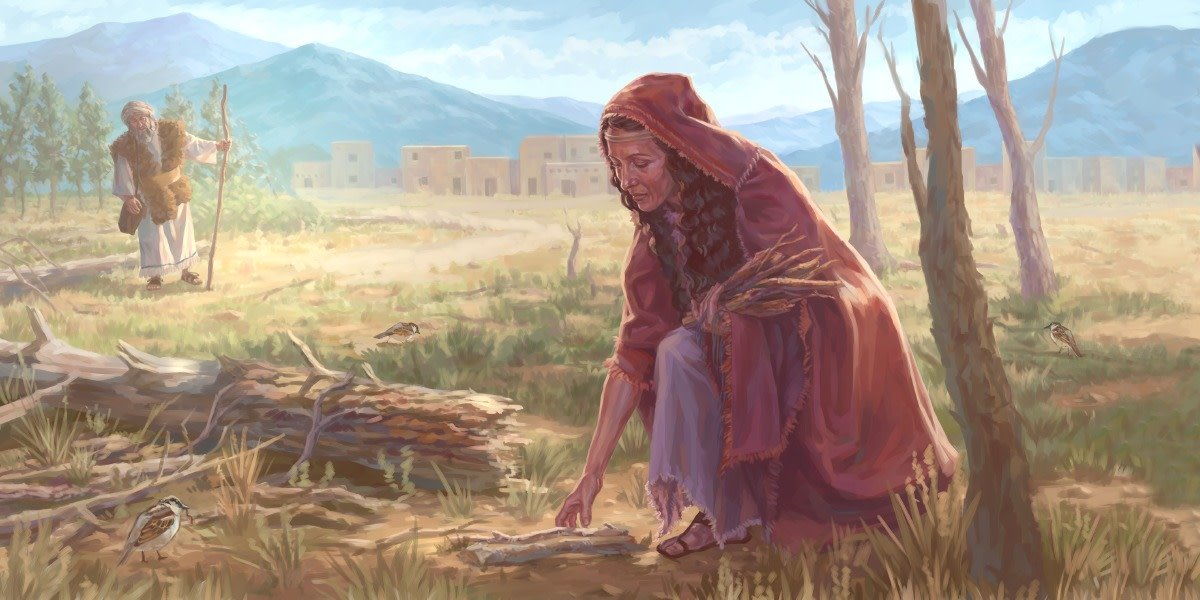
There is a woman in the Bible who is never named, who lived outside Israel, who worshipped a different god most of her life, and who Jesus held up as one of the clearest pictures of grace in the entire Old Testament. We call her the widow of Zarephath, or simply the widow who fed Elijah. Her story is short, just nine verses for the part everyone quotes, but it carries a weight that very few short passages in scripture carry. It is a story about famine, fear, obedience that made no sense, and a jar that should have run out but did not.
I want to walk you through the whole thing, not just the famous part about the flour and the oil. I want to show you the drought that came before it, the meaning hidden in the name of her town, the strange request Elijah made of her, and the second half of her story that most articles skip, the part where her own son dies in her arms and is given back to her. By the end, I think you will understand why Jesus picked this particular widow, out of every widow in Israel, to make a point that nearly got him killed in his own hometown.
The Story at a Glance, in Numbers
Some facts to anchor everything that follows
The Full Passage, 1 Kings 17:8 to 16
Read it slowly before we unpack it together
8 to 9Then the word of the Lord came to Elijah, go at once to Zarephath in the region of Sidon and stay there. I have directed a widow there to supply you with food.
10So he went to Zarephath. When he came to the town gate, a widow was there gathering sticks. He called to her and asked, would you bring me a little water in a jar so I may have a drink?
11As she was going to get it, he called, and bring me, please, a piece of bread.
12As surely as the Lord your God lives, she replied, I have no bread, only a handful of flour in a jar and a little olive oil in a jug. I am gathering a few sticks to take home and make a meal for myself and my son, that we may eat it, and die.
13Elijah said to her, do not be afraid. Go home and do as you have said. But first make a small loaf of bread for me from what you have, and bring it to me, and then make something for yourself and your son.
14For this is what the Lord, the God of Israel, says, the jar of flour will not be used up and the jug of oil will not run dry until the day the Lord sends rain on the land.
15 to 16She went away and did as Elijah had told her. So there was food every day for Elijah and for the woman and her family. For the jar of flour was not used up and the jug of oil did not run dry, in keeping with the word of the Lord spoken by Elijah.
What Happened Right Before This, and Why It Matters
The widow’s story does not begin with her, it begins with a drought Elijah called down himself
To really understand this story, you have to back up a few verses. Israel was under a king named Ahab, married to a queen named Jezebel, and together they had led the nation deep into the worship of Baal, a fertility and storm god. Elijah stood in front of Ahab and said there would be no rain or dew except at his word, 1 Kings 17:1. That is not a small thing to say. He was declaring war on the very thing Baal was supposed to control, rainfall and harvest. Then he disappeared.
God sent Elijah first to a brook called Cherith, where ravens brought him bread and meat morning and evening. It was strange provision, but it worked, until the brook itself dried up because there had been no rain anywhere in the land, 1 Kings 17:7. Even the place of provision dried up. That detail matters more than people give it credit for. Sometimes the very source God used to provide for you in one season is not meant to carry you into the next one. Cherith had done its job. It was time to move.
Then the word of the Lord came to him, get up, go to Zarephath in the region of Sidon, and stay there. I have directed a widow there to supply you with food.
1 Kings 17:8 to 9, NIVNotice what God says here. He does not tell Elijah to go find food. He tells him a widow has already been directed to supply him with food. The provision was arranged before Elijah ever arrived. The widow simply did not know it yet.
What the Hebrew Names Reveal
Cherith and Zarephath are not random place names, they are part of the lesson
So God moved Elijah from the cutting place to the melting place. First isolation, then refinement under pressure. And Zarephath was not a quiet, comfortable refinement either. It sat in the region of Sidon, which was Gentile territory and, more pointedly, it was Jezebel’s own home region, the place she came from before she married Ahab and brought Baal worship into Israel with her. God sent his prophet to hide in enemy territory, in the hometown of the queen who wanted him dead, and told him a poor widow there would keep him alive. That is not a safe plan by any human measure. It is the kind of plan that only makes sense if you actually trust the one who made it.
The Widow at the Gate
A request for water, then a harder one for bread
Elijah arrives at the gate of Zarephath and sees a widow gathering sticks. He asks her for water first, a small request, the kind hospitality customs of that world would normally have welcomed without a second thought. As she goes to get it, he adds one more thing, bring me a piece of bread too.
Her answer is one of the most honest and heartbreaking lines in the Old Testament. As surely as the Lord your God lives, she says, I have no bread, only a handful of flour in a jar and a little oil in a jug. Notice she swears by his God, the God of Israel, even though she was likely a worshipper of Baal herself, since this was Baal’s own home territory. She already had some awareness of who Elijah’s God was, even before any of this began.
Then she tells him the rest. I am gathering a few sticks to take home and make a meal for myself and my son, that we may eat it, and die. This was not a metaphor. The drought and famine had stripped her down to one final meal. She was not planning ahead. She was planning her own death and her son’s death, and she was being completely transparent about it with a total stranger.
This is the moment that decides everything. Elijah does not deny what she just told him. He does not say, oh, never mind, I will find someone else. He says, do not be afraid, go home and do as you have said, but first make a small loaf of bread for me from what you have, and bring it to me, and then make something for yourself and your son.
Read that again. He is asking a woman with one meal left, who has just told him she expects to die, to give the first and best portion of that one meal to him, a stranger, before she feeds herself or her own child. By any normal measure that is an unreasonable, even unkind thing to ask. Some commentators have asked the same question I imagine you are asking right now, how could Elijah be so cold?
The answer is that Elijah was not asking her to trust him. He was asking her to trust the promise that came with the request. For this is what the Lord, the God of Israel, says, the jar of flour will not be used up and the jug of oil will not run dry until the day the Lord sends rain on the land. The bread for Elijah was never the real cost. It was the test of whether she believed the promise enough to act on it before she saw a single grain of evidence that it was true.
Elijah said to her, do not be afraid. Go home and do as you have said. But first make a small loaf of bread for me from what you have, and bring it to me, and then make something for yourself and your son.
1 Kings 17:13, NIVAnd here is the detail I want you to sit with. She did it. She went home, with almost nothing, and gave the first portion away before she knew it would be enough for herself. That is the entire definition of faith in action, doing what God says before you can see how it works out, and she did it as a Gentile widow who had only just met this prophet at her own front gate.
She did as Elijah told her, and there was food every day for Elijah, for her, and for her household. The jar of flour was not used up, and the jug of oil did not run dry, exactly as the Lord had spoken through Elijah. Pay attention to the shape of this miracle. God did not fill her storehouse to overflowing in one moment. He did not hand her a year’s supply of grain so she never had to think about it again. He kept the small jar producing exactly what was needed, day after day, for as long as the drought lasted.
That detail is not an accident. A famine-stricken region with one household suddenly possessing a full granary would have attracted thieves and desperate neighbors very quickly. Instead, God gave her a sufficiency that renewed daily, never overflowing, never running dry, just enough, every single day, for as long as she needed it. It is the same shape of provision as the manna in the wilderness, gathered fresh, never stockpiled, always enough.
Her Son Dies, and Is Given Back
The part of the story almost every article skips
Most retellings of this story stop at verse 16, with the jar still full and everyone fed. But the chapter keeps going, and what happens next is just as important as the miracle of the flour. Some time later, her son becomes sick, and his illness grows so severe that he stops breathing, 1 Kings 17:17.
Her response is raw and honest, exactly like her first words to Elijah at the gate. What do you have against me, man of God? Did you come to remind me of my sin and kill my son? She does not hide her anger or her grief behind polite religious language. She assumes, like many people still do today, that tragedy must be punishment, that God’s prophet showing up in her life had somehow exposed her and brought judgment on her household.
Then Elijah cried out to the Lord, Lord my God, let this boy’s life return to him. The Lord heard Elijah’s cry, and the boy’s life returned to him, and he lived.
1 Kings 17:21 to 22, NIVElijah takes the boy, carries him to the upper room, lays him on his own bed, and cries out to God three times. God hears him, and the boy’s breath returns. When Elijah carries the living child back down to his mother, she says one of the clearest confessions of faith from any Gentile in the entire Old Testament, now I know that you are a man of God and that the word of the Lord from your mouth is the truth, 1 Kings 17:24.
It took two miracles to get her there. The first one, the flour and the oil, kept her alive and proved God’s provision was real. The second one, her son’s life restored, proved God’s power went beyond provision into resurrection itself. Her faith grew across the whole story, not all at once.
Why Jesus Brought Her Up, and Why It Almost Got Him Killed
Luke 4:25 to 26, the verse that turned a hometown crowd into a mob
Early in his ministry, Jesus stood up in the synagogue in Nazareth, his own hometown, and read from Isaiah. The people were proud of him at first, until he said something that turned the room. Truly I tell you, he said, no prophet is accepted in his own hometown. I assure you that there were many widows in Israel in Elijah’s time, when the sky was shut for three and a half years and there was a severe famine throughout the land. Yet Elijah was not sent to any of them, but to a widow in Zarephath in the region of Sidon, Luke 4:24 to 26.
Think about what Jesus just told a room full of his own people. There were many Jewish widows suffering through that same famine, in Israel, among God’s chosen people. God did not send Elijah to a single one of them. He sent his prophet outside the covenant nation entirely, to a Gentile widow in the territory most associated with Baal worship and with Jezebel herself. Jesus was telling his hometown crowd, plainly, that God’s grace has never been limited to people who look the part or have the right pedigree, and that sometimes it reaches further than anyone expects, even into enemy territory.
The crowd’s reaction tells you they understood exactly what he meant. They got up, drove him out of town, and led him to the edge of a cliff to throw him off, Luke 4:28 to 29. A story about an obscure widow’s flour jar became the spark that nearly ended Jesus’s life before his ministry had really started. That is how much weight this widow’s story carries in scripture. It is not a small footnote. It is one of the clearest Old Testament pictures of grace reaching beyond the boundaries people assume it should stop at.
If you are watching your own jar run low right now, in finances, health, or hope, her story is not meant to stay in the past. It is meant to remind you that God still meets people exactly where their flour runs out.
💬 Has there ever been a season where you had to give first, before you could see how it would work out? Leave a comment, this widow’s story might be exactly what someone reading today needs to hear.
What This Story Teaches You
Eight lessons drawn straight from her nine verses, and the chapter that follows them
God told Elijah the widow had already been directed to feed him, before Elijah ever met her. She had no idea what was about to be asked of her, yet God was already at work in her life before the crisis even arrived at her door. Whatever you are walking into right now, it is worth remembering that God’s preparation usually runs ahead of your awareness of the need.
She told Elijah the truth plainly, she had almost nothing, and she expected to die. She was not pretending to be strong. Faith is not the absence of honest fear, it is what you do next, after you have told the truth about your situation.
She baked the bread for Elijah before she knew the jar would refill. The miracle did not happen first and then ask for her trust. Her trust came first, and the miracle followed it. That order matters more than people usually notice.
The jar refilled day by day, not in a single overflowing burst. If your own provision feels like it is only ever just enough, never extravagant, you are in good company. This widow lived the same way for as long as the famine lasted, and it was enough every single time.
God sent his prophet to a Gentile widow in Baal’s own territory, ahead of the many Jewish widows suffering the same famine. Grace has never respected the boundaries we draw around who deserves it.
When her son died, her first instinct was to assume it was judgment for her sin. That instinct is common, and it is often wrong. Suffering is not always a verdict on your life, and her own story proves it, because the boy was given back to her.
The same God who kept her jar from running dry also raised her son from death. The God who meets your daily, ordinary needs is the same God who can meet you in your most desperate, impossible one.
She believed enough to bake the bread, then believed more fully after her jar kept refilling, and arrived at full conviction only after her son was restored. You are allowed to be in the early stages of trusting God. She was too, for most of this story.
Quick Reference, Her Story From Start to Finish
For easy review or sharing
| Stage | What Happened | Scripture |
|---|---|---|
| Background | Elijah declares a drought, hides at the brook Cherith, fed by ravens | 1 Kings 17:1 to 7 |
| The Call | God sends Elijah to Zarephath, says a widow has been directed to feed him | 1 Kings 17:8 to 9 |
| The Meeting | Widow gathering sticks for her last meal, Elijah asks for water and bread | 1 Kings 17:10 to 12 |
| The Test | Elijah asks her to feed him first, with the promise of a jar that will not run dry | 1 Kings 17:13 to 14 |
| The Miracle | She obeys, the jar of flour and jug of oil do not run out, day after day | 1 Kings 17:15 to 16 |
| The Crisis | Her son becomes sick and dies, she blames herself and Elijah | 1 Kings 17:17 to 18 |
| The Resurrection | Elijah prays three times, the boy’s life returns to him | 1 Kings 17:19 to 23 |
| Her Confession | Now I know you are a man of God and the word of the Lord is truth | 1 Kings 17:24 |
| Jesus Refers to Her | Jesus uses her story to show grace reaches beyond Israel, the crowd tries to kill him for it | Luke 4:24 to 30 |
If Your Own Jar Feels Almost Empty
I do not know what your version of one handful of flour looks like right now. Maybe it is your bank account, your health, your patience with a situation that will not change, or your hope for a relationship you have been praying over for years. The widow of Zarephath did not have a guarantee before she acted. She had a promise, spoken by a stranger, attached to the name of a God she barely knew.
Whatever you are holding onto with both hands right now, the small jar that feels like it is about to run out, this story is not asking you to be reckless with it. It is asking you to consider whether the God who kept her flour from running dry, and who raised her son from death, is the same God you are trusting with what little you have left. He has not changed.
For this is what the Lord, the God of Israel, says, the jar of flour will not be used up and the jug of oil will not run dry until the day the Lord sends rain on the land.
1 Kings 17:14, NIV, a promise made to one widow, recorded for everyone who would ever read it after herWhich Part of Her Story Stayed With You?
The request for bread first, her honesty about her last meal, or her son being given back to her. Leave a comment and tell us, and share this with someone who needs to remember that God still meets people at the bottom of their last jar.
📖 The Widow Who Fed Elijah, full story, meaning, and lessons from 1 Kings 17:8 to 16, with Luke 4:24 to 30
The jar did not run dry. Neither will his faithfulness toward you. ✦